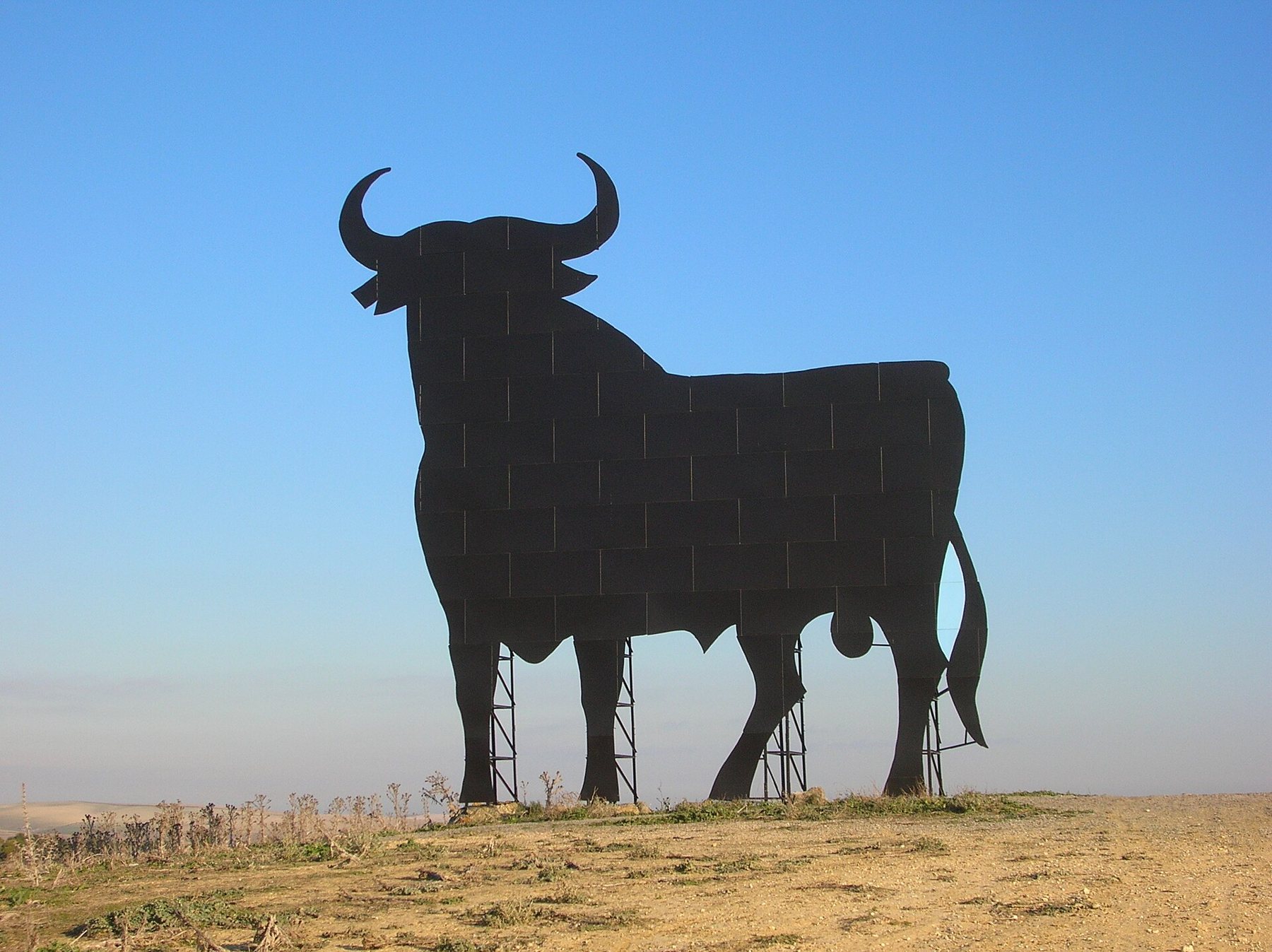
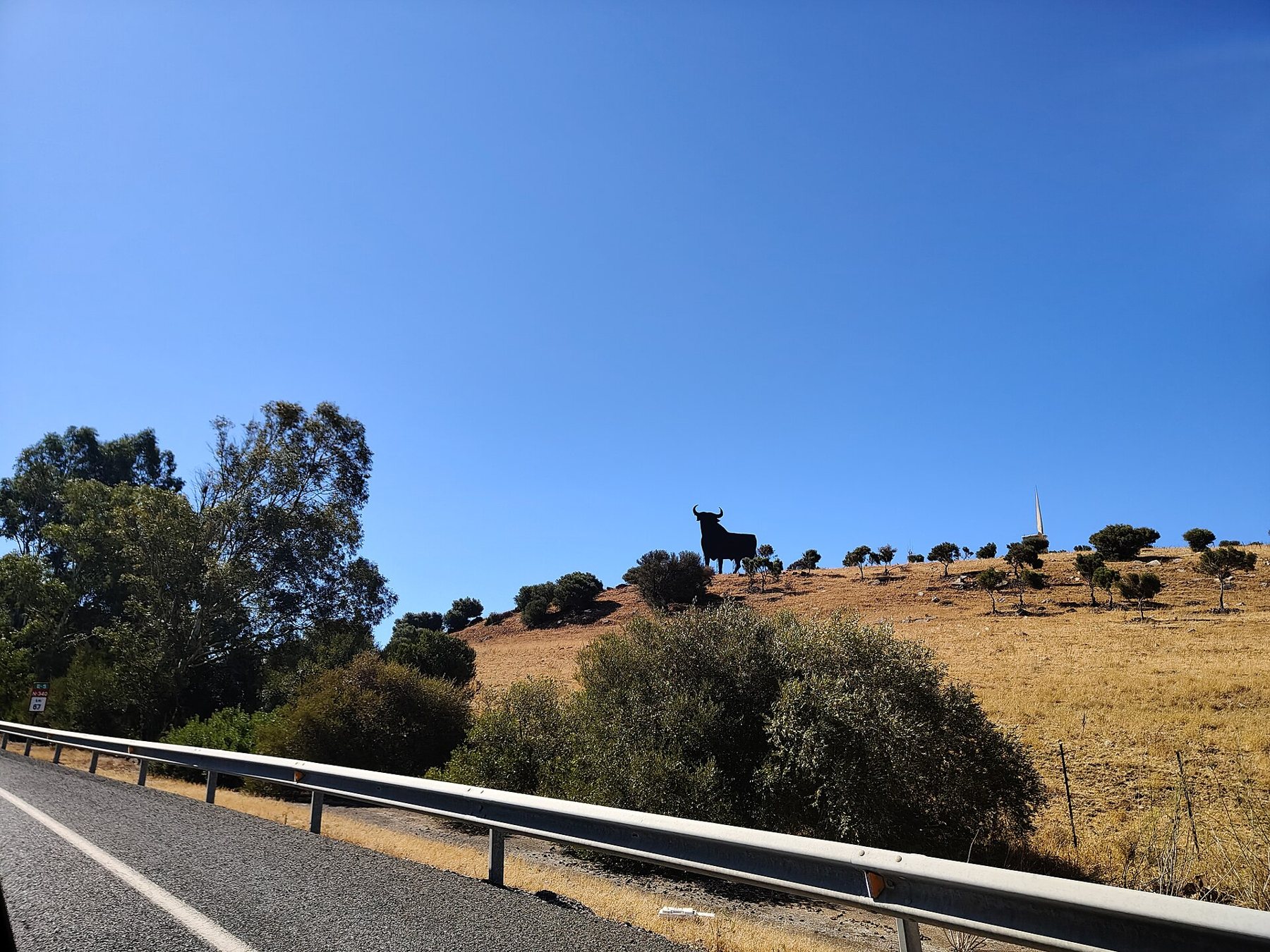
The immense, black bull silhouetted on hilltops along Spanish highways is not an advertisement for bullfighting. It began life as an ad for brandy, survived roadside advertising bans, was rescued by public affection, and is now virtually Spain's unofficial emblem. Here is its story, where to spot the bulls in Andalusia, and what the icon represents.
From brandy advert to national icon
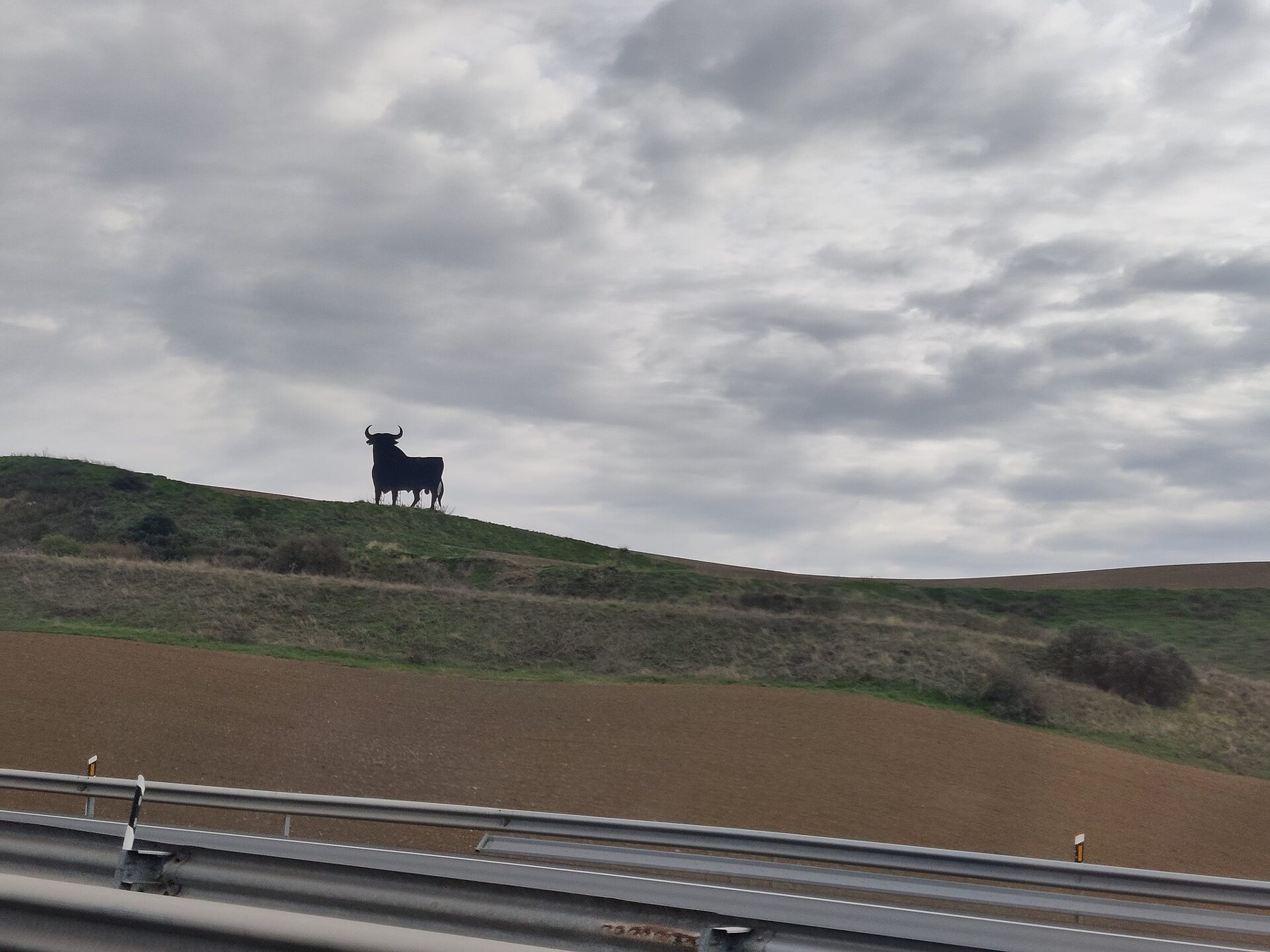
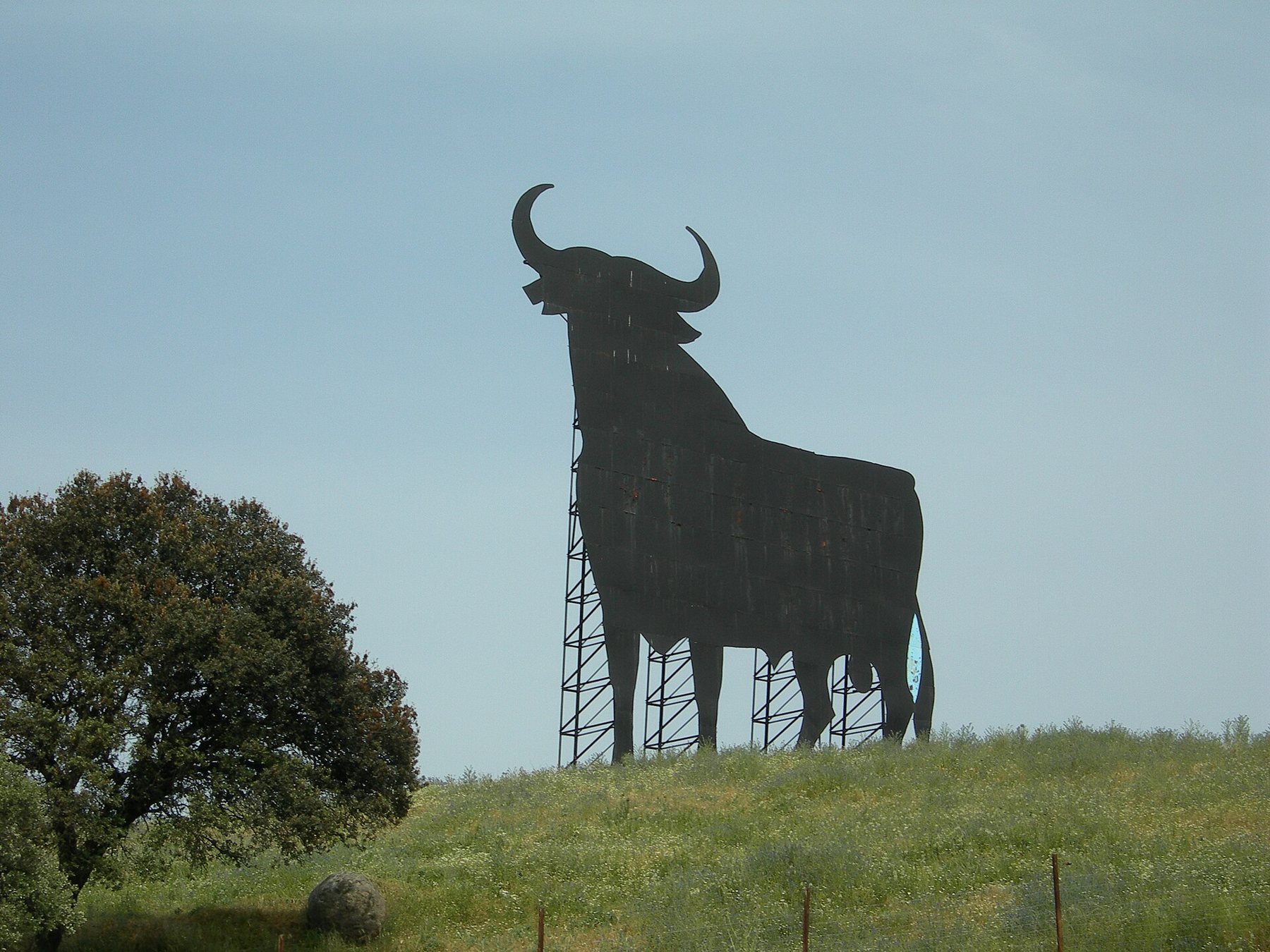
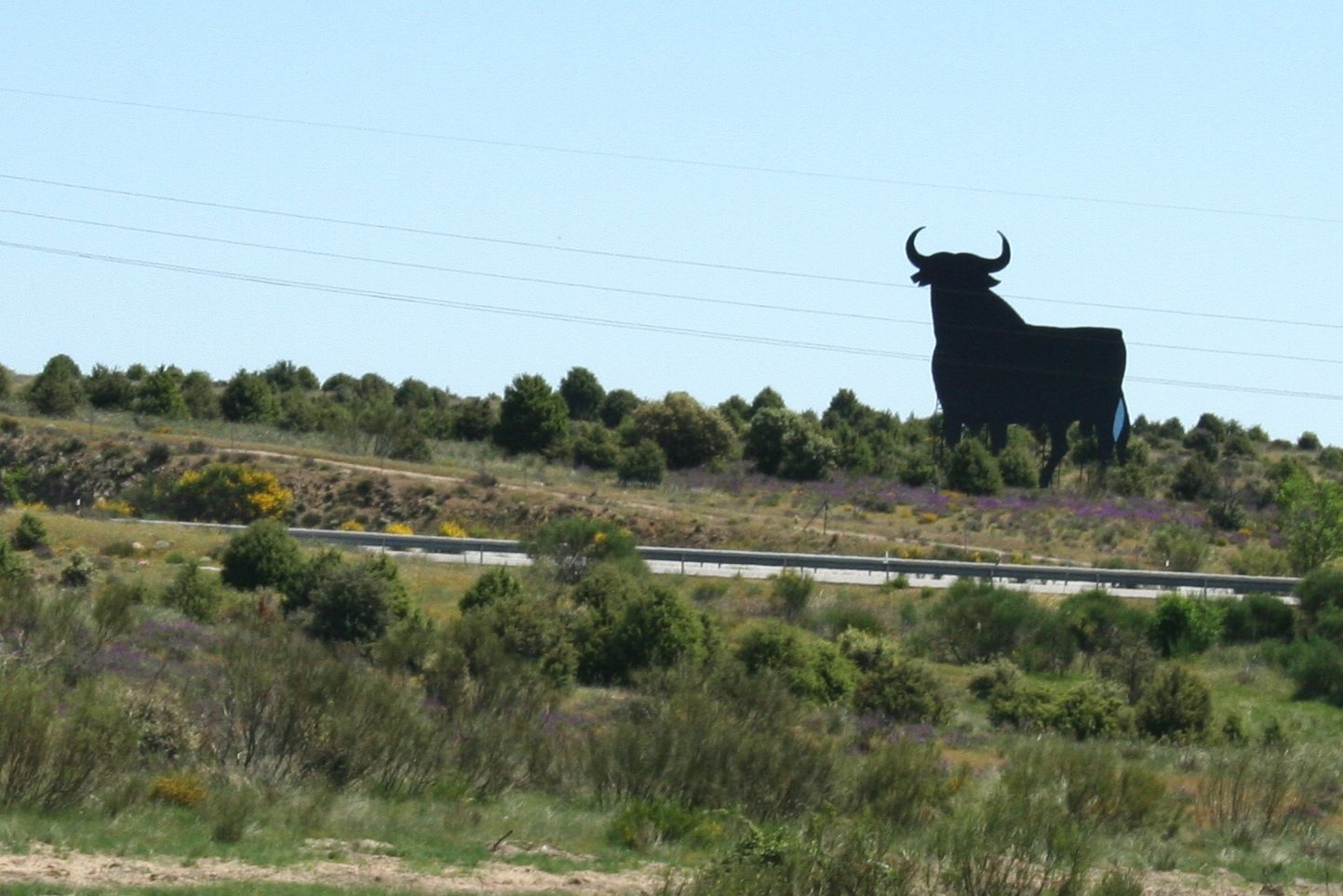
In 1956, the wine and spirits producer Osborne commissioned the advertising agency Azor Publicidad to create an emblem for their brandy Veterano. Agency director Manolo Prieto suggested a silhouette of a black fighting bull – embodying strength and pride. Its distinctive shape stood out clearly from afar, and by the late 1950s, Osborne began erecting the giant bulls along Spain's roadside verges.
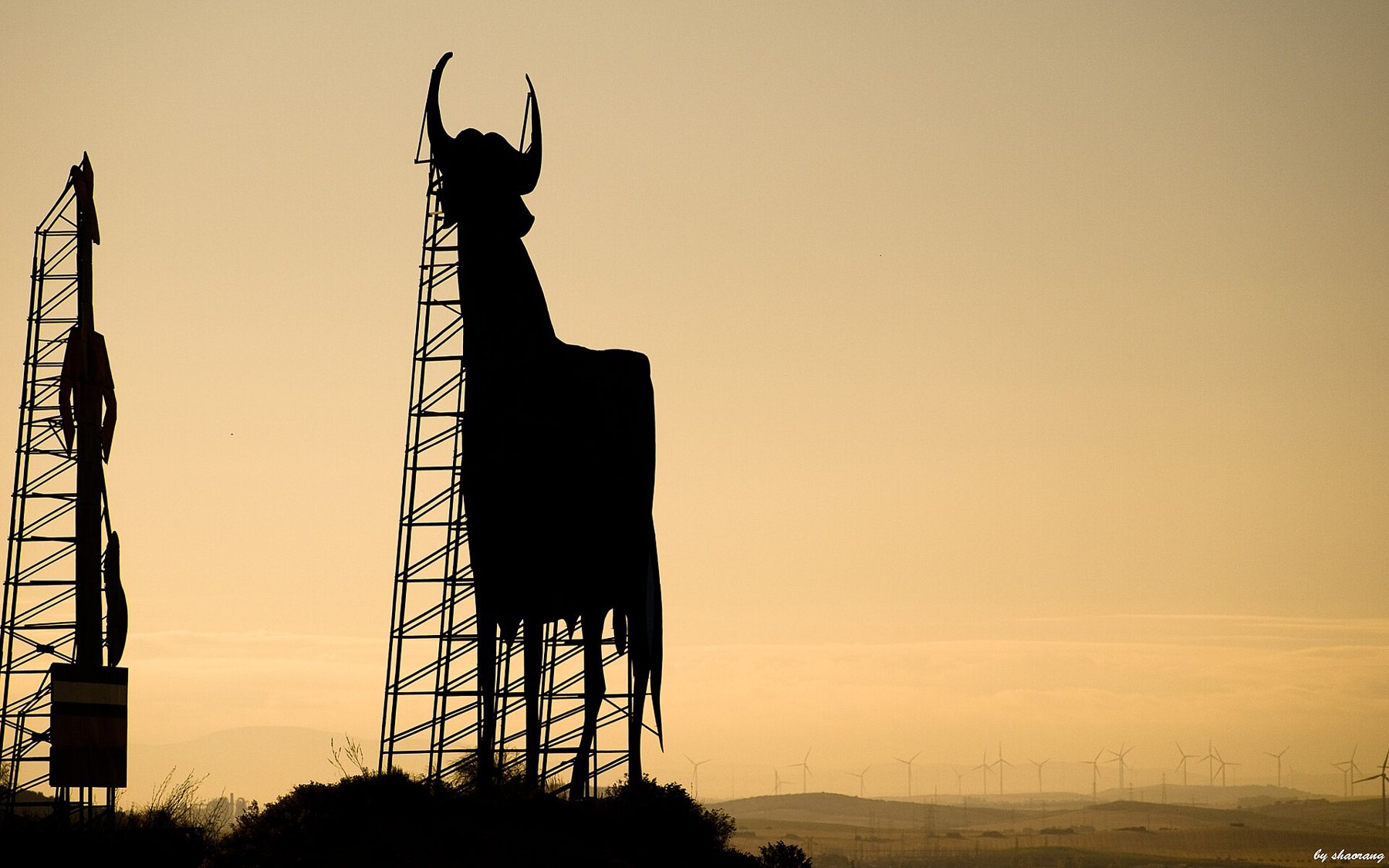
- 1957–58: The earliest bulls were made of wood and stood around 4 metres high. According to several sources, the very first was placed at Cabanillas de la Sierra along the road between Madrid and Burgos.
- 1961: The figures were reconstructed in sheet metal and grew up to 7 metres in height.
- 1962: New road safety regulations mandated that advertising signs be set further back from roads. The bulls were pushed back and enlarged to 14 metres to remain visible. Further regulations in 1974 relocated them once again.
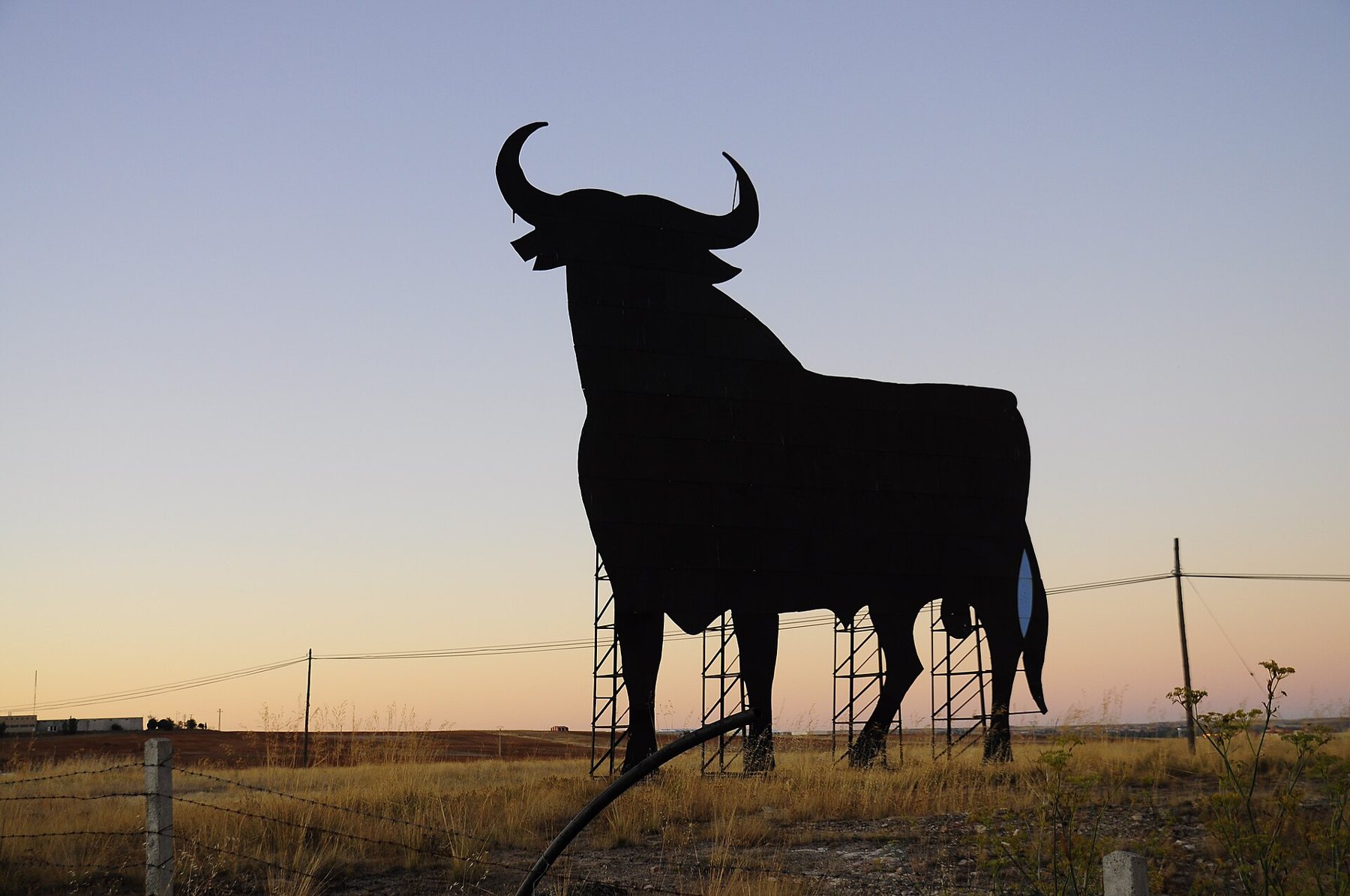
- 1988: A new national roads law banned commercial advertising along state highways. Osborne stripped the branding lettering, leaving only the pure black silhouette standing.
- 1994: A revised road decree called for the complete removal of the bull silhouettes.
- 1997: In December, the Supreme Court (Tribunal Supremo) ruled that the bulls could stay – recognising their "aesthetic and cultural significance" that transcended mere advertising.
Why are they everywhere – and why do they remain?
Throughout the 1950s and 60s, car ownership exploded across Spain, turning highways into prime advertising territory. Osborne erected bulls across the nation – reaching an estimated peak of around 500. By the time advertising bans were introduced in 1988 and 1994, the bull had evolved into something far greater than a commercial billboard. Municipalities, prominent artists, politicians, and newspaper editors campaigned passionately for its preservation. Andalusia's regional government initiated cultural heritage status, Navarra passed protective legislation, and the Spanish parliament hailed the bull as part of the "cultural and artistic heritage of the Spanish people". This movement ultimately culminated in the landmark Supreme Court ruling.
Who owns them – and who foots the bill?
Grupo Osborne holds the trademark and copyright to the silhouette. No other commercial entity may use the bull logo without permission – in 2006, the Provincial Court of Seville ruled against unauthorised souvenir manufacturers following an initial acquittal in a lower court.
Exactly who pays for repainting and ongoing maintenance of each specific bull could not be verified in available records. In Andalusia, the Junta de Andalucía has listed several bulls as protected heritage monuments (see below). Heritage protection legally forbids altering or dismantling them, but does not designate a specific funding body. If you are curious about a particular bull, contacting Osborne or the relevant local town hall is the best approach.
How big are they?
The standard highway bull is 14 metres tall and weighs around 4 tonnes. A smaller 7-metre version also exists (a local tourist guide mentions two bulls measuring 6.5 m in the province of Cádiz). The original wooden prototypes from 1958 were a modest 4 metres.
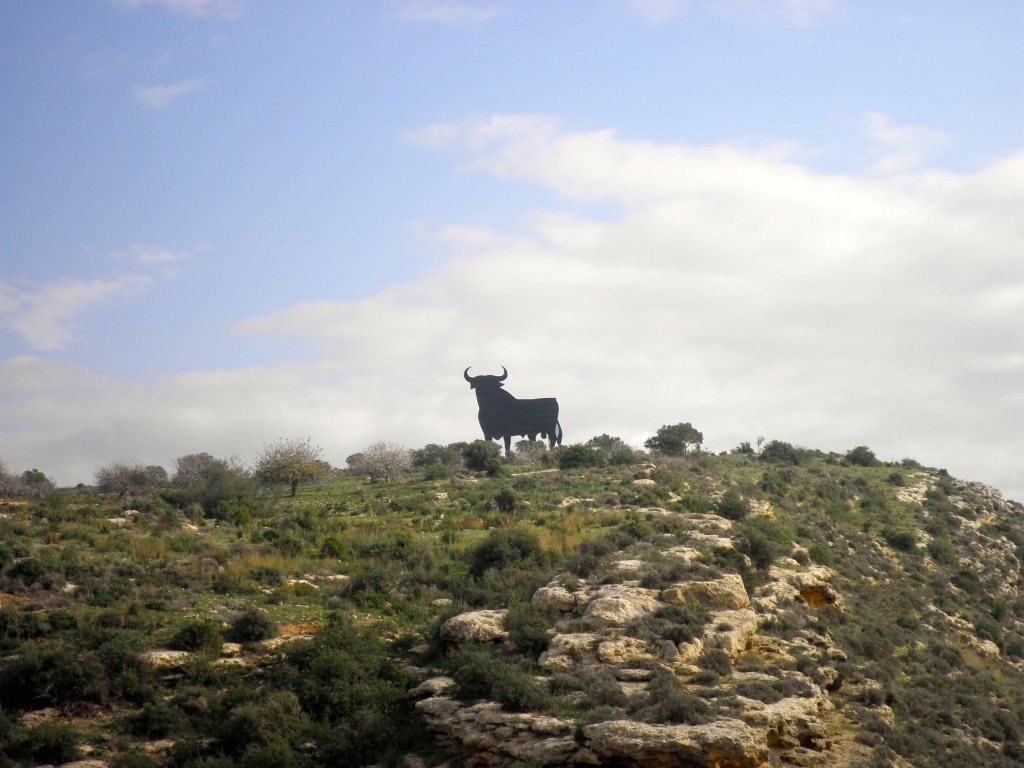
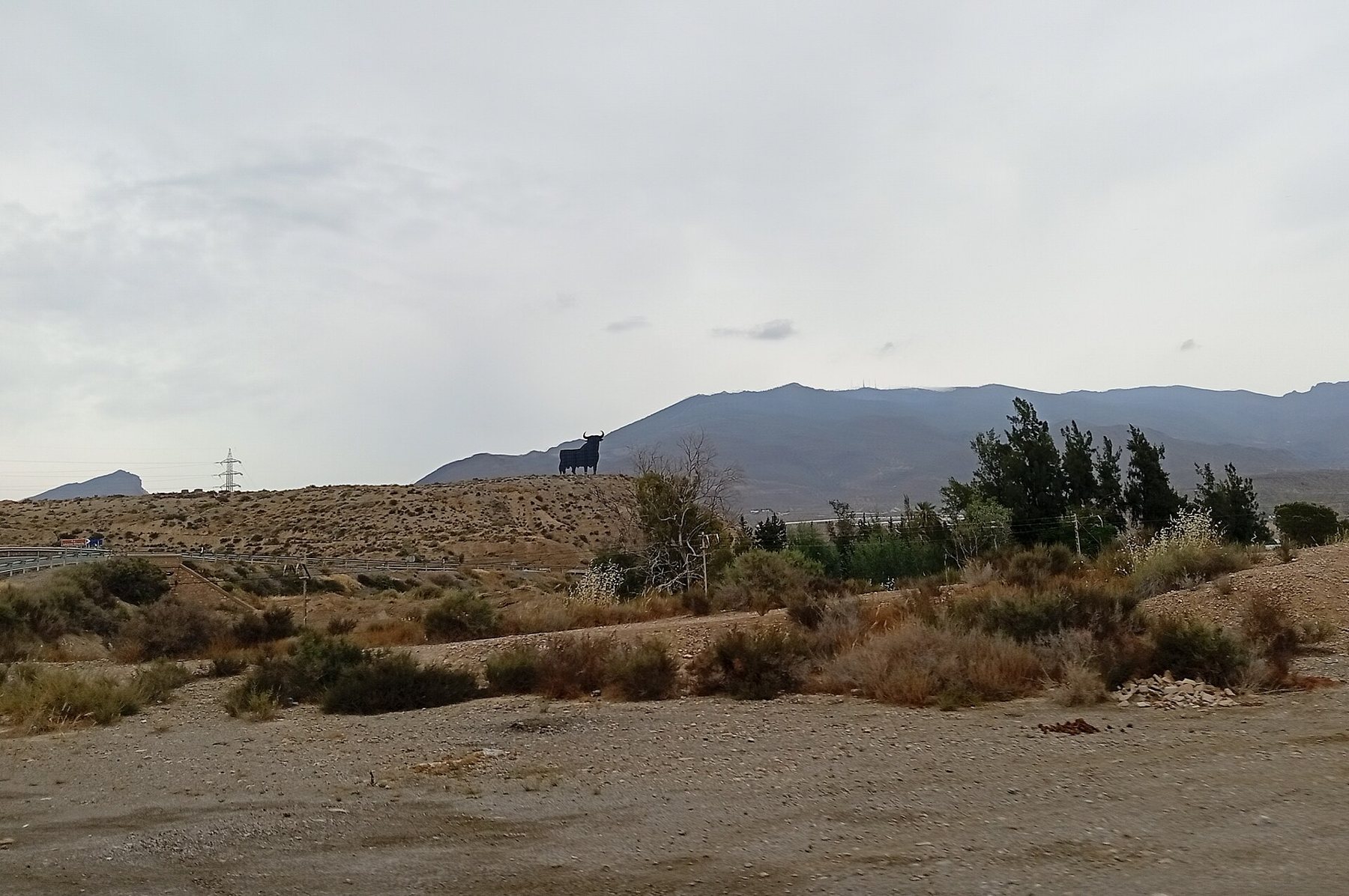
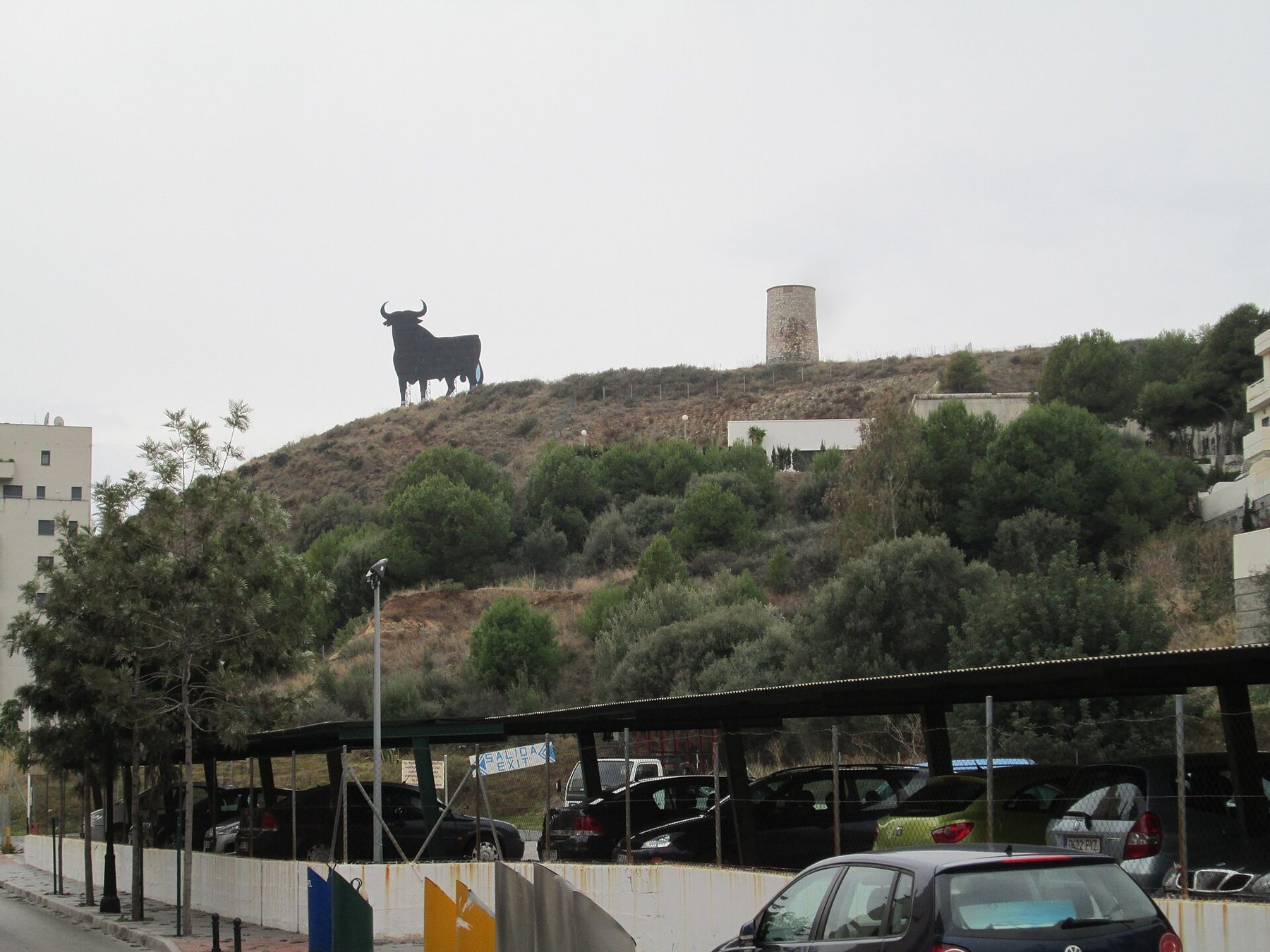
None of our sources identifies a single tallest bull – all the large installations measure approximately 14 metres. However, because they are strategically perched on prominent crests and hilltops, some appear considerably grander. The bull at Almayate, for instance, crowns a steep rocky outcrop locally known as the Peñón del Toro.
What does the bull symbolise?
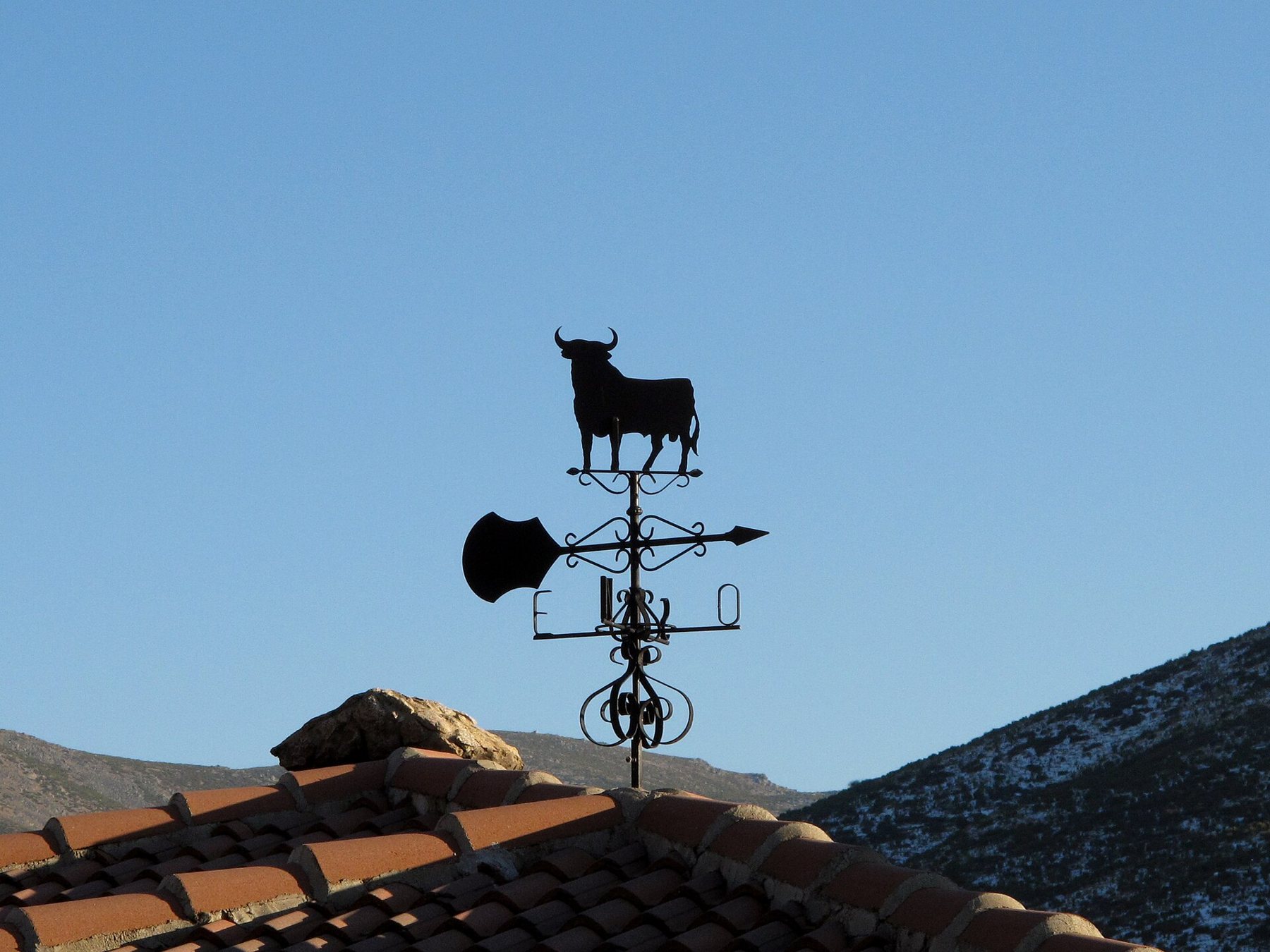
The Osborne bull is unquestionably Spain's most iconic roadside image. You'll see it emblazoned on souvenirs, bumper stickers, and football shirts, while Spanish sports fans famously display it stitched into the national flag on stadium terraces as a modern crest. For many Spaniards, it has become an affectionate symbol of their country.
That said, feelings are not universally shared. In regions such as Catalonia and the Basque Country, some view the silhouette as a token of Spanish centralism or nationalism, leading to occasional vandalism – the bull at El Bruc in Catalonia was repeatedly torn down (in 2002, 2007, and 2009), and in 2025 and 2026 the bulls at Rivabellosa and Tavernes de la Valldigna were similarly targeted. Others respond with artistic humour: in 2005 an artist transformed the Casar de Cáceres bull into a spotted Holstein cow, while in Mallorca it has sported rainbow colours and peace signs. In 2017, artists painted a mural of Picasso's Guernica across the Santa Pola bull.
The bull in Denmark – and around the globe
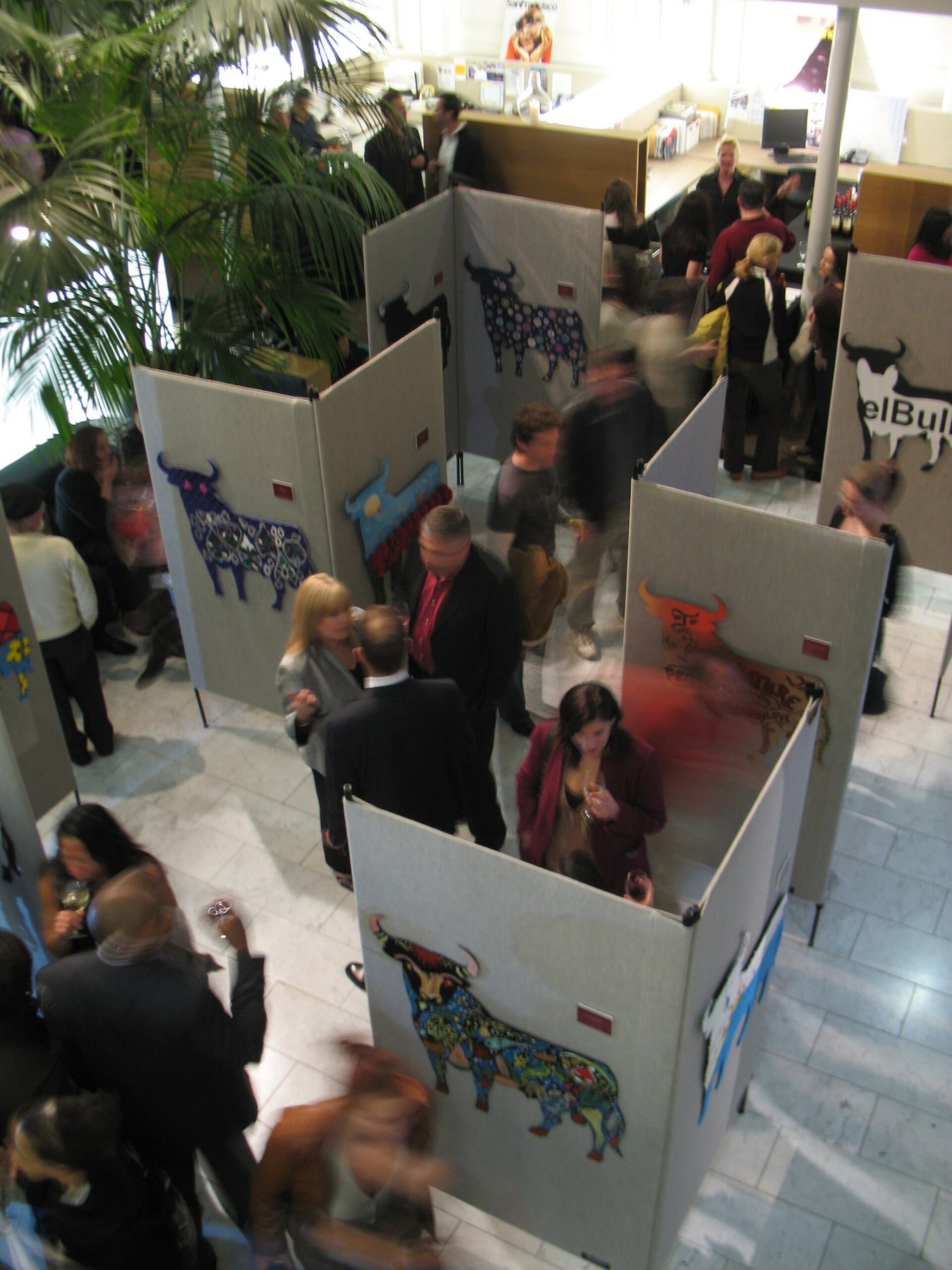
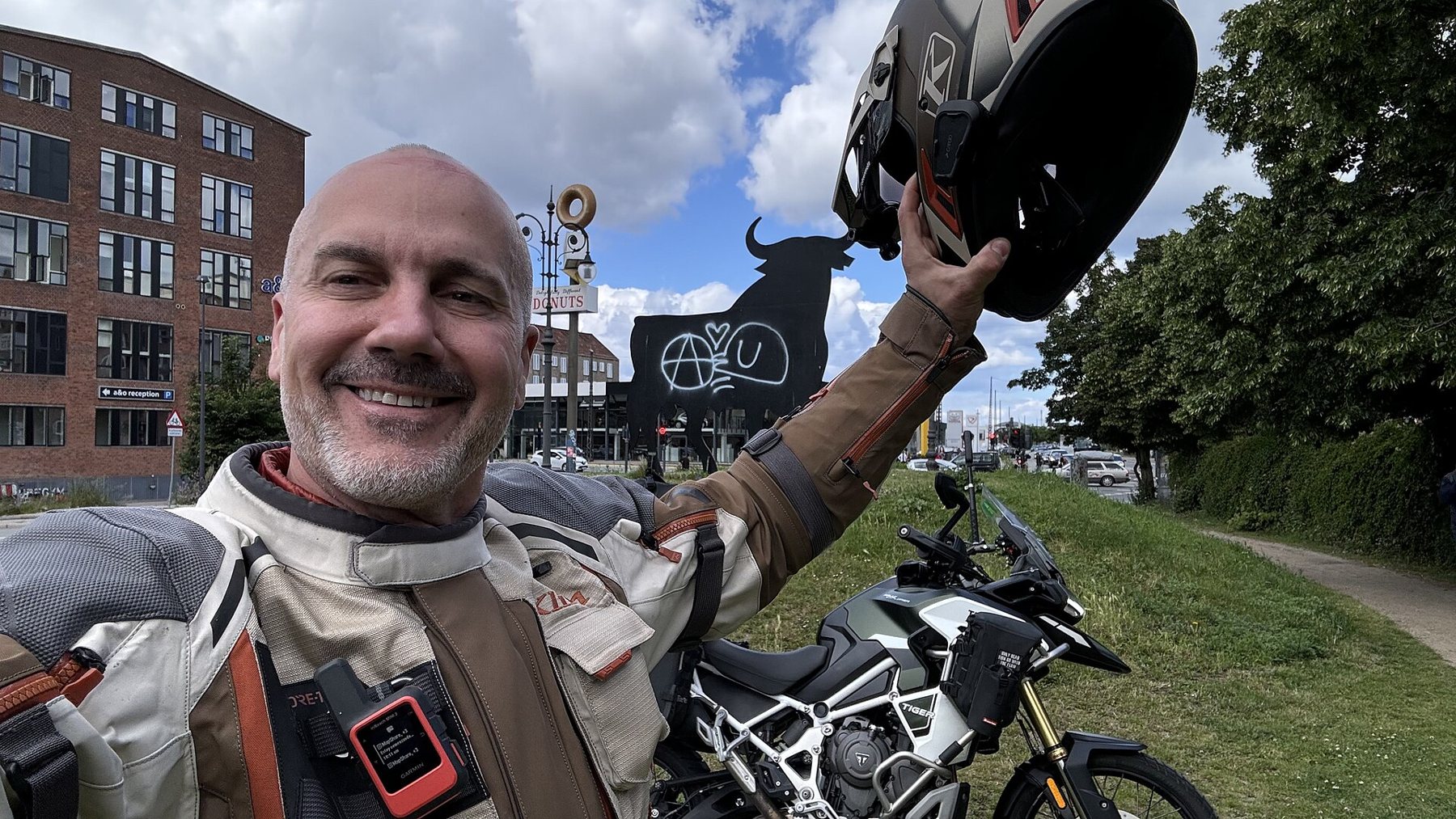
The Osborne bull has even travelled far beyond Spanish shores. In June 2012, an authentic bull was installed in the Superkilen urban park in Nørrebro, Copenhagen – as part of its celebrated public collection of everyday cultural objects from around the world. In 2018, the Echigo-Tsumari Art Triennale in Japan acquired a 10-metre replica now housed in its permanent collection, and four original bulls still overlook highways in Mexico. In July 2025, long-distance motorcyclist Julio Álamo completed an expedition visiting every Osborne bull outside Spain.
Notable bulls
- The first: Cabanillas de la Sierra on the Madrid–Burgos road, where the bull is said to have stood since 1957.
- The protected ones: The Junta de Andalucía has declared the bulls in Benahadux (Almería) and Córdoba cultural heritage monuments (Bien de Interés Cultural, 2011). For the bull in Santa Elena (Jaén), a similar process was initiated in 2009.
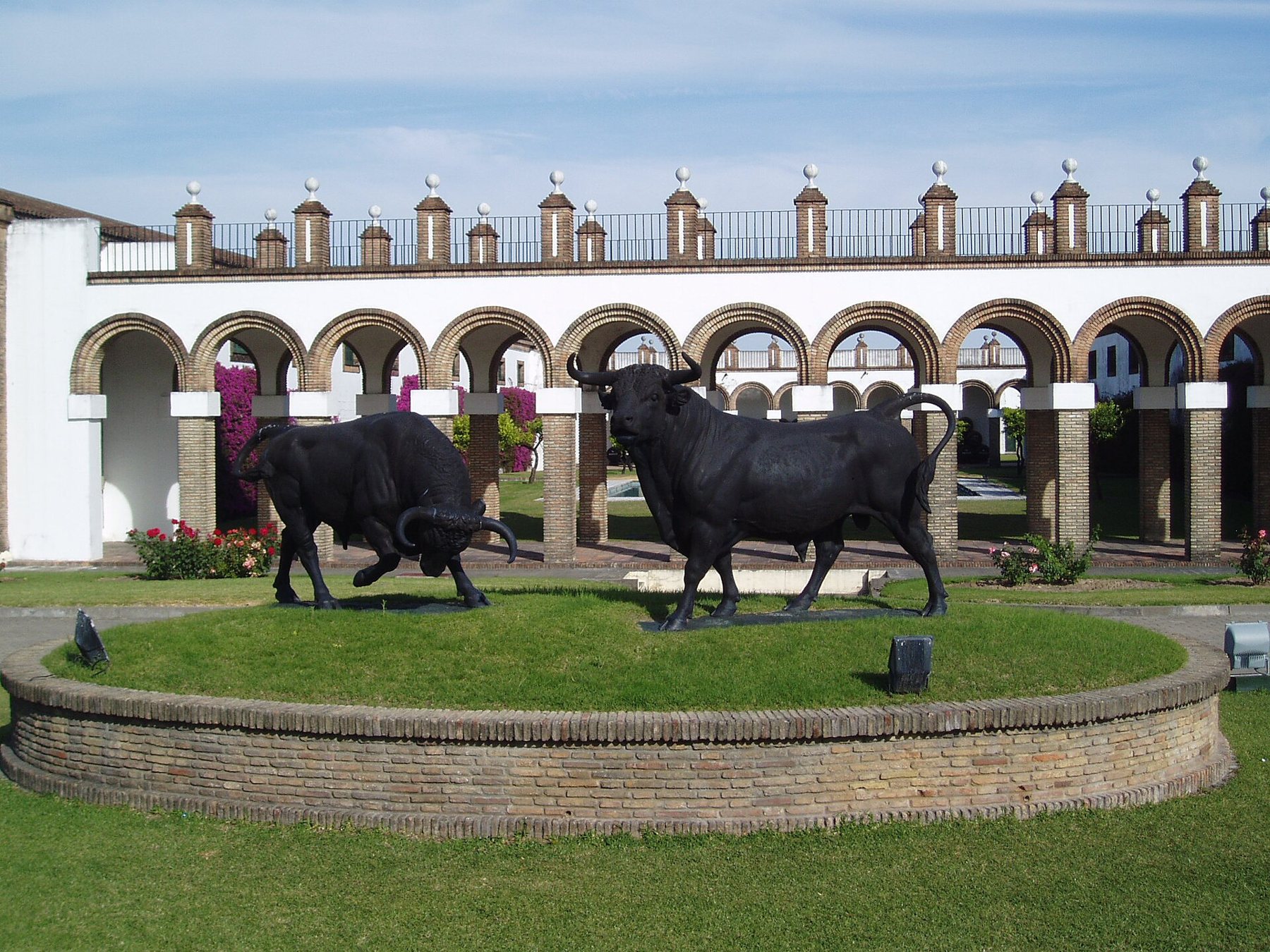
- Osborne's hometown: Several bulls stand in El Puerto de Santa María. The only two in Spain that still carry the word Osborne are located in the province of Cádiz: near Jerez Airport and in El Puerto.
- Furthest south: The bull near Tarifa, where Europe comes to an end.
- Furthest away: Melilla in North Africa (2011) – and Copenhagen.
Where can you see them?
Around 24 bulls stand across Andalusia – mostly in the provinces of Cádiz and Seville. The closest ones from Playa Tropical, as the crow flies:
| Location | Notes | Km |
|---|---|---|
| Almayate | The nearest one, on the cliff by the old N-340 | 40 |
| Güéjar Sierra | Granada – on the road up towards Sierra Nevada | 49 |
| Albolote | Granada – north of the city | 63 |
| Fuengirola | Costa del Sol, beside the old tower | 86 |
| Casabermeja | By the motorway from Málaga towards Antequera | 70 |
| Benahadux | Almería – protected cultural monument | 110 |
| Córdoba | Protected cultural monument | 153 |
| Tarifa | Cádiz – at the southern tip of Europe | 194 |
| El Puerto de Santa María | Osborne's hometown in Cádiz | 226 |
Maps and routes
Red star = Playa Tropical. Click on a point for the name and distance. Map data © OpenStreetMap.
Open the route in Google Maps
- Drive to the bull at AlmayatePeñón del Toro on the old N-340. Approx. 1 hour each way.
- The bulls near GranadaAlbolote and Güéjar Sierra – a day trip via Granada and back home.
- The Costa del Sol bullsAlmayate, Fuengirola and Casabermeja – a long day trip along the coast.
The routes start at Playa Tropical. On mobile devices, they open directly in the Google Maps app, ready for navigation.
Tips for visiting them
- Only stop in safe places. Many bulls stand along motorways. Pull over at a rest stop or a side road – never on the hard shoulder.
- Take your photo at sunset. The bull is black – it looks best against a colourful sky.
- Check the location on the map first. The bulls often sit on hilltops that can be seen long before you actually reach them.
- Combine it with something else. Almayate is not far from Torre del Mar. The Granada trip can easily be combined with exploring the city.
Sources
- Wikipedia (es): Toro de Osborne
- Wikipedia (en): Osborne bull
- Wikipedia (es): Locations of the bulls
- BOJA 2011: Protection of the bulls in Córdoba and Benahadux
- BOJA 2009: Protection proceeding for the bull in Córdoba
- Noticias de Navarra: The bull in Tudela (weight approx. 4 tonnes)
- Escapada Rural: Osborne's bulls along the roads
- Andalucia.com: Almayate
- Coordinates: OpenStreetMap contributors (ODbL)