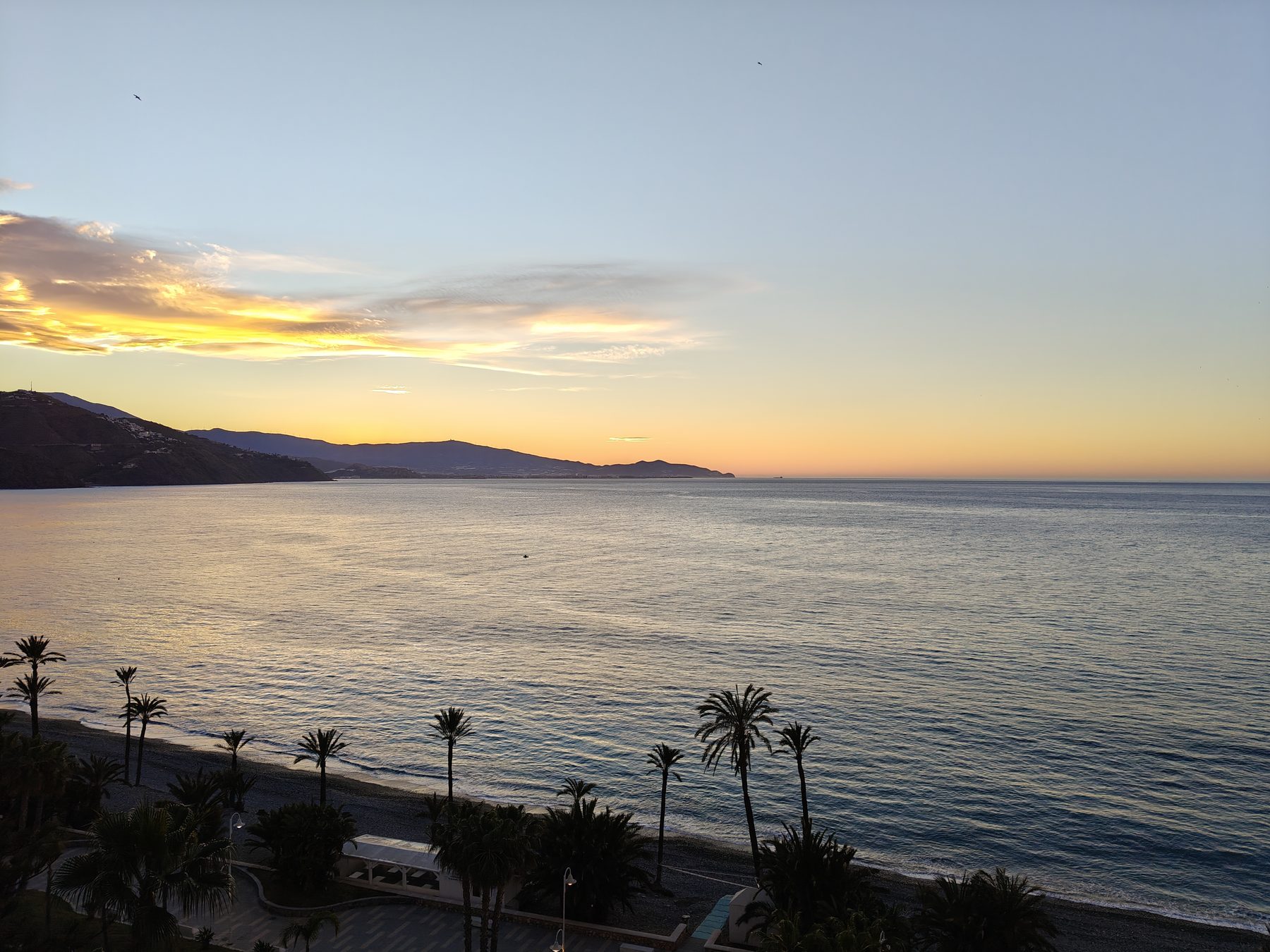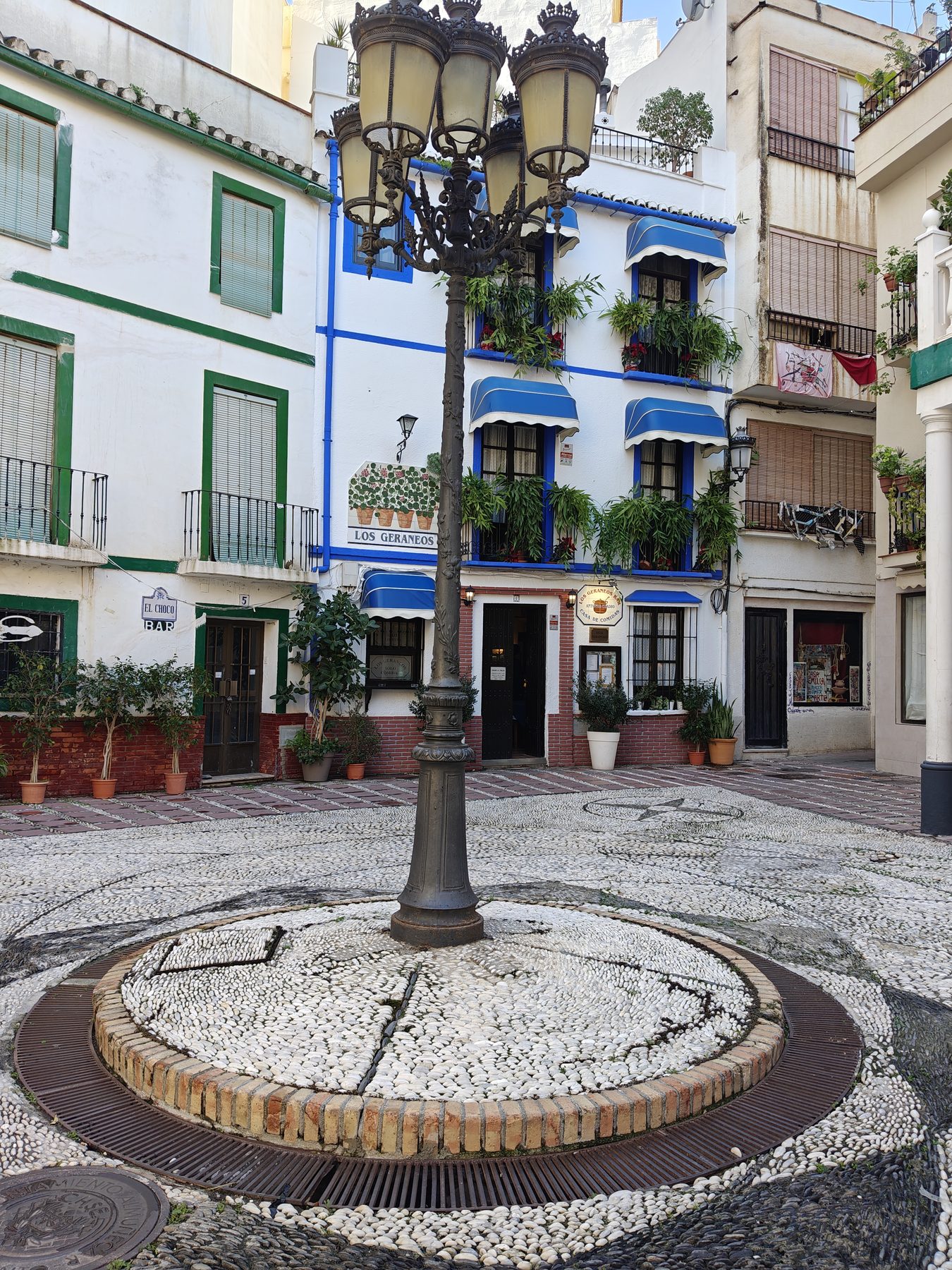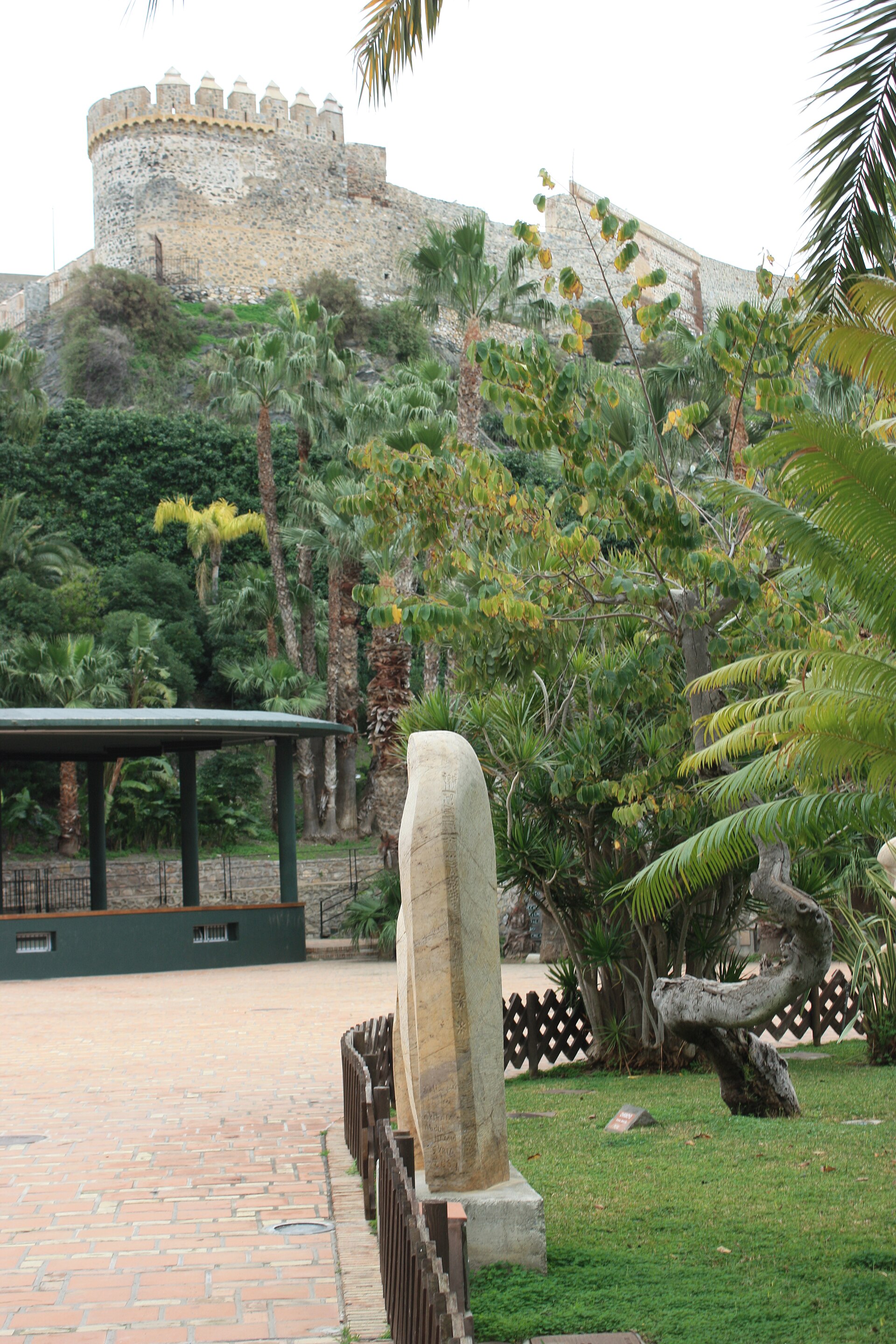
Right beneath the castle, in the heart of the old town, lies a green oasis where palms and plants from the tropics of the entire world grow alongside 2,000-year-old fish tanks. El Majuelo is the town's botanical garden, an open-air sculpture museum, an archaeological excavation and, in summer, a concert venue – and admission is free. Here is everything you can discover in the park.
A garden with the tropics of the world
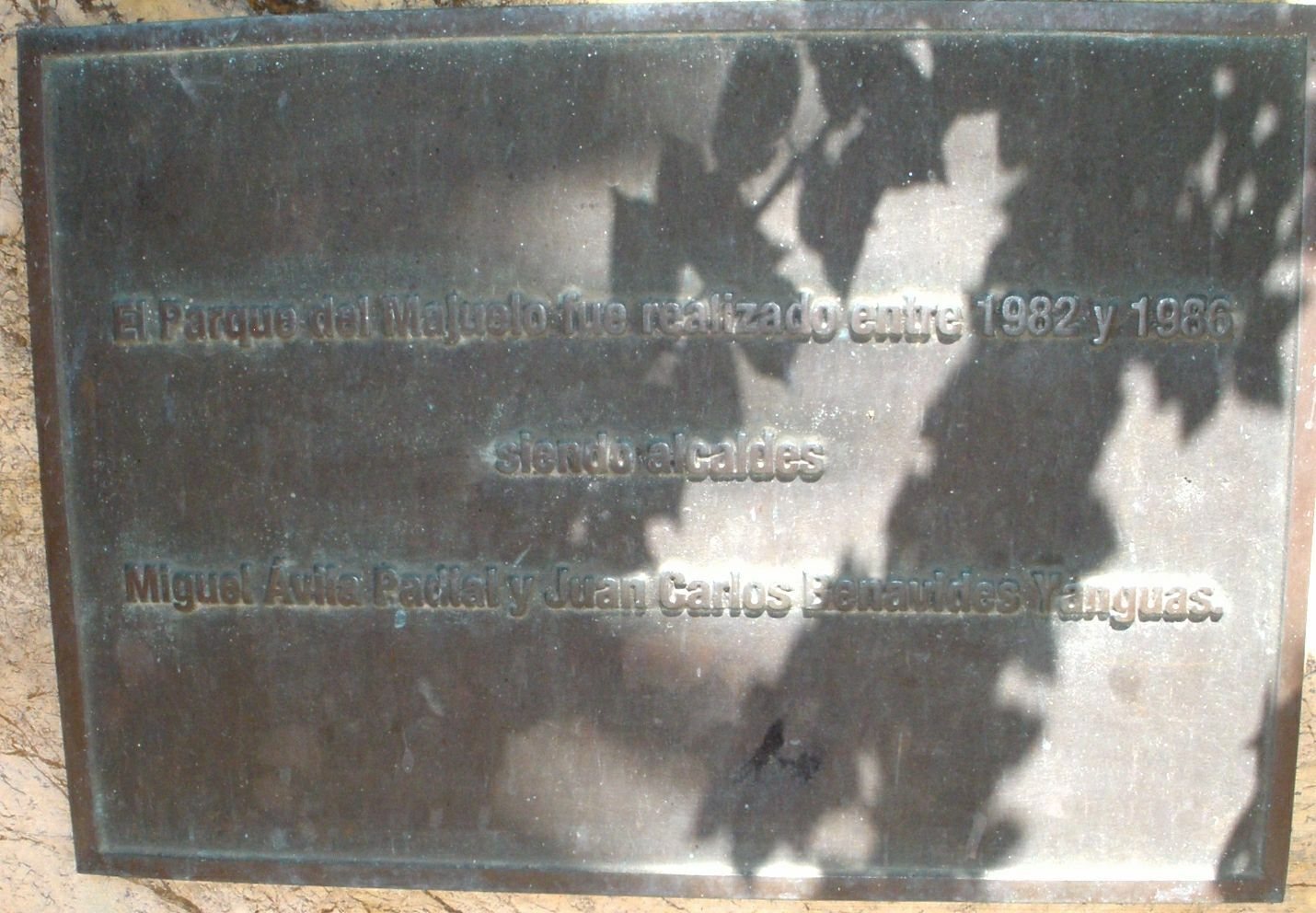
Almuñécar enjoys some of Spain's mildest winters, and the town took advantage of this when, in 1982–1986, it established the park on an old fruit orchard beneath the castle. This is recorded on a small bronze plaque by the entrance, alongside the names of the two mayors, Miguel Ávila Padial and Juan Carlos Benavides Yanguas. The name Majuelo means a young vineyard.
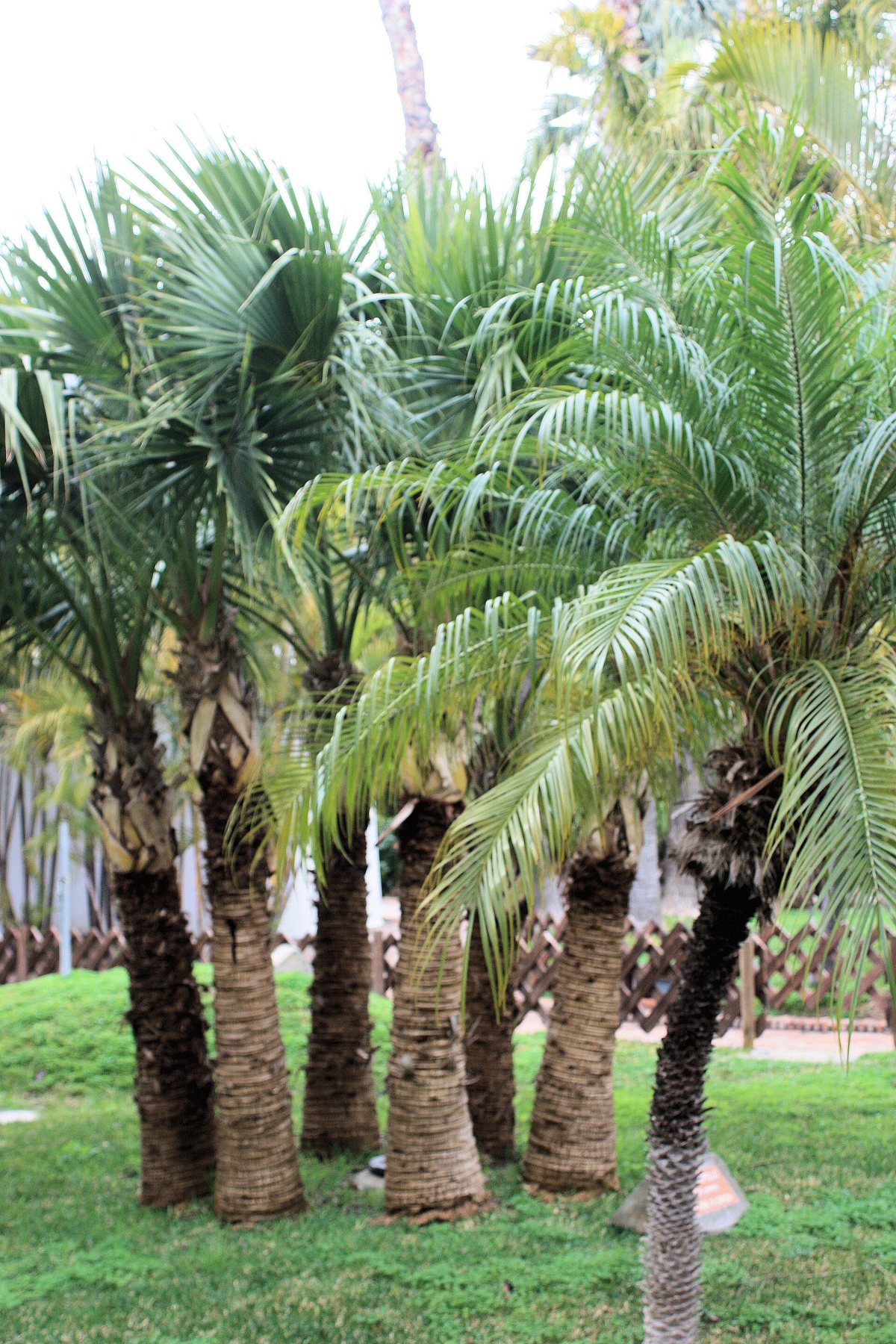
The idea was to plant species that thrive in the coast's subtropical climate, whilst showcasing plants from all of the world's tropical regions. Today, 182 species grow here from Central and South America, Africa, Madagascar, Arabia, India, China, Japan, the Philippines, Malaysia, Indonesia, New Guinea, Australia, New Zealand and the Pacific Islands. Palms are especially numerous, and the paths wind through dense, shady greenery that makes you forget you are right in the middle of a town.
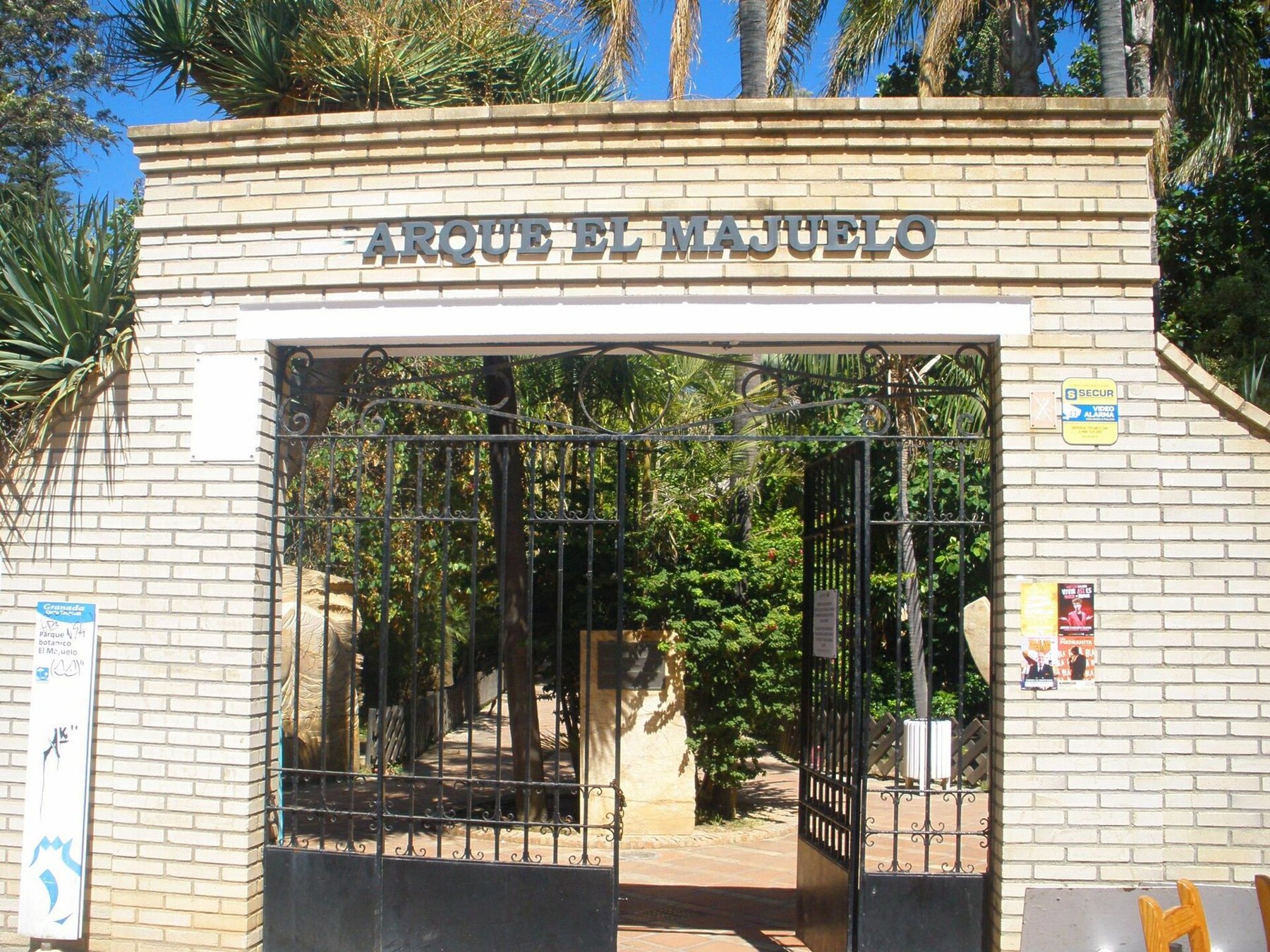
Curious trees and plants to look out for
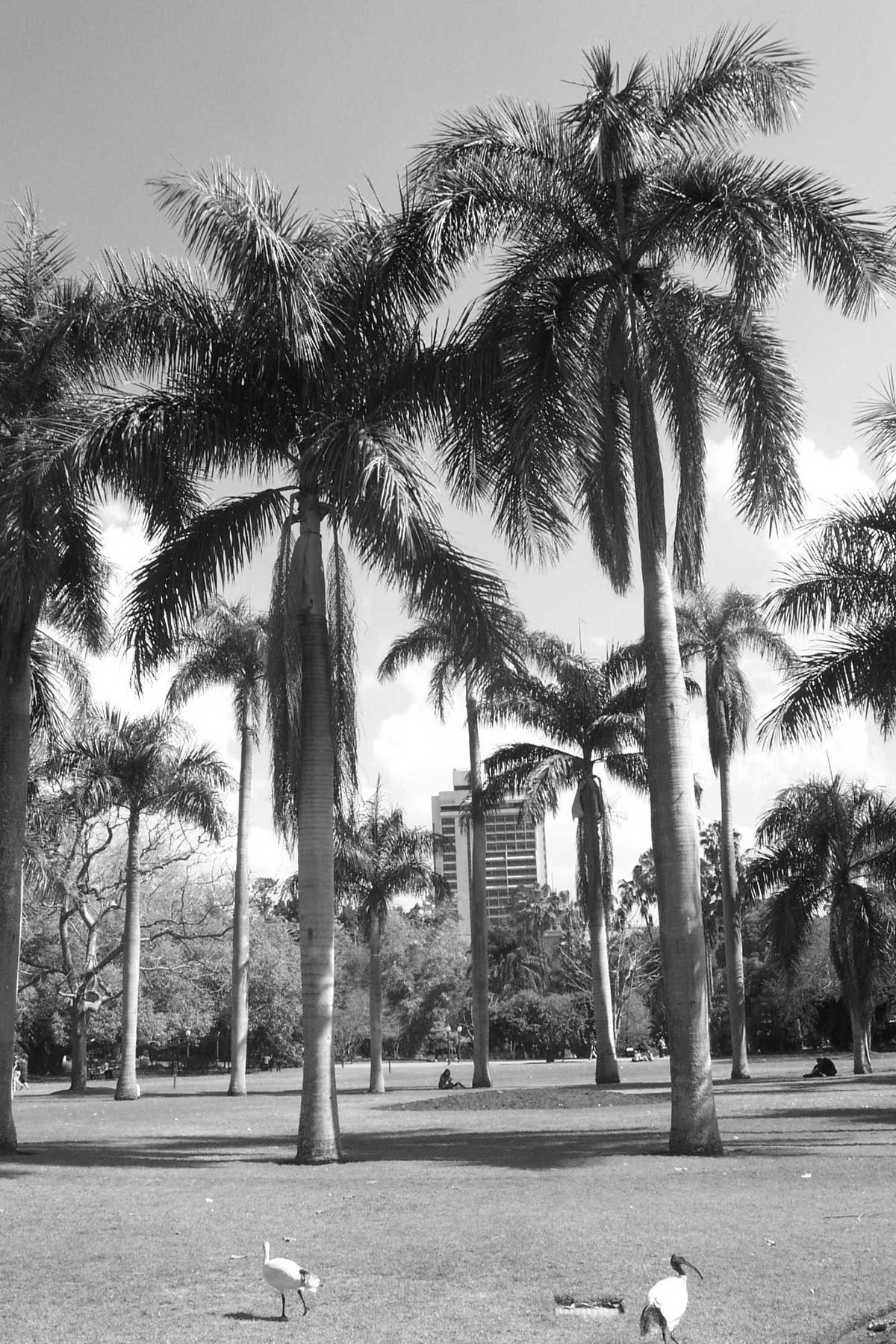
- Cuban royal palm (Roystonea regia) – the tall, smooth palm with the green "neck" standing by the entrance. It is the national tree of Cuba.
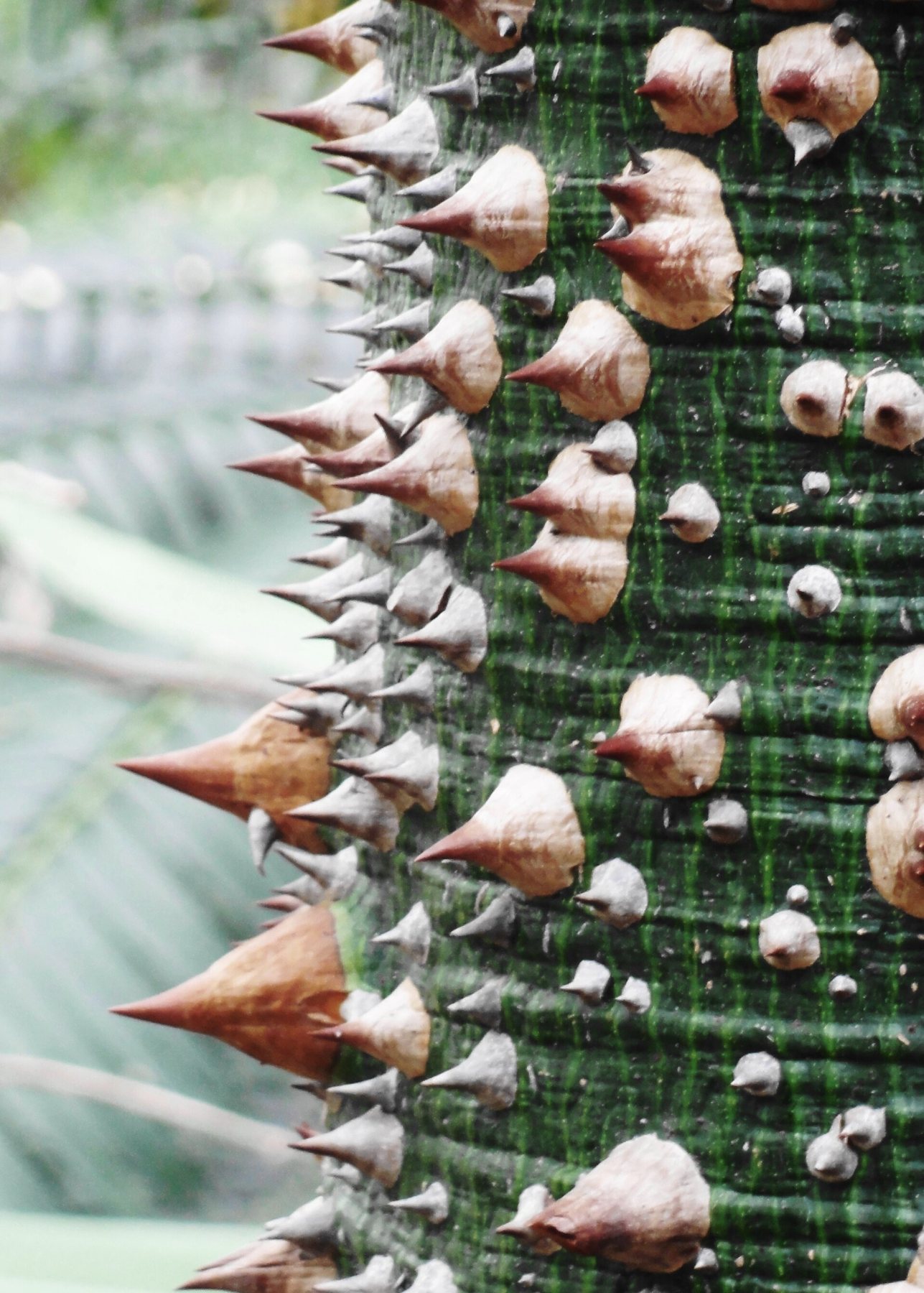
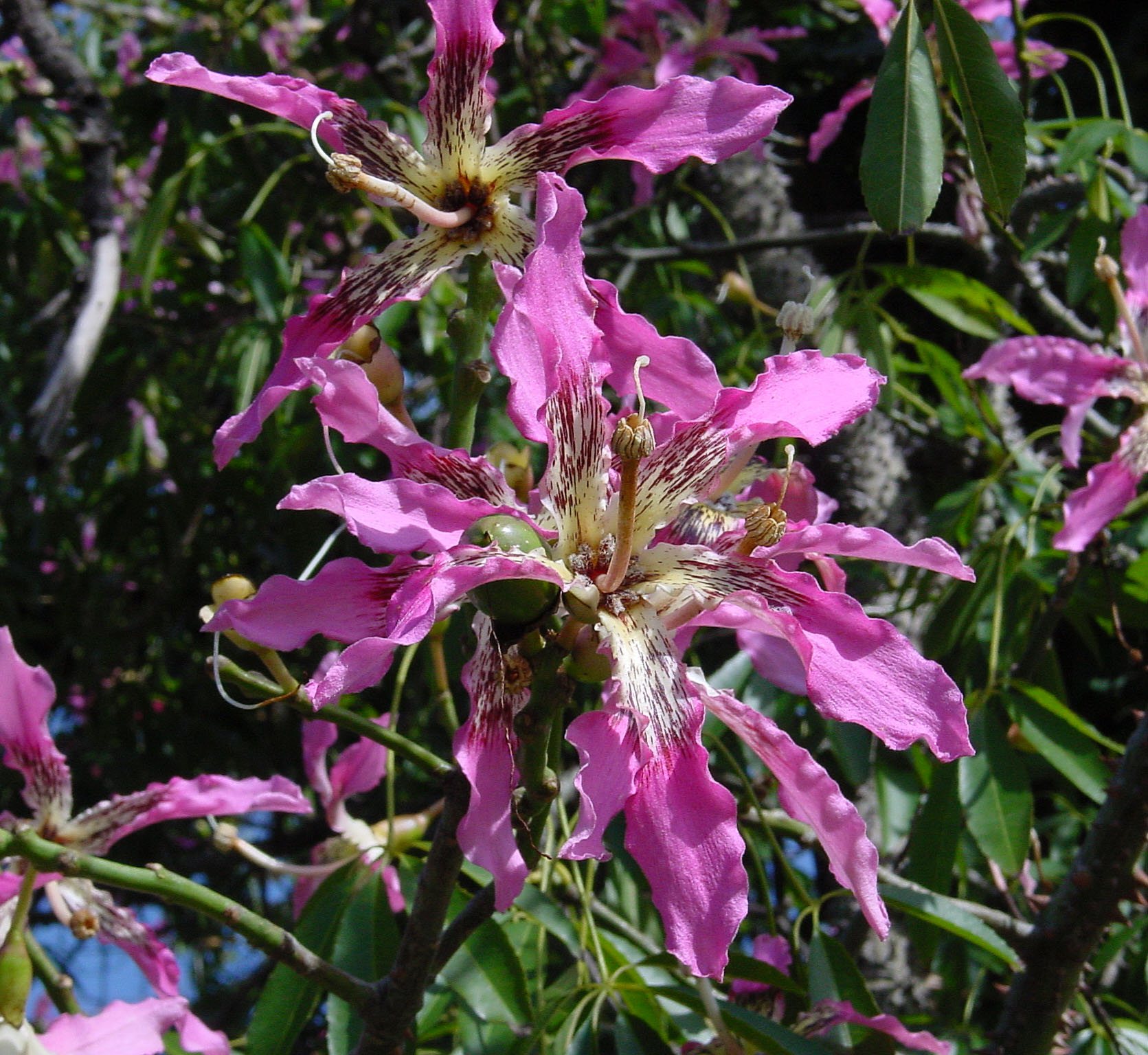
- Palo borracho, "the drunken tree" (Ceiba speciosa) – from South America. The trunk is bulging like a bottle and covered with thick, sharp thorns. In late summer and autumn it produces large, pink flowers.
- Australian umbrella tree (Schefflera actinophylla) – the leaves spread like umbrellas, and the long, red flower spikes radiate like tentacles.
- Pygmy date palm (Phoenix roebelenii) – a small, graceful palm from Southeast Asia.
- Everglades palm (Paurotis wrightii) – grows in dense clumps with many slender trunks.
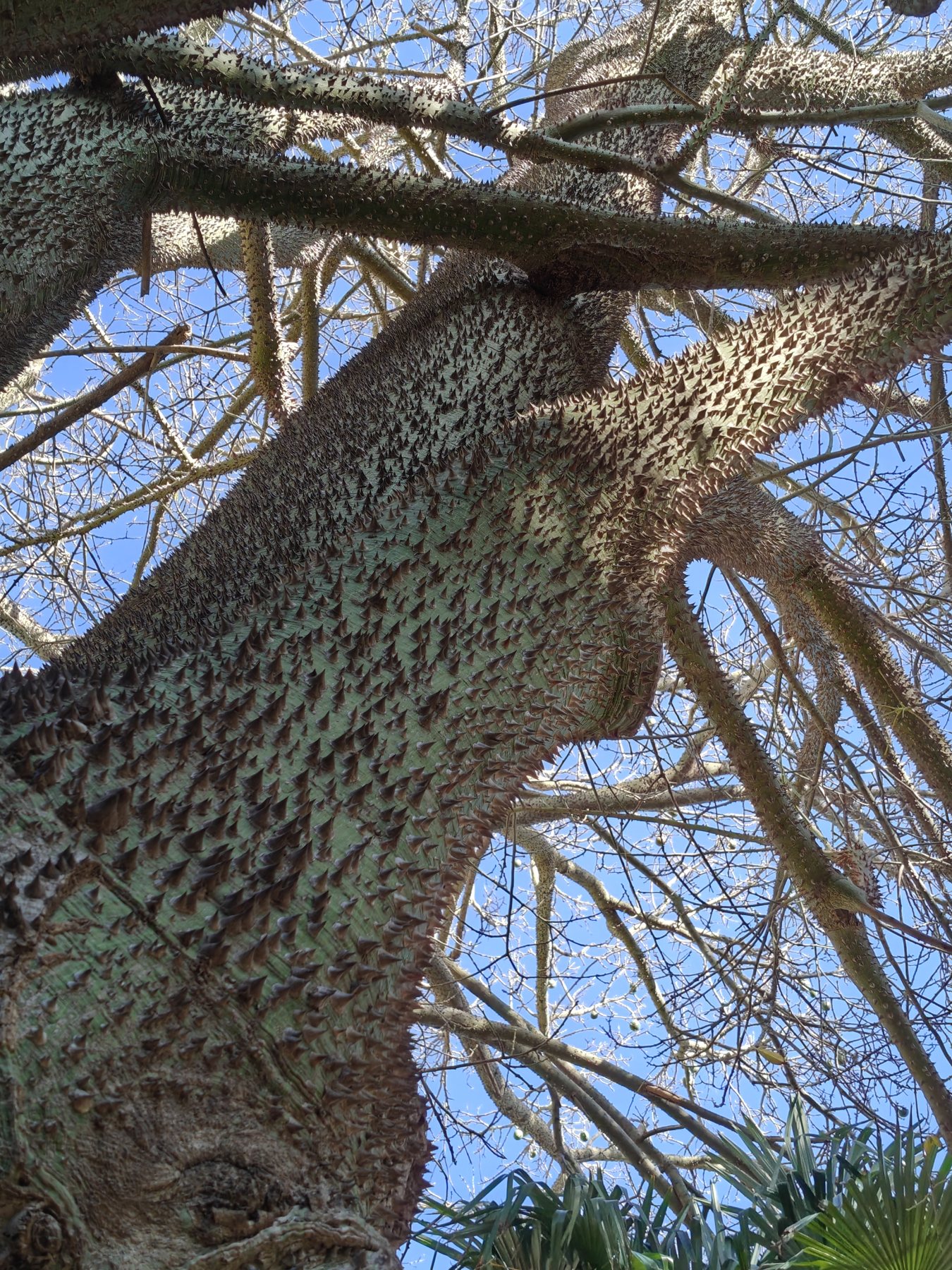
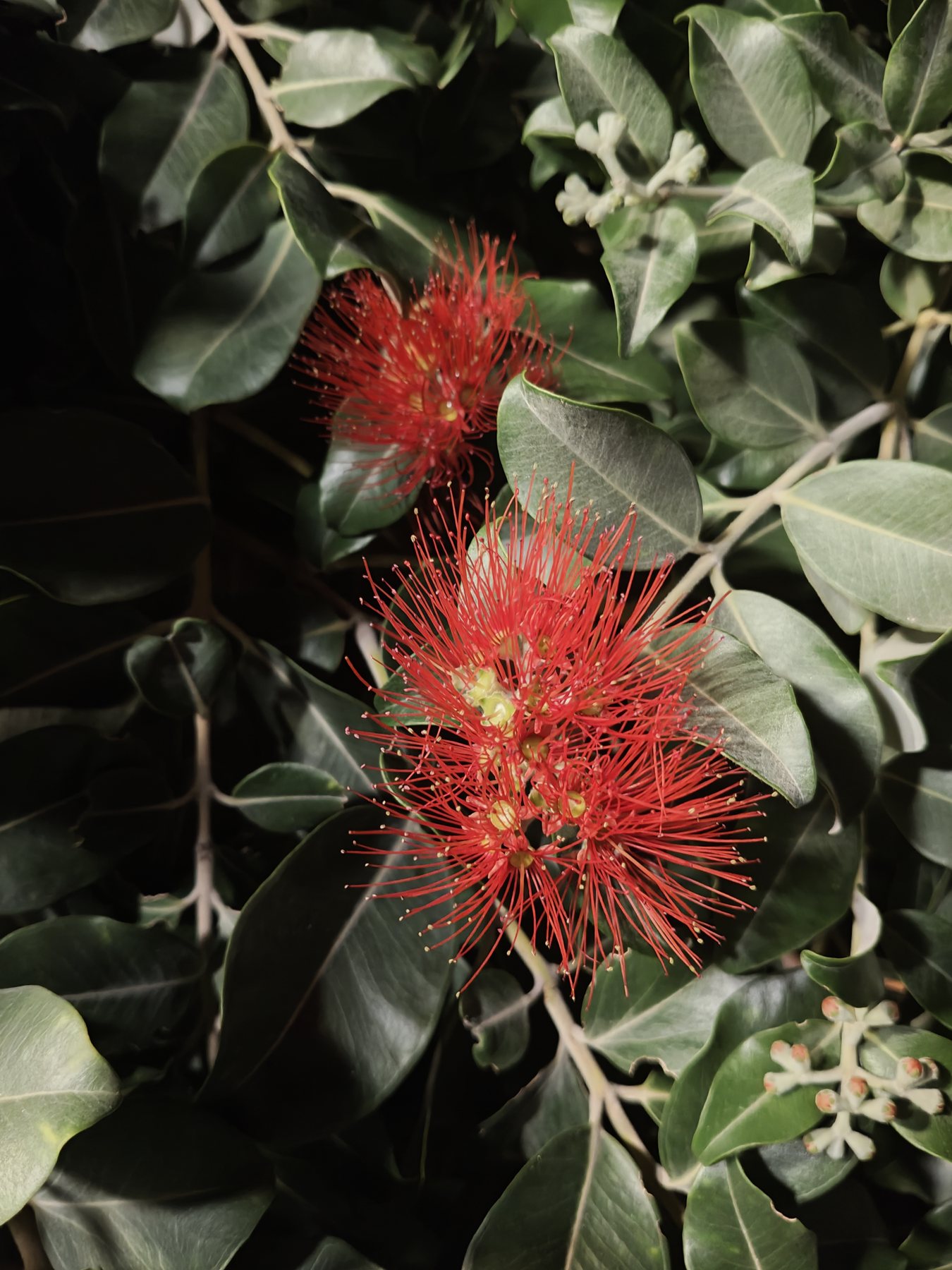
Photos: Playa Tropical, January 2026.
The sculptures – a gift from Syria
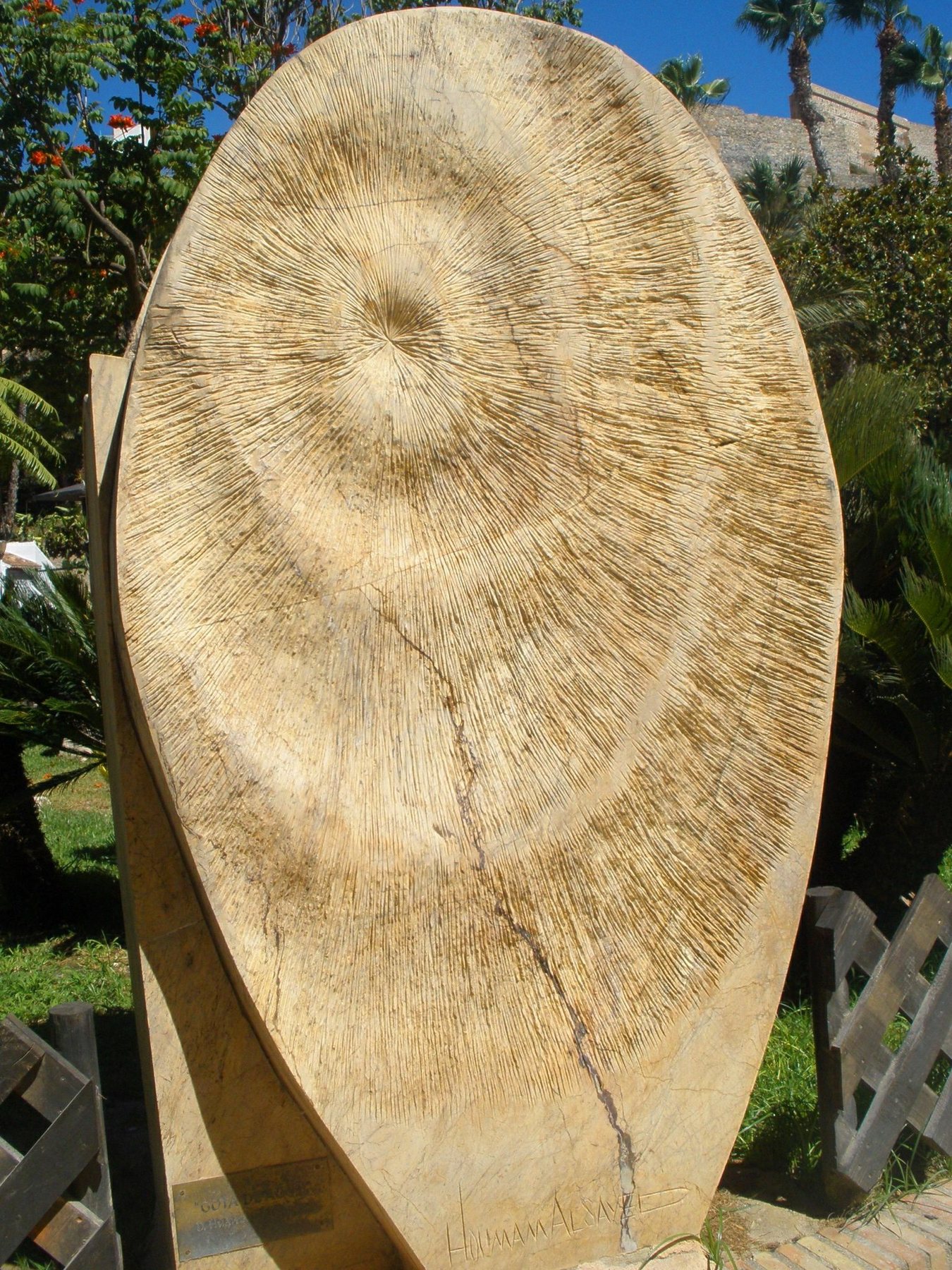
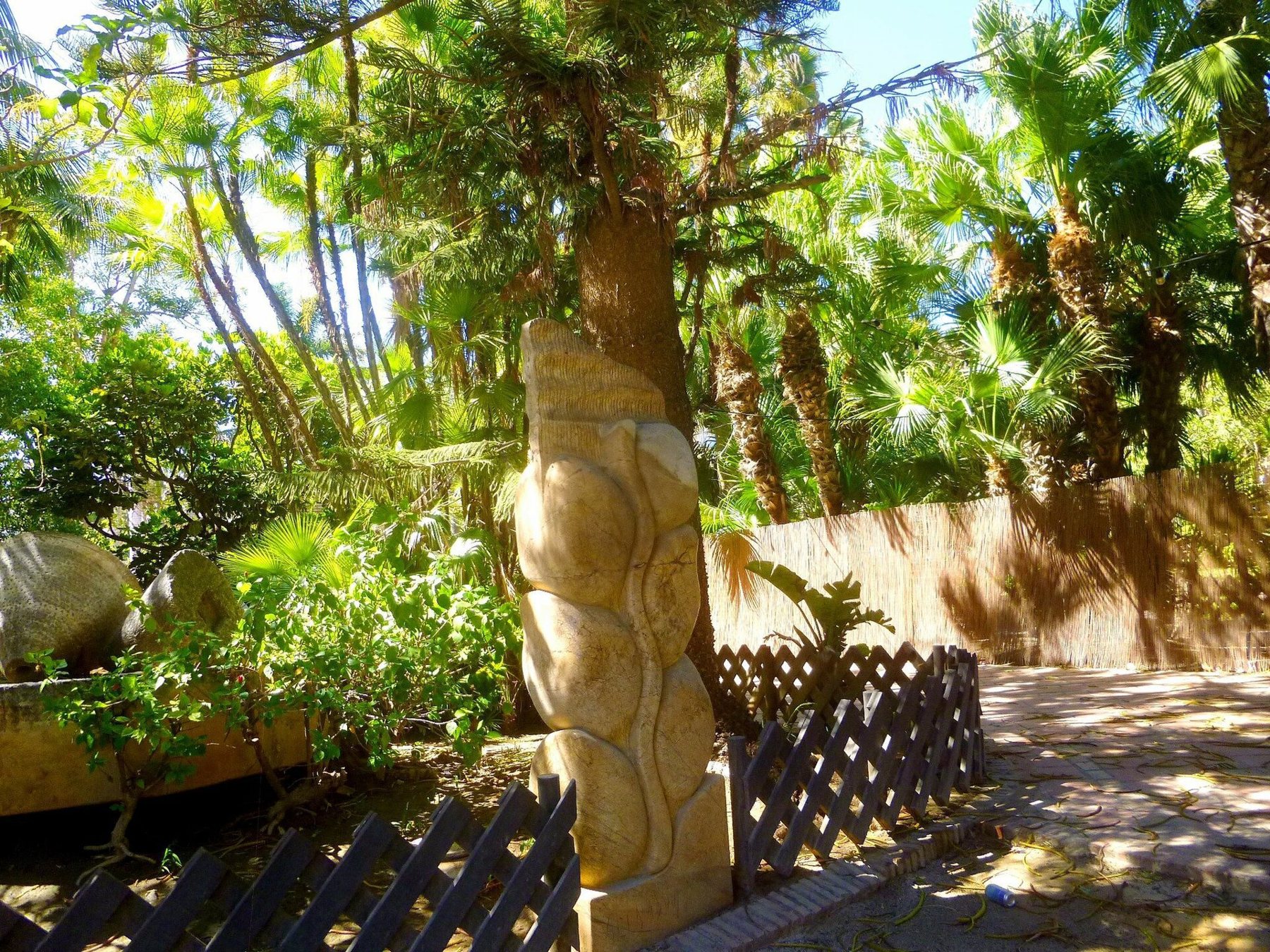
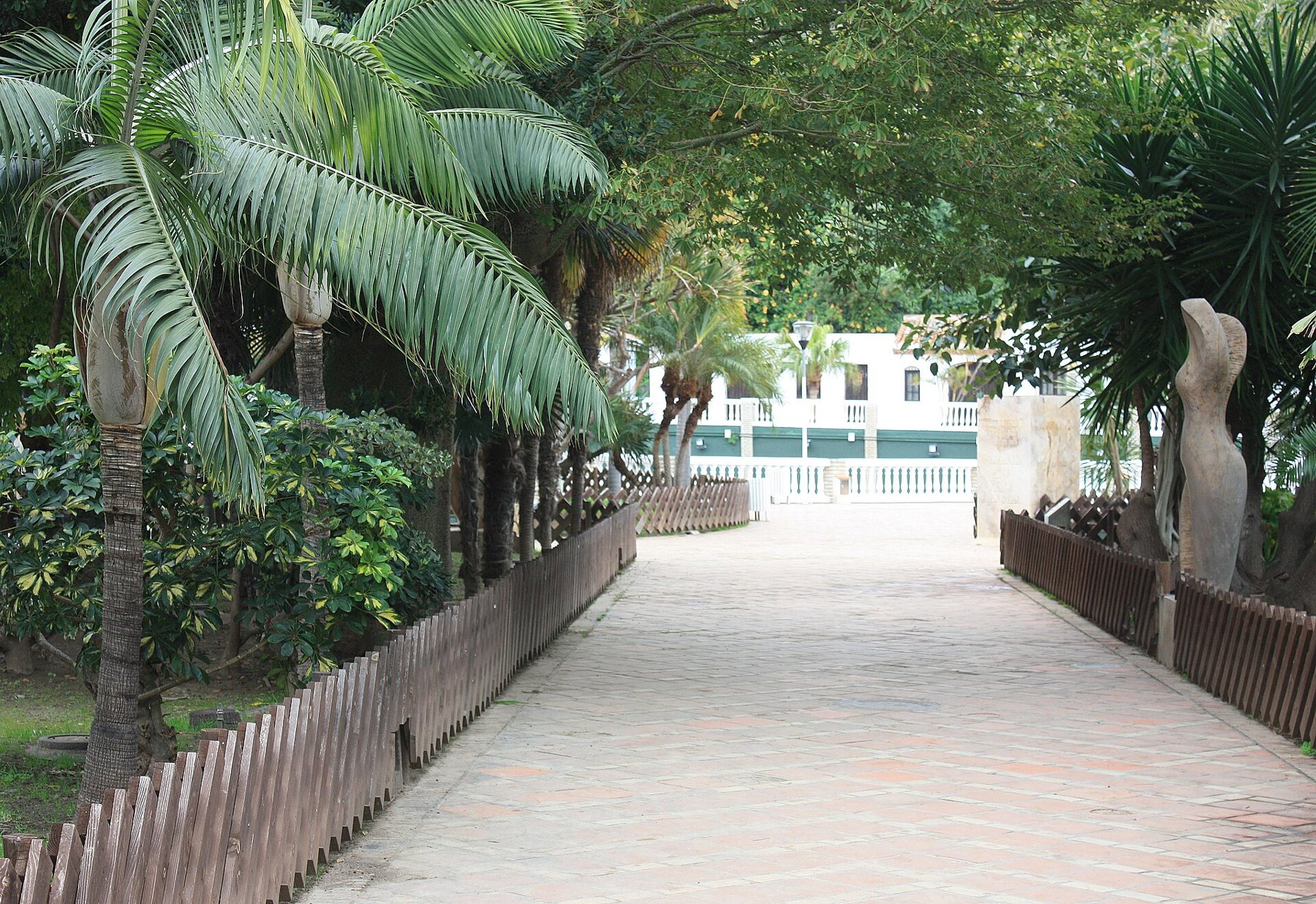
Entering through one of the gates, you immediately encounter the first stone sculptures. There are over 30 throughout the park. The first ten arrived in October 2006, when a group of young Syrian sculptors – including Anwar Rashid, Mohamed Bajano, Ali Suliman, Samah Adwan and Tarek Al Sawah – carved and presented them to the town during an art symposium. The project was led by Aktham Abdul Hamid, director of the Damascus art academy, and Syria's minister of culture attended in person to unveil them.
The sculptures form part of the Spanish-Arab cultural exchanges that Almuñécar has hosted since 1984 – the town was, after all, Moorish for more than 700 years. According to the artists, several of the works reflect the ancient bonds between Syria and Spain. More have been added since, mostly in white marble. Many are abstract stone forms – explore at your own pace and pick your favourites.
The Roman fish sauce factory
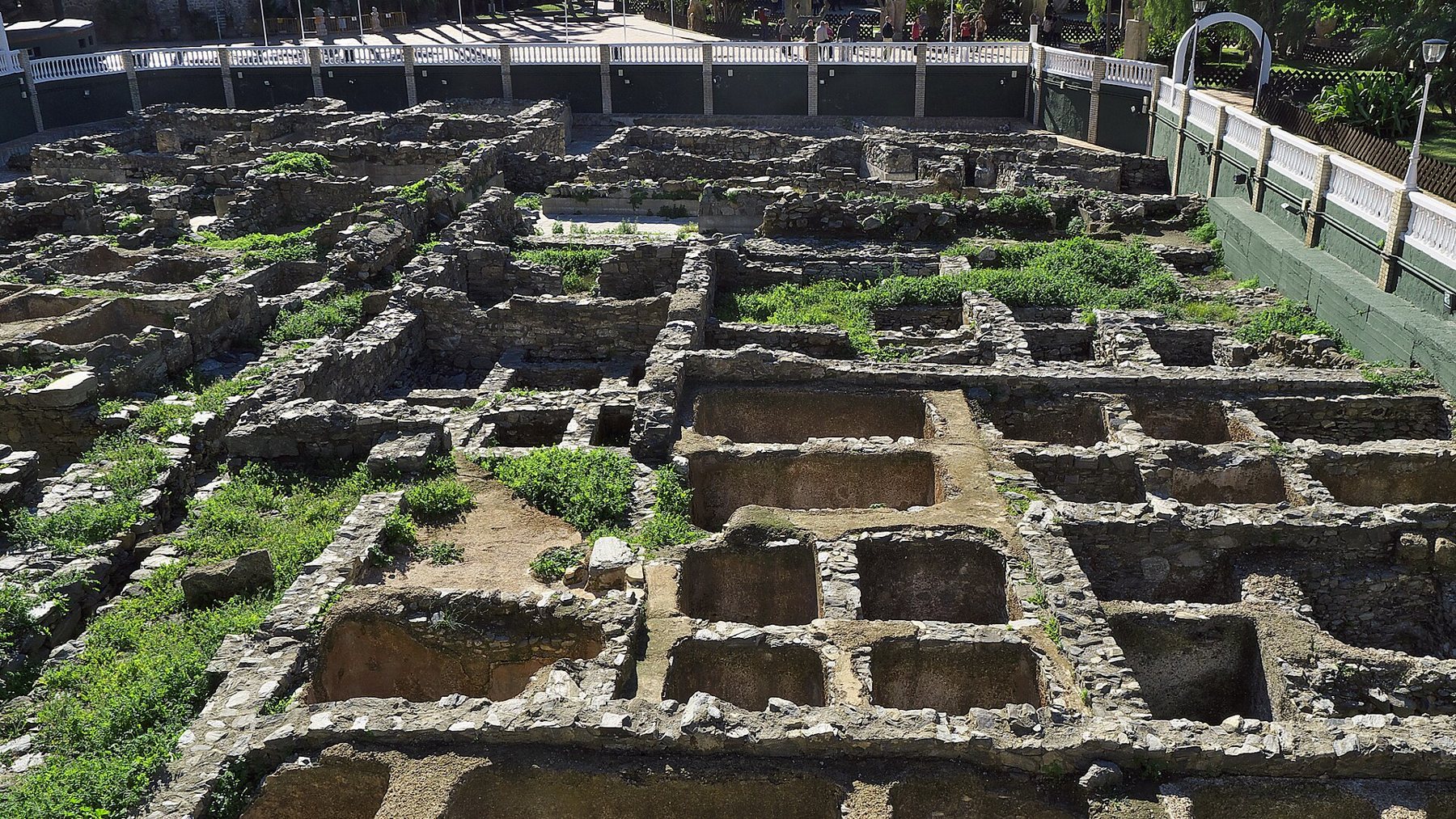
In the middle of the park lies the very site that brought Almuñécar fame in antiquity: a salting factory, where fish was salted as early as the 4th century BC, and which the Romans later expanded on a grand scale. In square vats, fish and offal were layered with salt and left for three weeks to three months. The result was salted fish and the celebrated fish sauce garum, which the Romans used in almost every dish. Greek and Roman writers including Pliny the Elder, Strabo and Martial praised the seafood delicacies from this coast.
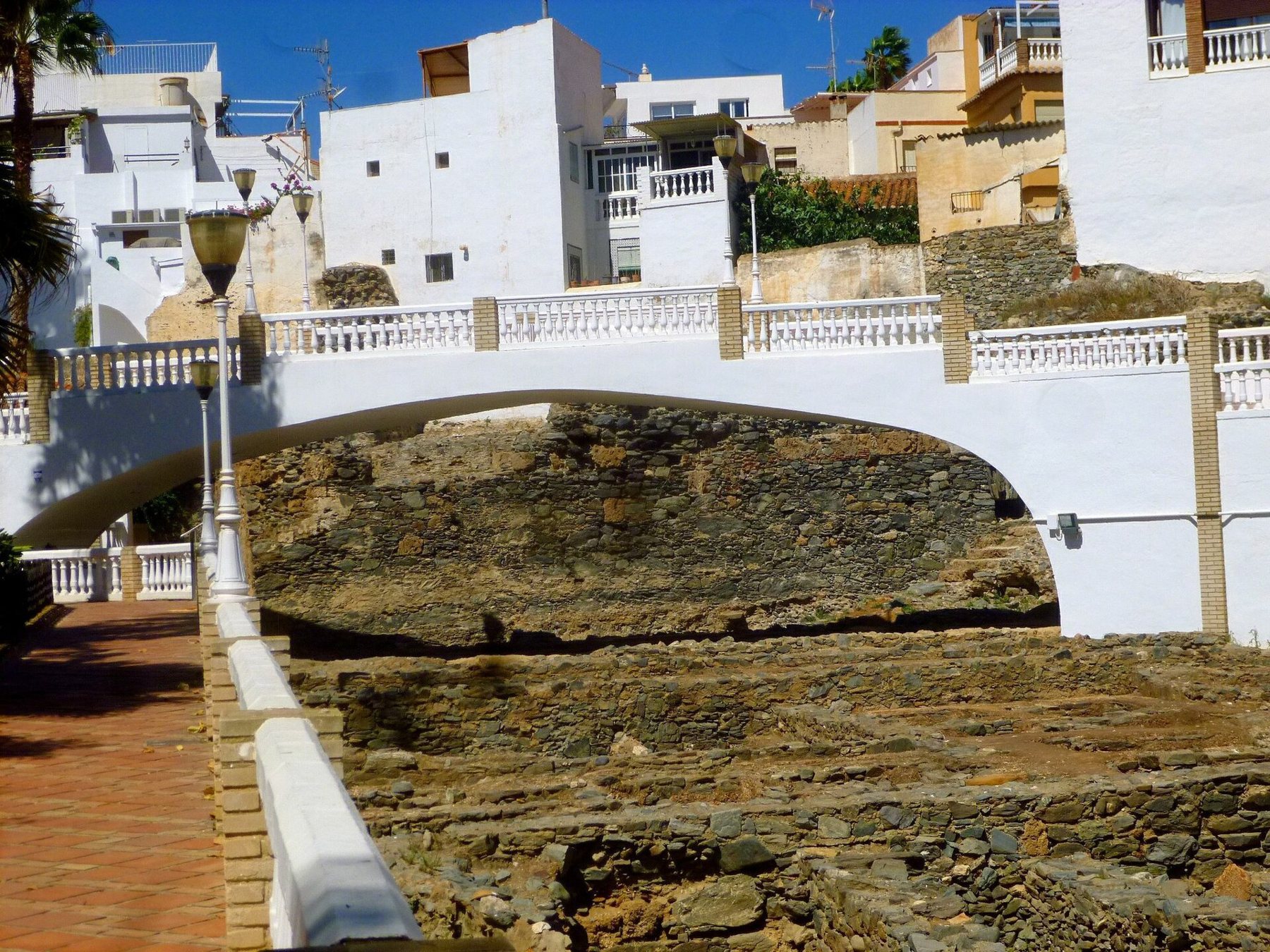
The factory was excavated in the 1970s by archaeologist Manuel Sotomayor, and today footpaths and a small footbridge lead you over the vats. The entire complex belongs to Almuñécar's historic quarter, protected as a heritage site in 2014. Read more in Castillo de San Miguel, the museums and the Roman aqueduct.
The eight little houses and the open-air stage
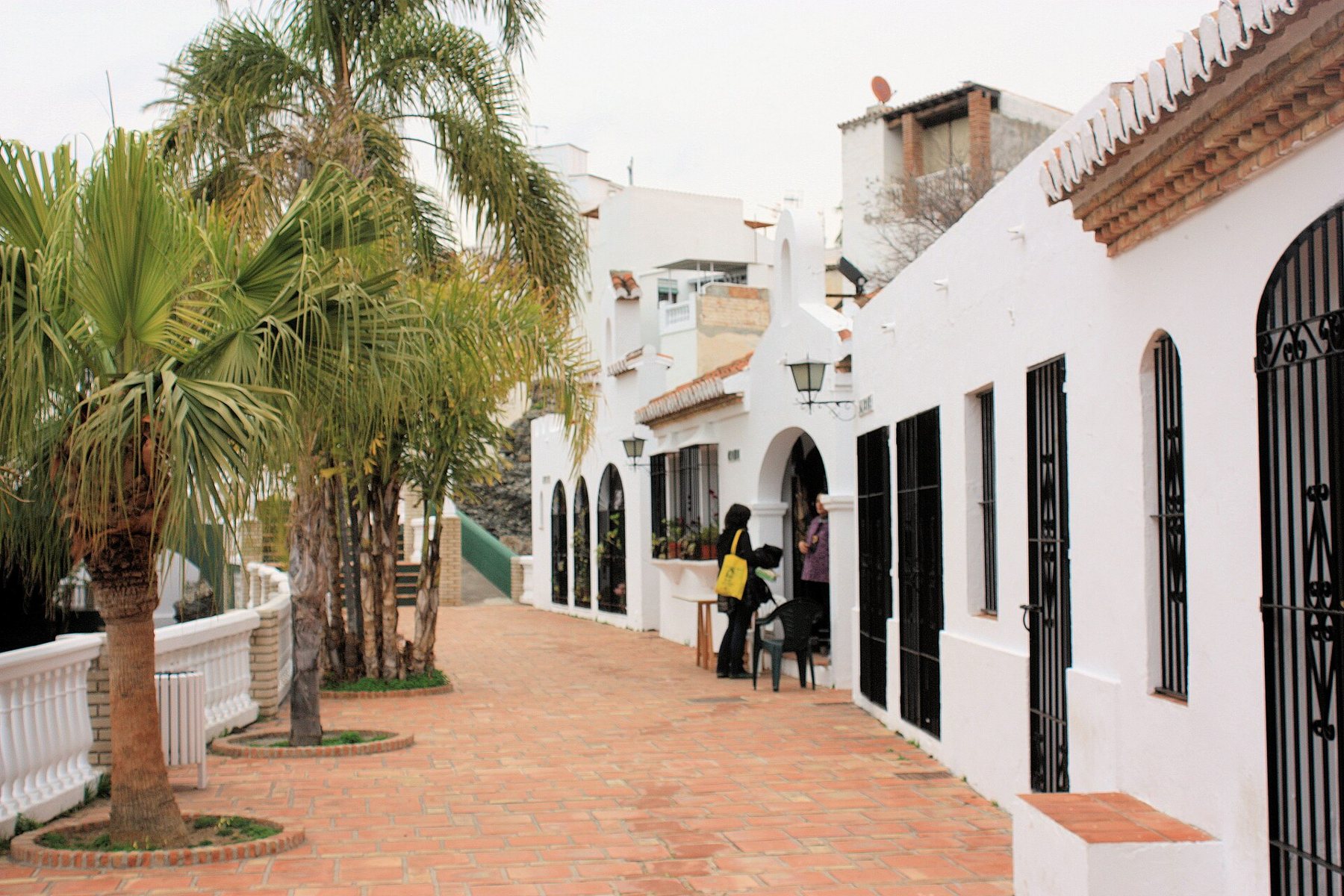
Alongside the excavations stands a row of charming whitewashed houses. Built in different Andalusian architectural styles, each is named after one of the eight provinces of Andalusia. Today they house artisans and local clubs. You will also find a few craft shops, a children's playground and a couple of bars.
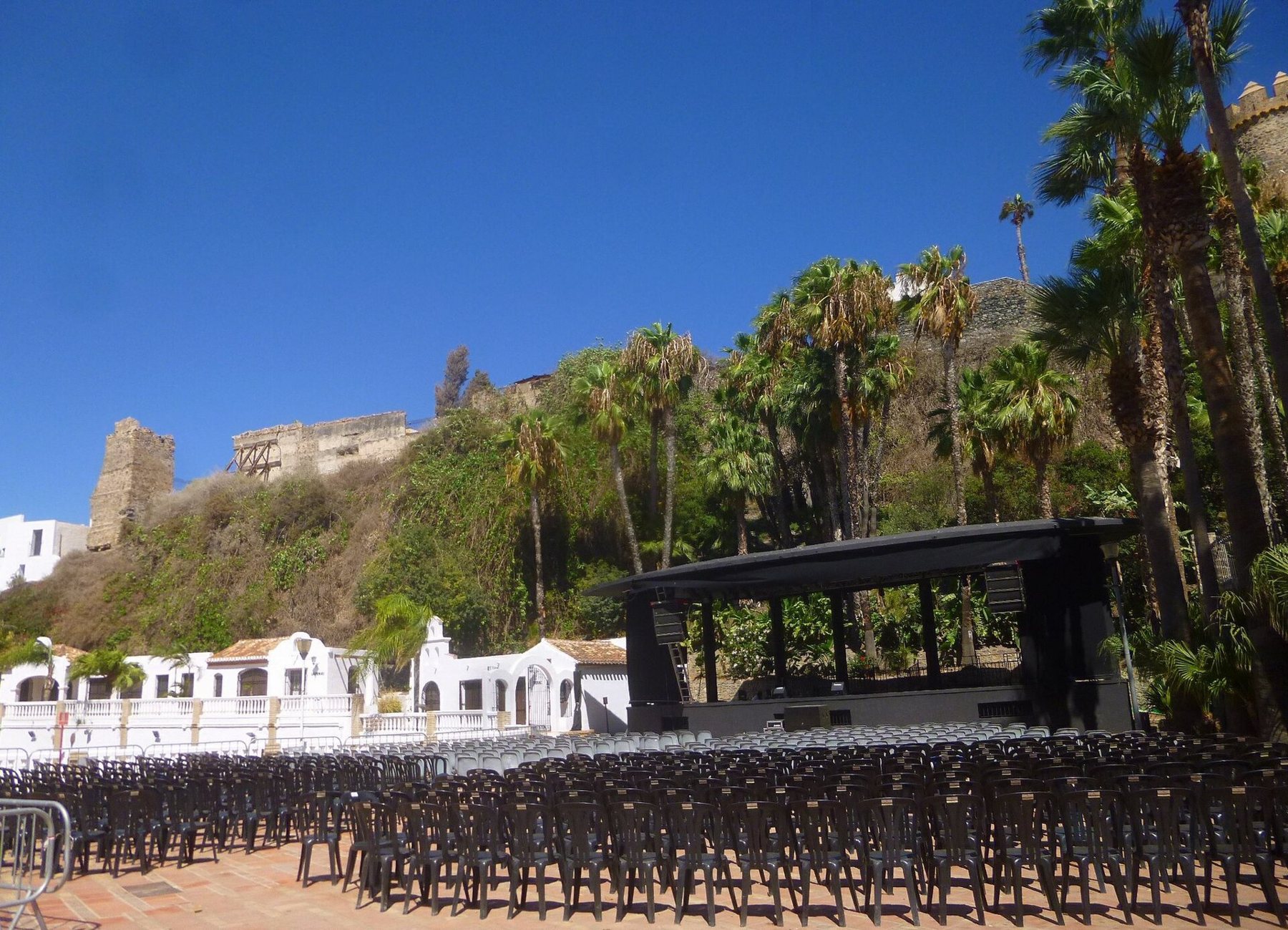
The park's open-air stage was designed by Timoteo Urrengoechea Gomeza, pianist, composer and founder of the town brass band. He also penned the pasodoble "Almuñécar" and the historic anthem of Athletic Bilbao football club. In summer, it hosts concerts, comedy and theatrical performances – as well as the renowned jazz festival Jazz en la Costa. In June the town hosts a food festival in the park, and for Cruces de Mayo in May floral crosses are displayed. See the festivals page.
Maps and routes
Red star = Playa Tropical. Click on a point for the name and distance. Map data © OpenStreetMap.
Open the route in Google Maps
- Walk to El MajueloAlong the promenade westwards and up by the castle. Approx. 2.5 km, 35 min.
- From the garden to the crossContinue from El Majuelo down to Peñón del Santo – just a few minutes' walk.
The routes start at Playa Tropical. On mobile devices, they open directly in the Google Maps app, ready for navigation.
Good advice
- Visit in the morning or late afternoon during summer – that's when it is coolest and the shade is best.
- It is easy to stroll around. The paths are practically flat. Only the area around the little houses is tricky with a wheelchair or pushchair.
- Bring the children along. There is a playground, and the salting vats and sculptures are fun to explore.
- Check the schedule. In summer, sections of the park may be closed off while the stage is set up for performances.
- Combine your visit. The fortress Castillo de San Miguel sits just above, and the cross on Peñón del Santo is just a few minutes' walk away.
Sources
- Wikipedia (es): Parque botánico-arqueológico El Majuelo
- Almuñécar Hoy: Parque El Majuelo (Syrian sculptures, the eight houses, the stage)
- Rincones de Granada: Parque El Majuelo (the sculptors, garum, Urrengoechea, Jazz en la Costa)
- Jardines sin fronteras 2019: Parque Botánico El Majuelo (plant species)
- Plaque at the entrance: "El Parque del Majuelo fue realizado entre 1982 y 1986"
- Coordinates: OpenStreetMap contributors (ODbL)