The boat on the grass
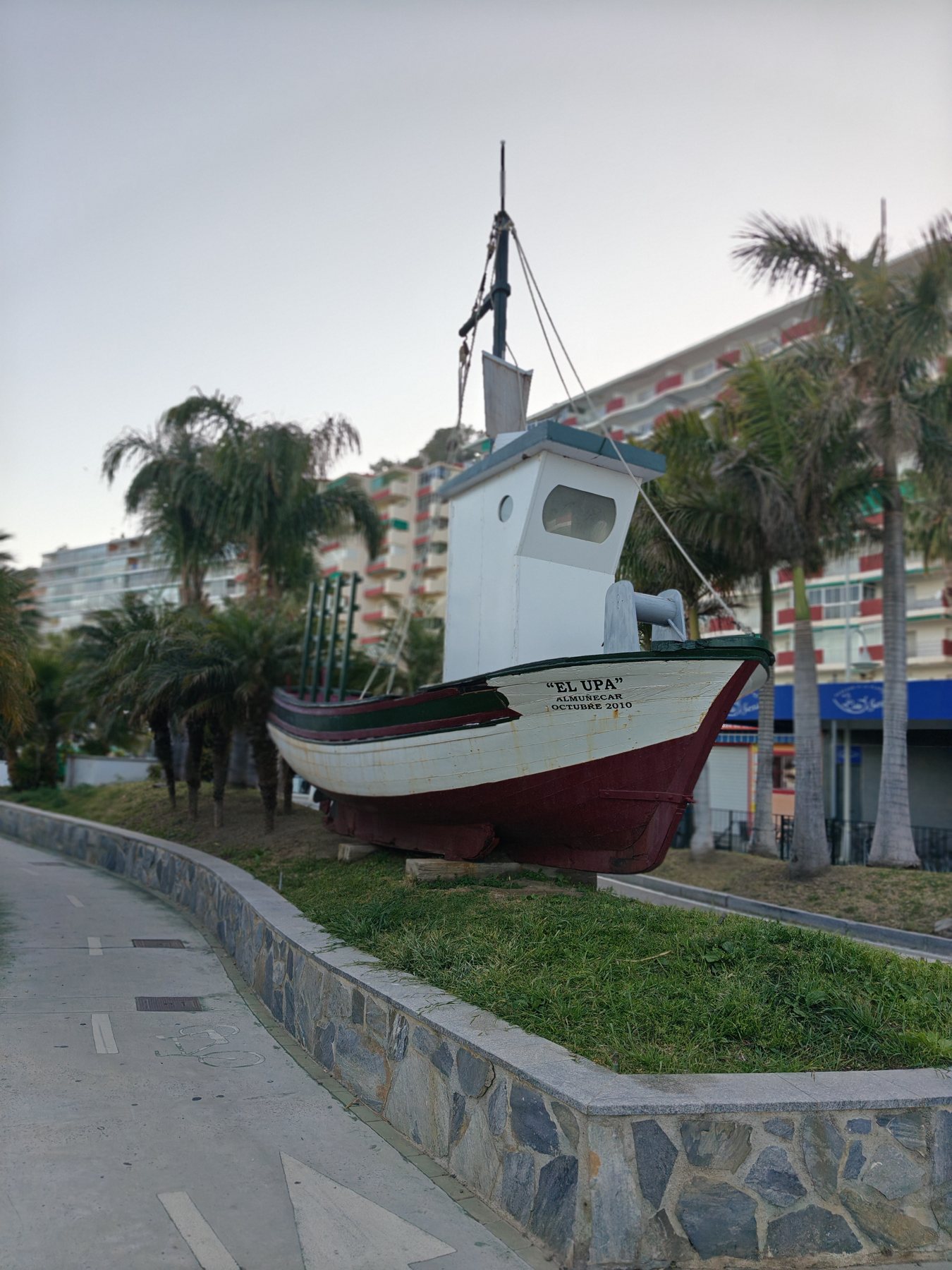
El Upa is neither a replica nor a sculpture. She is a genuine wooden fishing boat, of the kind that worked close inshore. The hull is painted white with a burgundy bottom and a green and red stripe beneath the gunwale. Amidships stands a white wheelhouse with a round porthole and a large window, above which rises the mast with boom, rigging and blocks. Mounted on the foredeck is the winch once used to haul in nets and lines, while aft stands a row of green racks.
The boat rests on wooden blocks in a small landscaped patch of lawn and palms, right by the promenade cycle path.
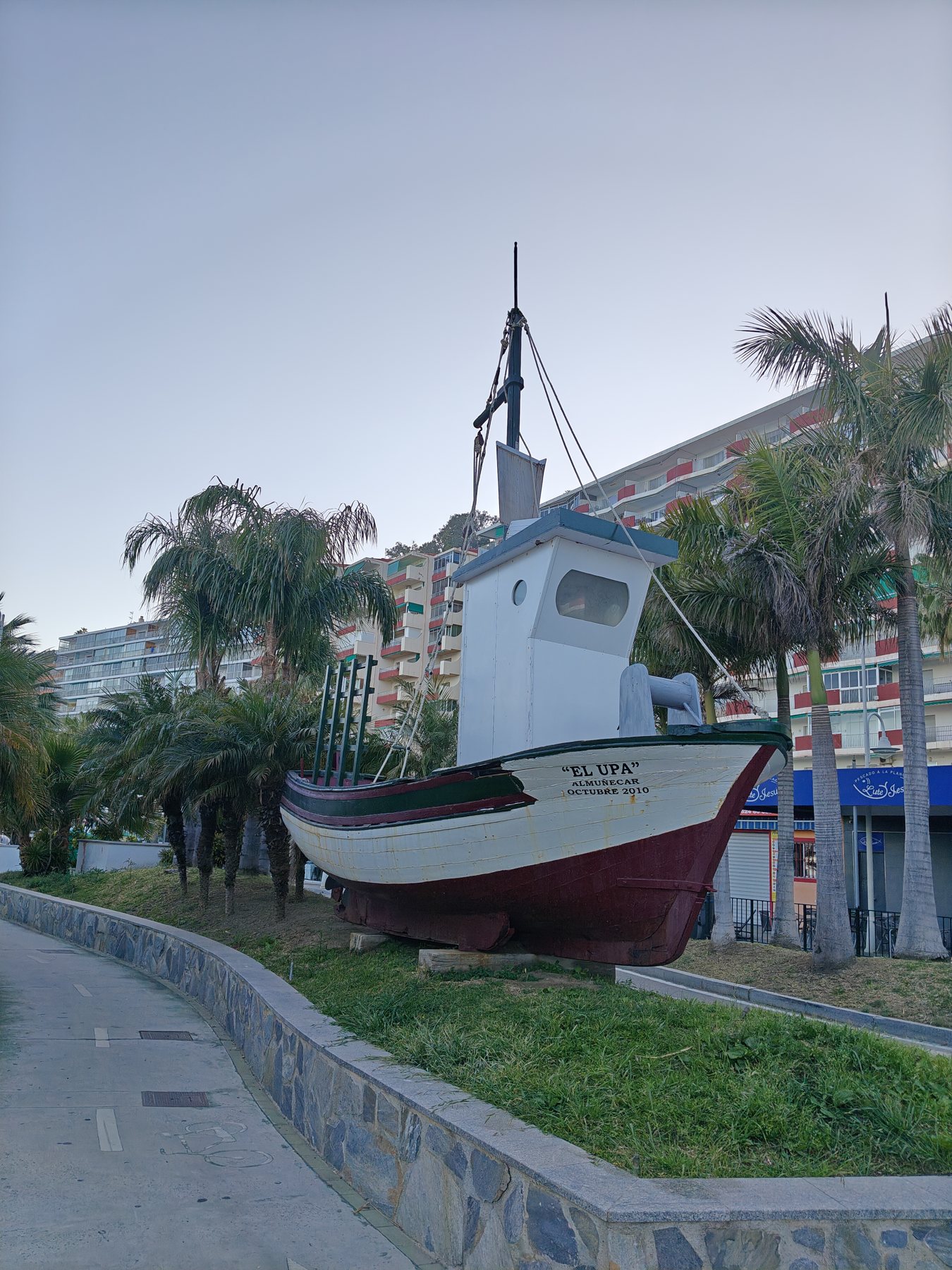
Photos: Playa Tropical, April 2026.
Why is she called El Upa?
We do not know for sure. The name is painted on the vessel alongside the town name and the date, but we have found no record of who owned her or why she bears this name. "¡Upa!" is a Spanish exclamation used when lifting someone or something up – rather like "heave-ho!" or "up you go!" – and many Spanish fishing boats bore family nicknames or sobriquets. As to whether that is the true explanation, only one of the old fishermen in Los Marinos could say for certain.
Almuñécar and the sea – 3,000 years of fishing
Fishing here is as old as the town itself. The Phoenicians, who founded Sexi nearly 3,000 years ago, cured fish and made fish sauce, and in Roman times Sexi's salted fish and garum were shipped right across the Mediterranean. The remains of the extensive salting vats can still be viewed in Parque El Majuelo beneath the castle. Read more in Phoenician Sexi, Roman fish sauce and the Moorish castle.
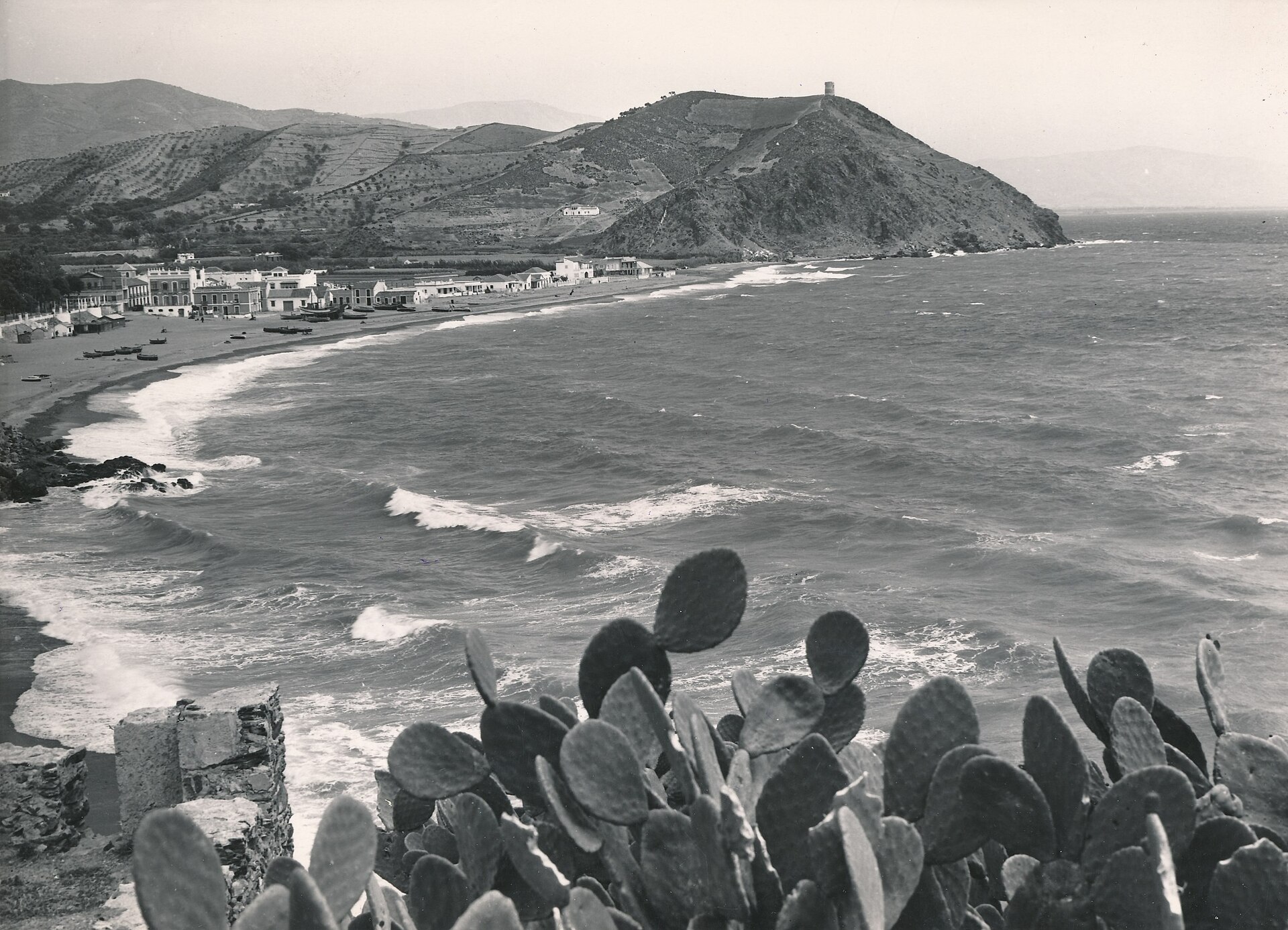
For centuries, fishing was done straight off the shore. Almuñécar has no proper fishing harbour. The small boats were dragged up onto the beach each evening, and today the larger purse seiners dock in the port of Motril. The fishermen's quarter was Los Marinos by San Cristóbal beach, west of the castle. Here, Virgen del Carmen, the patron saint of fishermen, resides in her little chapel.

Jábega and copo – the net hauled in from the beach
The most famous fishing method on the coast between Málaga and Almuñécar was the jábega – on the Almuñécar coast often called copo. The word jábega derives from the Arabic šabbāk, meaning "net". A rowing boat would head out with a large bag-shaped net, paying it out in a wide semicircle. Two teams of men on the beach would then haul the net in using the long ropes at either end. It was hard, communal toil, while women waited on the shore, mending nets.
The boats themselves were also called jábegas: rowing boats 7–14 metres in length, carrying up to 15 oarsmen and a skipper. Many feature an eye painted on the bow – traditionally believed to be an unbroken heritage from the Phoenicians. Today, jábegas are rowed only in regattas and local festivities.
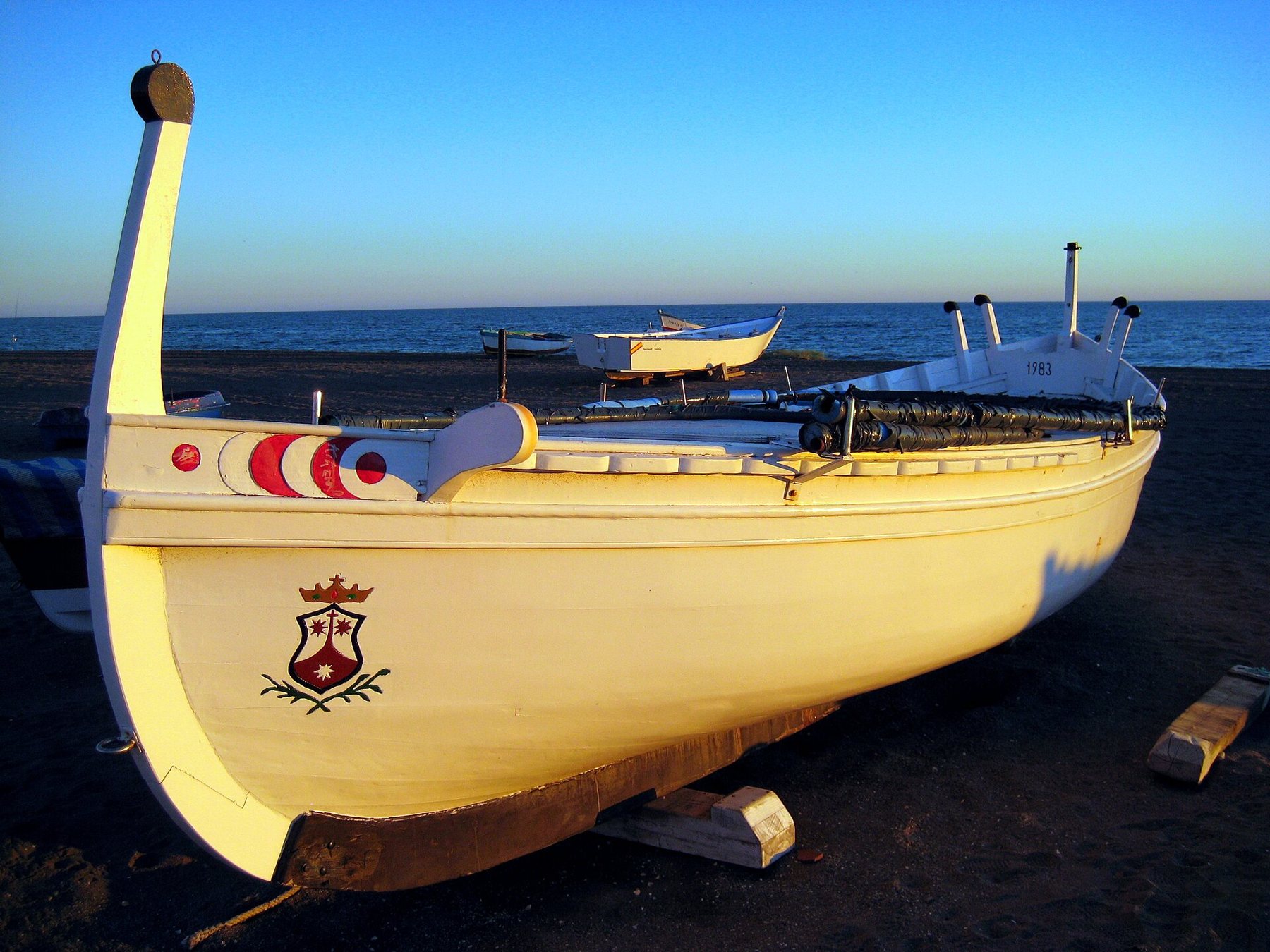
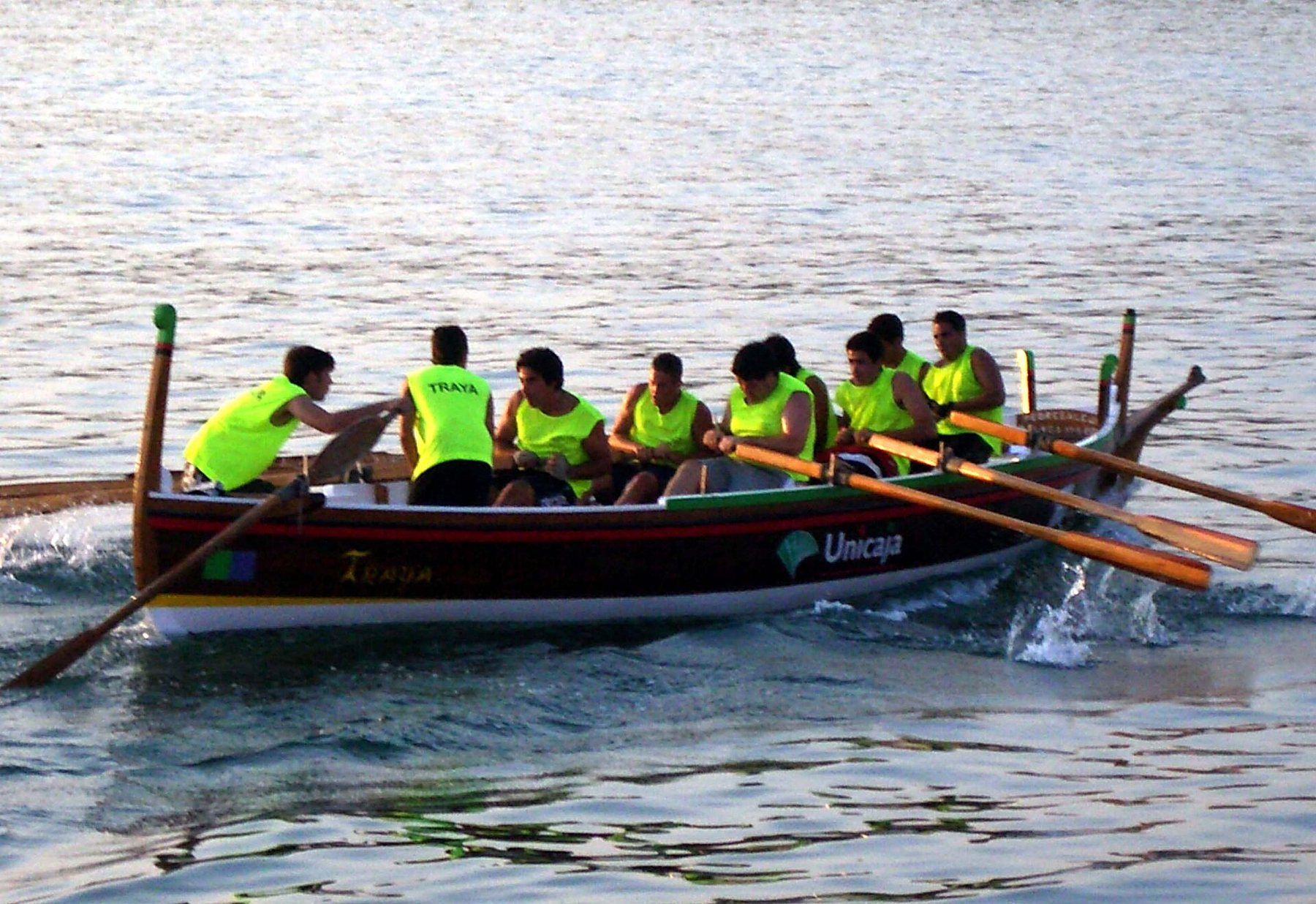
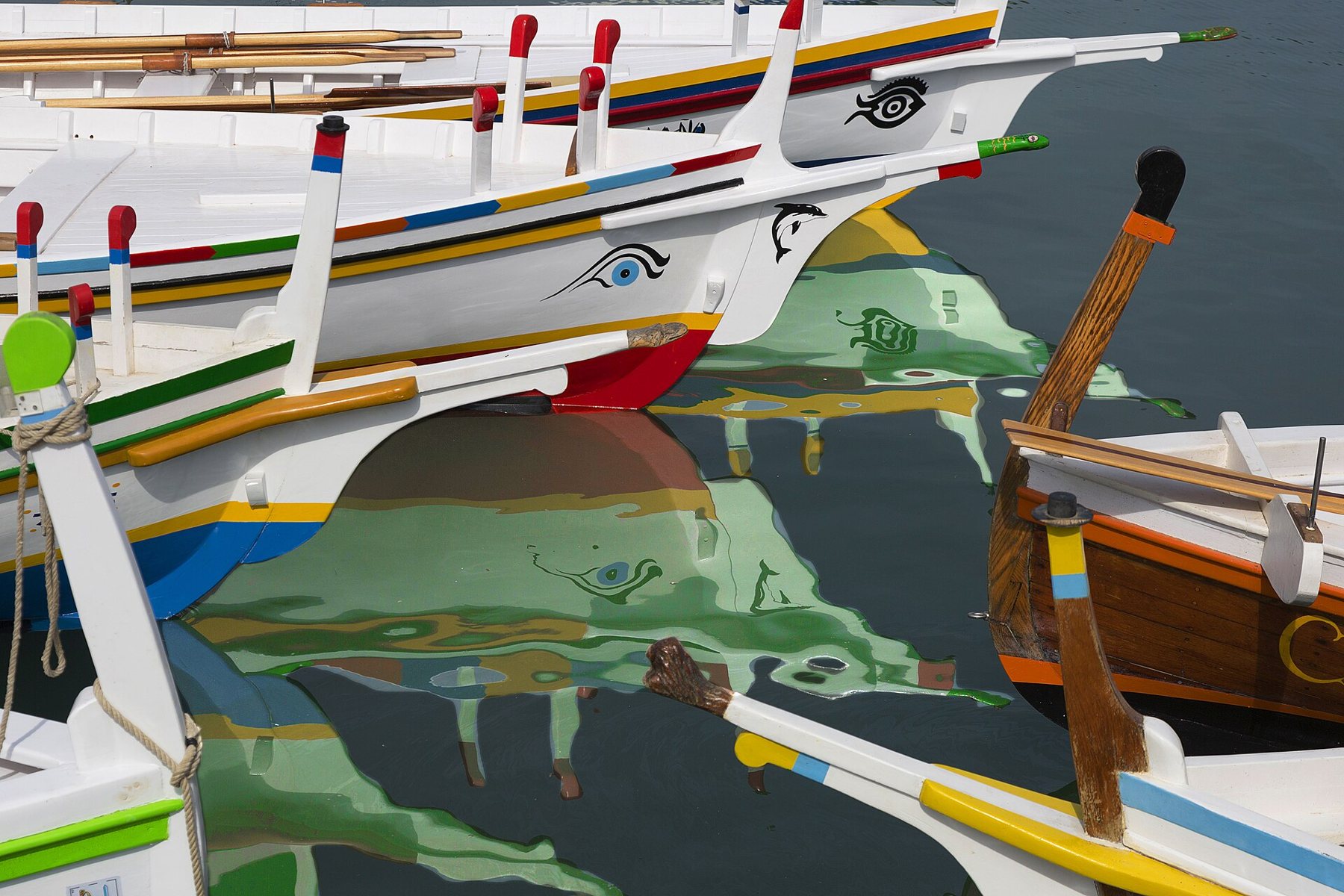
According to the town mayor, Juan José Ruiz Joya, "hundreds of families" in Almuñécar and La Herradura lived off the copo. It vanished from Andalusian beaches when new legislation banned beach-seine netting. Since 2025, the local associations Almuñécar Patrimonio Cultural and Asociación del Copo have staged a live tiro del copo on San Cristóbal beach every July, so the younger generation can see how their grandparents worked.
Traiñas – sardines, anchovies and horse mackerel
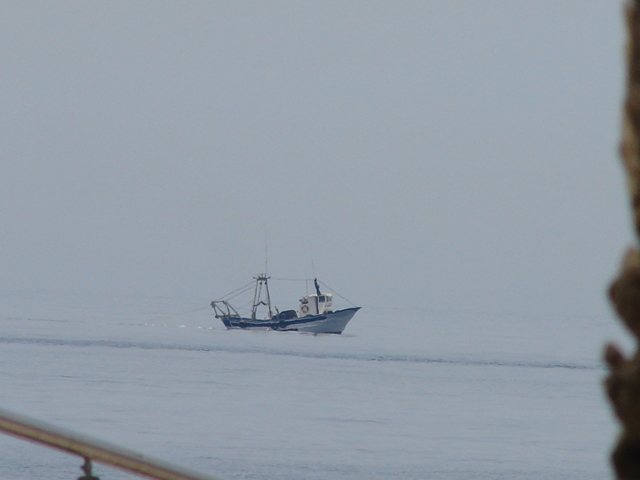
The larger boats fished using a traíña, a long encircling net cast around schools of sardines, anchovies (boquerones) and horse mackerel (jureles). The fishermen headed out every afternoon. Around twenty traiñas once operated out of Almuñécar. Today, almost all are gone, but one of them, the Yolanda, now rests on land beside San Cristóbal beach, at the foot of the Peñón del Santo rock, as the town's tribute to them all.
Espetos – sardines skewered over an old boat
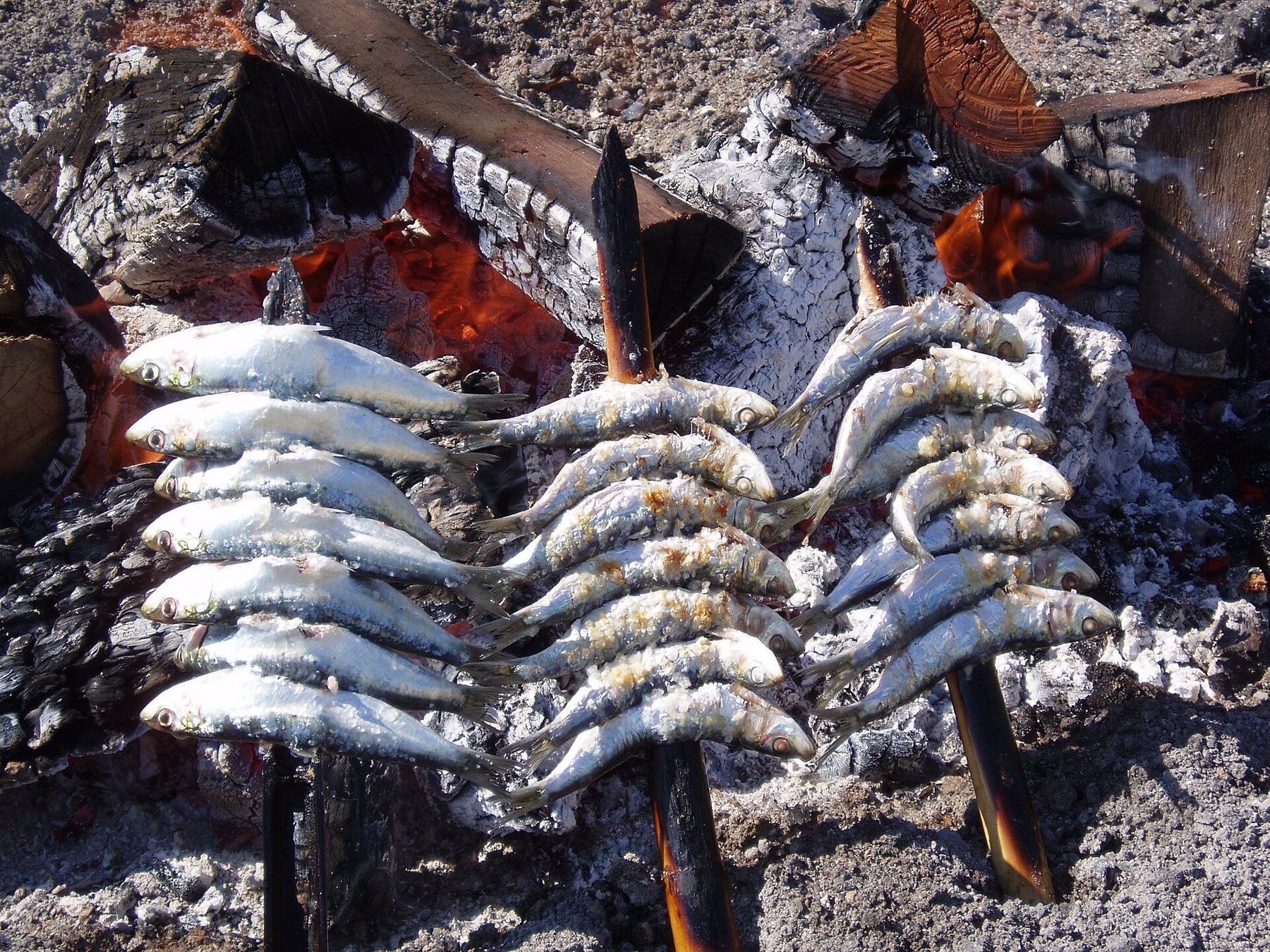
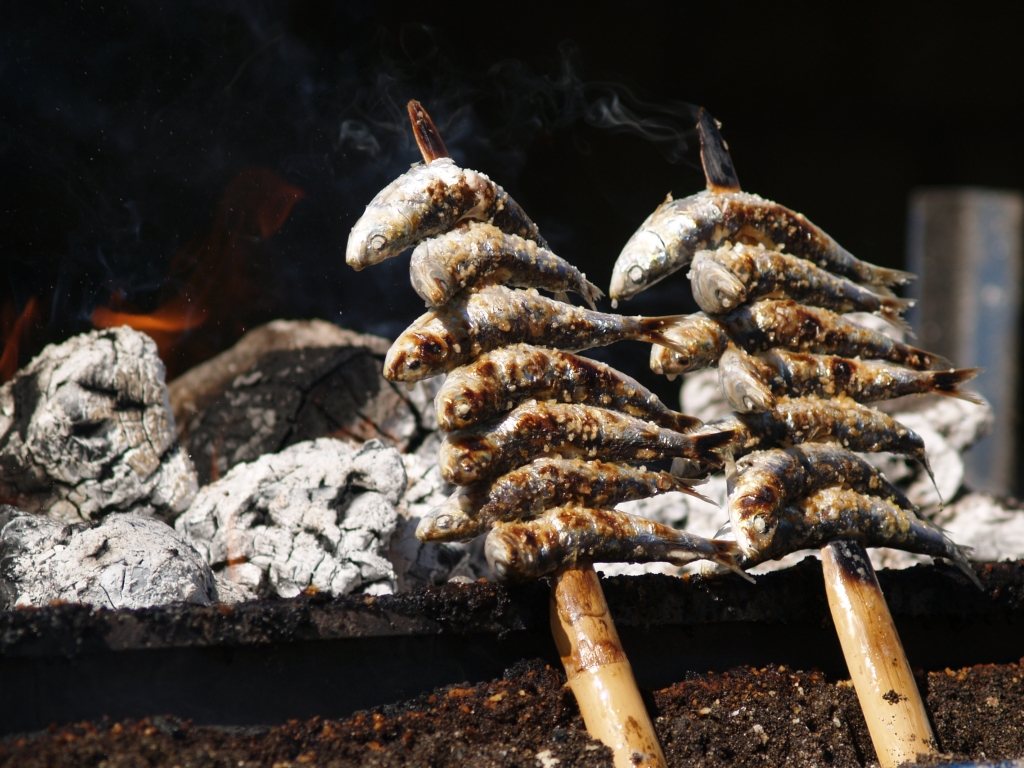
From the fishermen also comes the coast's most iconic delicacy: espetos, sardines skewered on canes and grilled beside an open olive-wood fire on the sand. Many beach chiringuitos use an old boat filled with sand as a barbecue. The espetero even has his own monument along the promenade at San Cristóbal. See 3×10 things to taste, eat and visit.
What does El Upa mean?
El Upa is part of a series of fishing memorials the town has dedicated over recent decades: the traiña Yolanda was already installed by 2008, El Upa arrived in 2010, the espetero was honoured with a monument in 2022, and in 2026 a bronze statue of a copo fisherman followed. Unveiling the bronze statue Homenaje a los Hombres del Copo, the mayor remarked that "Almuñécar was also built upon a boat", and that the town's children and grandchildren must remember that the town was not built solely from the shore.
For us at Playa Tropical, El Upa is also simply our neighbour. It is the very first thing you spot when walking east along the promenade, and a convenient landmark: "See you by the boat." That is why it earned its spot in our logo in October 2026, paired with the town's coat of arms – read the story of the coat of arms celebrating 500 years.
More boats and fishing memorials in Almuñécar
El Upa is in good company. Heading west along the seafront, you will find a whole series of tributes to the sea and its fishermen – as the crow flies from Playa Tropical:
| Location | Facility | Distance |
|---|---|---|
| El Upa | The fishing cutter on Paseo de Velilla (2010) | 250 m |
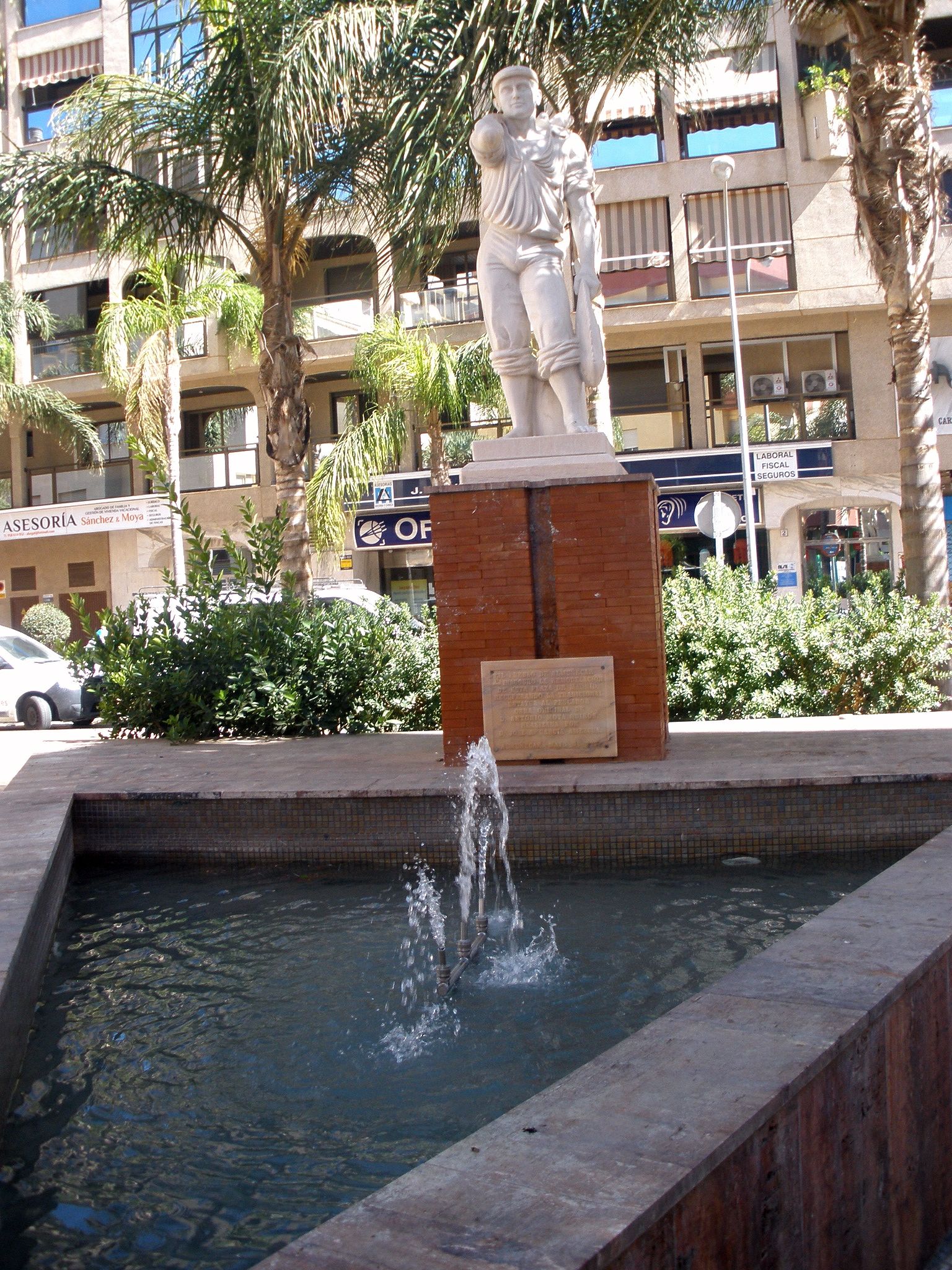
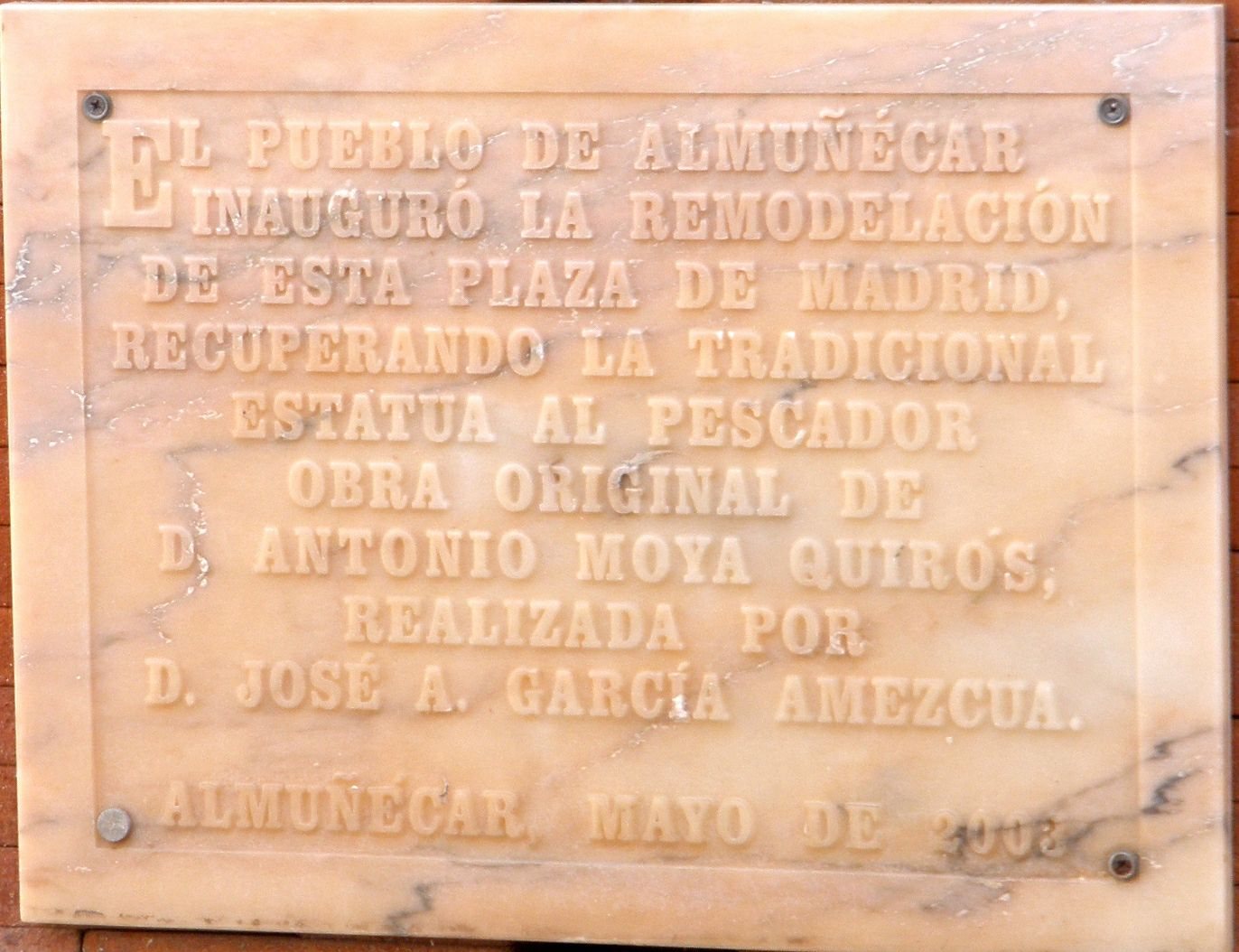
| Monumento al Pescador | The Fisherman Statue in Plaza de Madrid – a recreated version of the original by Antonio Moya Quirós | 1.4 km |
| Monumento a los Fenicios | The Phoenicians who arrived across the sea and founded the town – Paseo del Altillo (1987) | 1.7 km |
| Traiña Yolanda | The fishing boat by Peñón del Santo, dedicated to the town's traiñas | 2.0 km |
| Homenaje al espetero | The monument to the sardine-griller on the San Cristóbal promenade | approx. 2 km |
| Hombres del Copo | Bronze statue of a fisherman hauling the beach net (2026), on the San Cristóbal promenade | approx. 2.5 km |
| Los Marinos | The old fishing quarter housing the chapel of Virgen del Carmen | 2.6 km |
| Casa Barco | The house shaped like a ship – read the story | 2.7 km |
| Monumento a los Náufragos | La Herradura: commemorating the 25 Spanish galleys wrecked in the bay in 1562 | approx. 8 km |
Hombres del Copo is the newest addition. Granada sculptor Javier Galán Domingo completed it in May 2026. Standing 170 cm tall, it depicts a tirador del copo in traditional attire, leaning forward in the straining pose used to haul the net ashore. When the bronze was cast, metal from the propeller of an old fishing vessel was incorporated into the alloy. "The very soul of our boats now beats at the heart of this monument", the artist explained.
Virgen del Carmen – the fishermen's festival on 16 July
The biggest day for the fishermen is 16 July, when Virgen del Carmen is celebrated all along the coast. In Almuñécar, she is carried through the streets of Los Marinos from 18:00, and around 21:00 the sea procession begins, with boats accompanying her off San Cristóbal beach, from Peñones del Santo to Rincón de la China, and the evening finishes with fireworks. If you are here in mid-July, you can also experience tiro del copo on the beach. See more celebrations on the festivals page.
Maps and routes
Red star = Playa Tropical. Click on a point for the name and distance. Map data © OpenStreetMap.
Open the route in Google Maps
- Walk to El UpaAlong the promenade heading east – approx. 250 m, 4 minutes.
- The boat walk along the beachEl Upa, the fisherman statue on Plaza de Madrid, Yolanda at Peñón del Santo and Casa Barco. Approx. 3 km one way.
The routes start at Playa Tropical. On mobile devices, they open directly in the Google Maps app, ready for navigation.
Good advice
- Visit late in the afternoon. The light is soft, the promenade is full of life, and the name on the bow shows up clearly.
- Please do not climb into the boat. It is old and rests loosely on blocks – enjoy it from the path.
- Watch out for the cycle lane. The boat stands right by the cycle path on the promenade. Step onto the grass before stopping.
- Have some seafood afterwards. The fish restaurant Lute y Jesús is right next door, and there are several beach bars along Paseo de Velilla – see Where to eat.
- Do the full boat walk. Follow the promenade westwards, past the castle, to Yolanda and Los Marinos – approx. 3 km. Catch the bus or take a taxi back.
Sources
- OpenStreetMap: El Upa (artwork, October 2010)
- Wikipedia (es): Jábega and Jábega (red)
- Wikipedia (es): Traíña
- COPE 20-07-2026: Homenaje a los Hombres del Copo
- COPE 16-07-2026: Tiro del copo on San Cristóbal beach
- El Faro de Motril: How copo fishing was done
- Flickr: La Traiña Yolanda – the town's tribute to a score of traiñas
- 101TV: Virgen del Carmen on the Costa Tropical
- Diario Sexitano 2023: The sea procession
- Almuñécar Info: The monuments in Almuñécar and La Herradura
- Coordinates: OpenStreetMap contributors (ODbL)