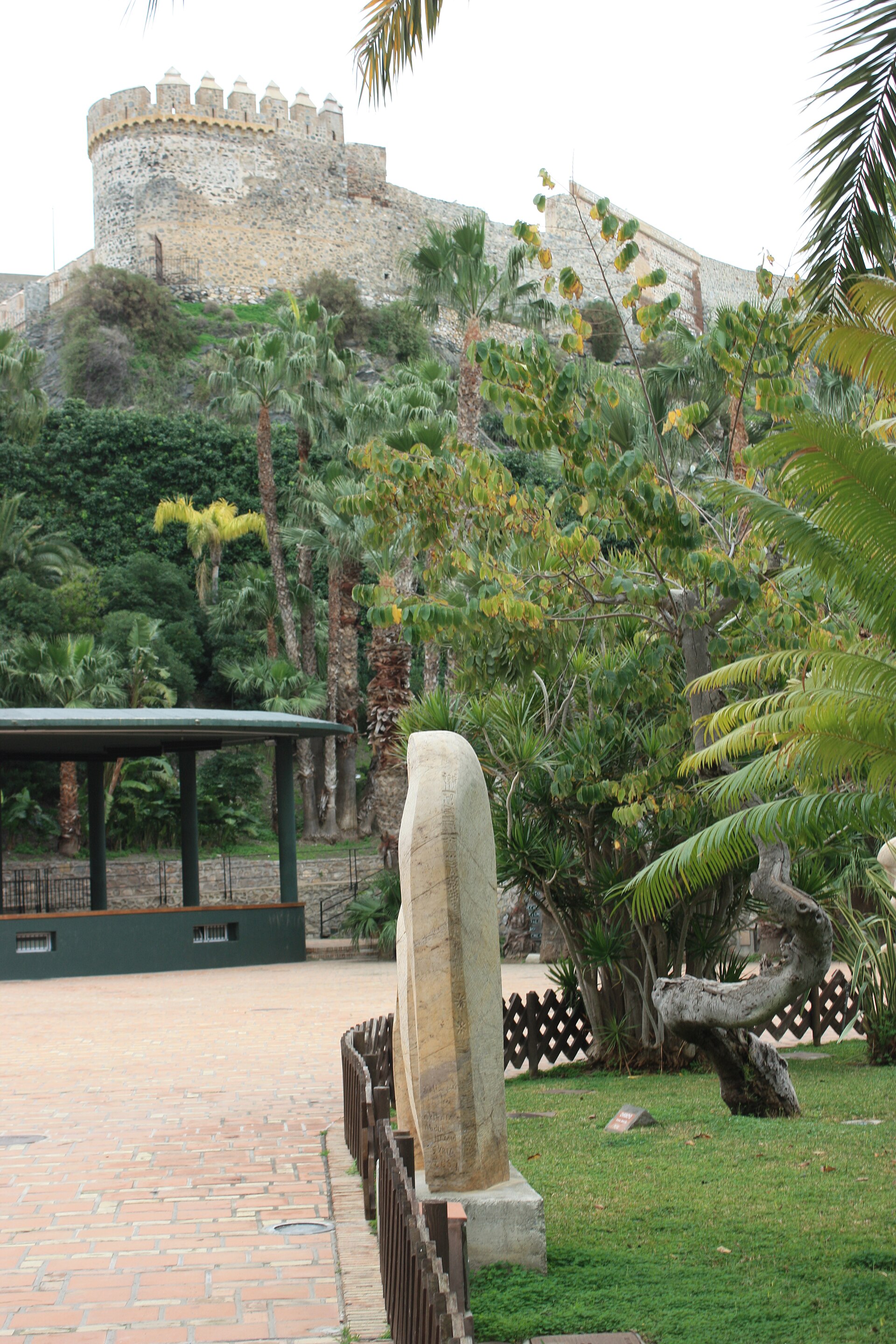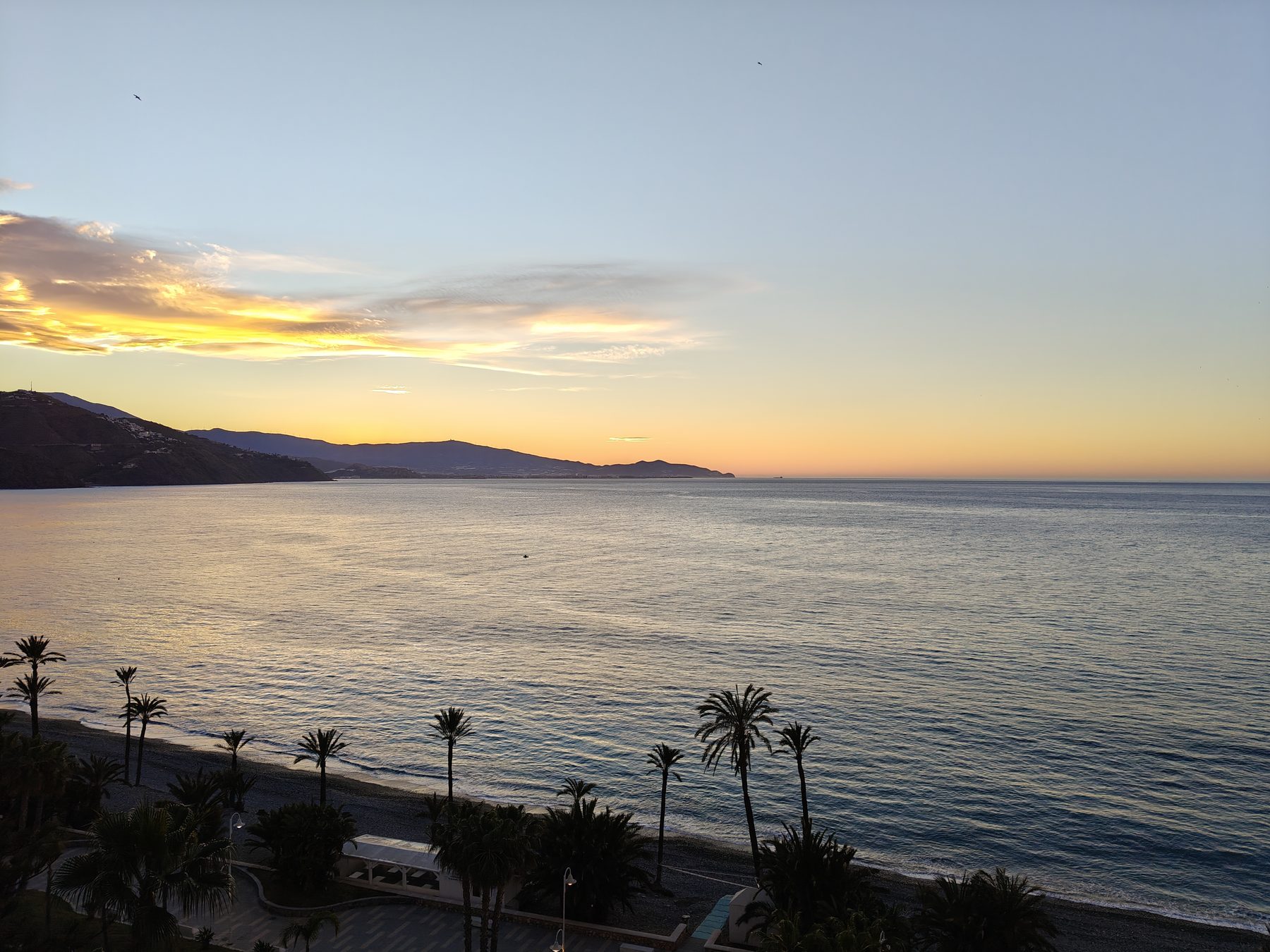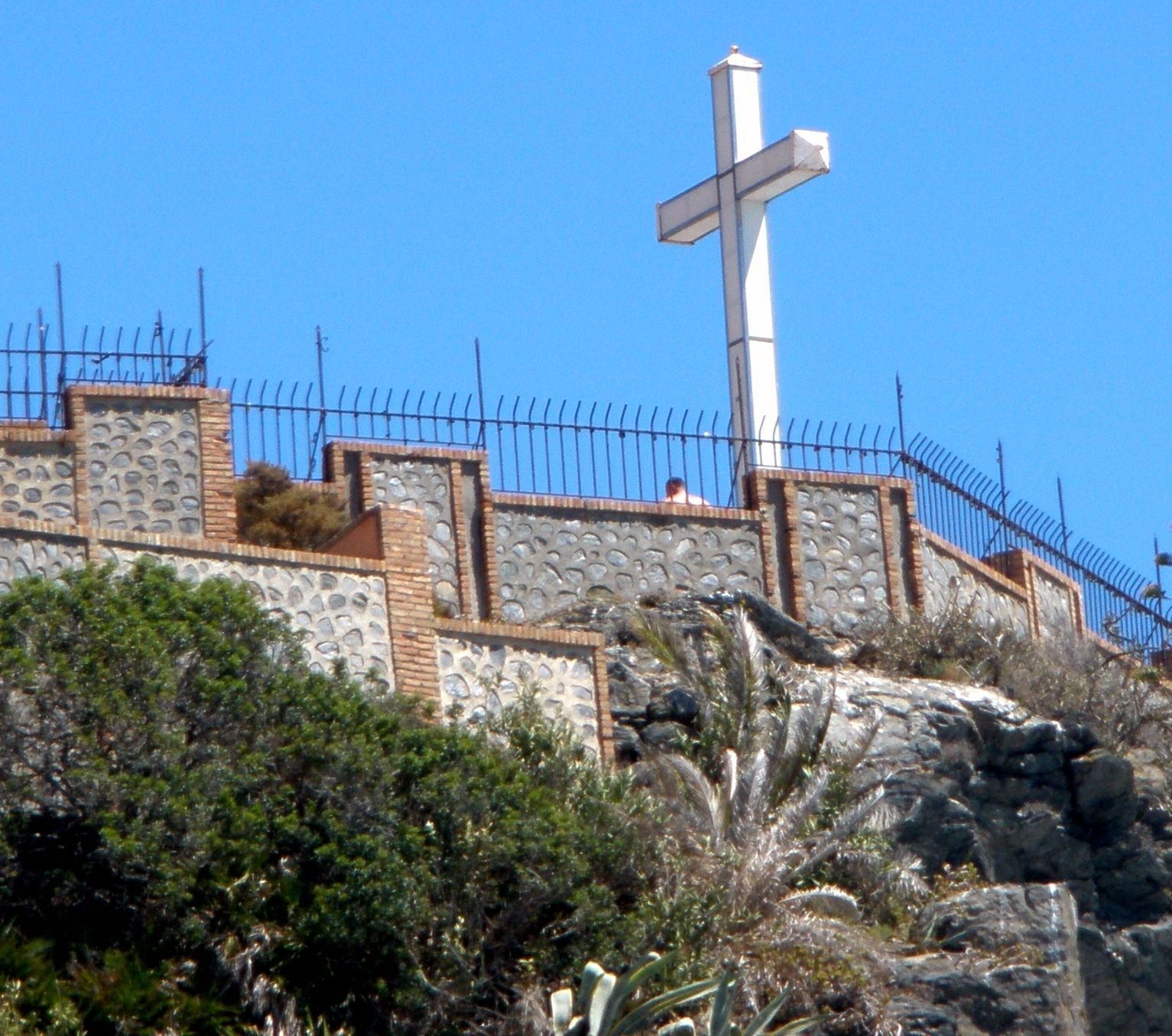
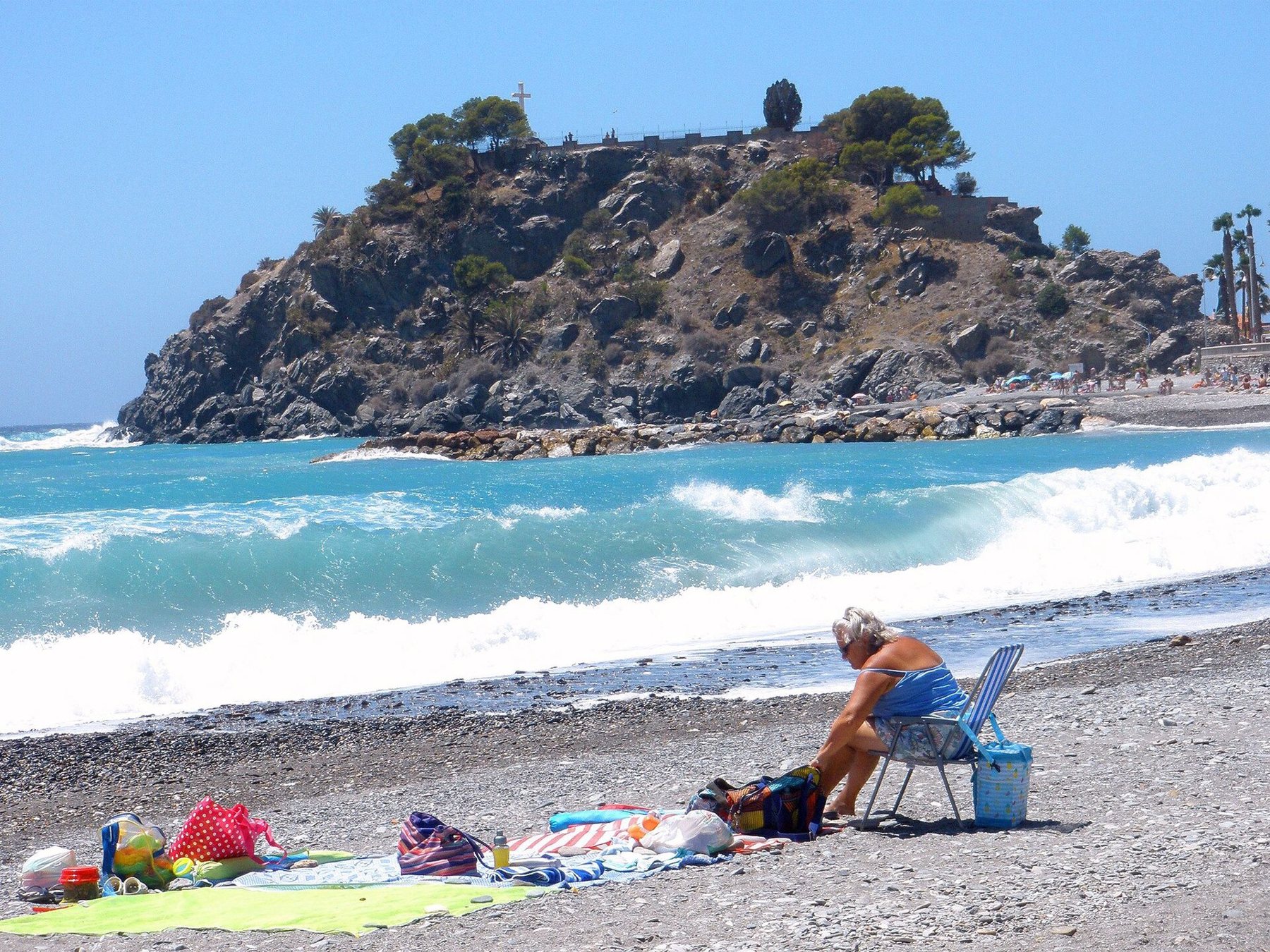
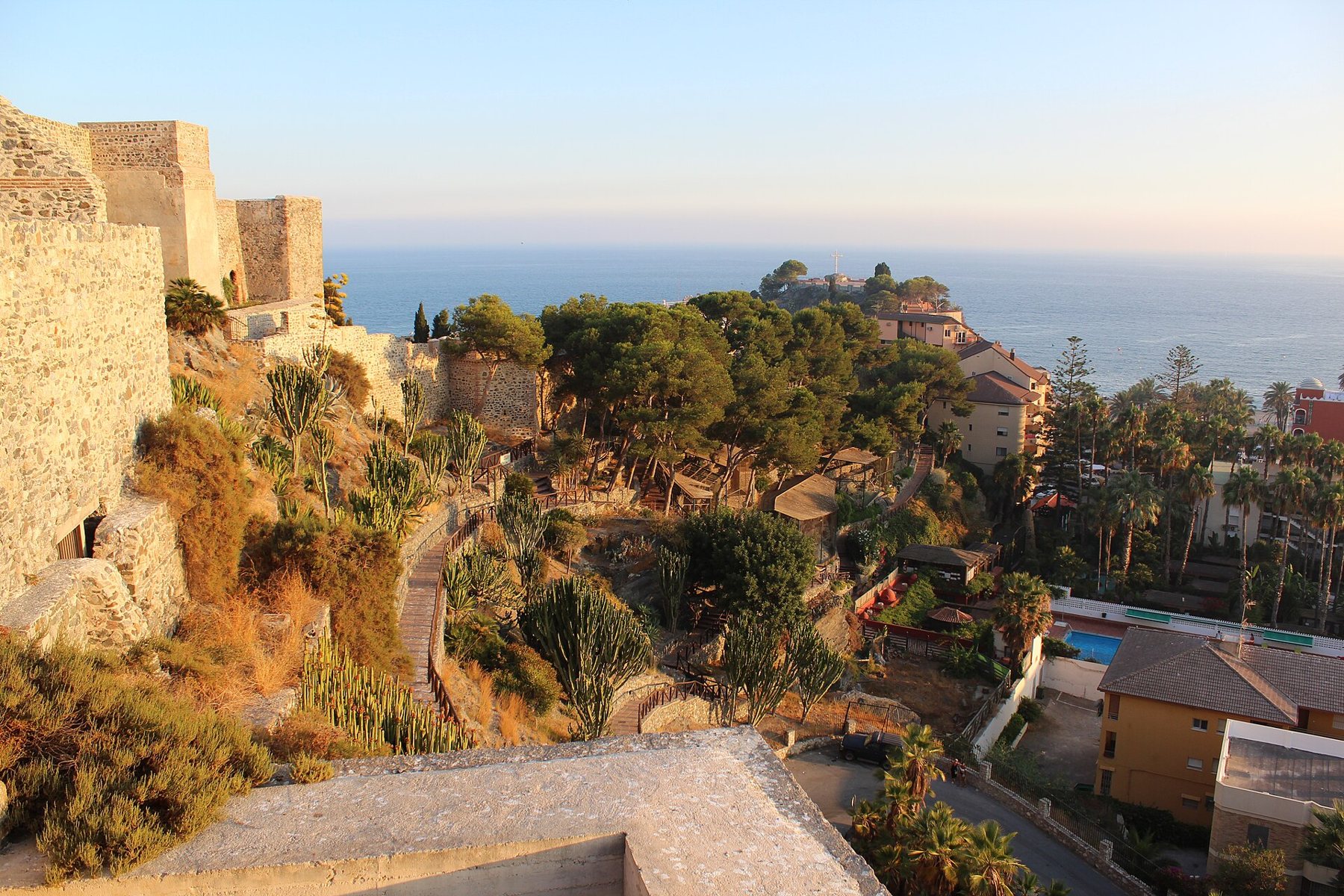
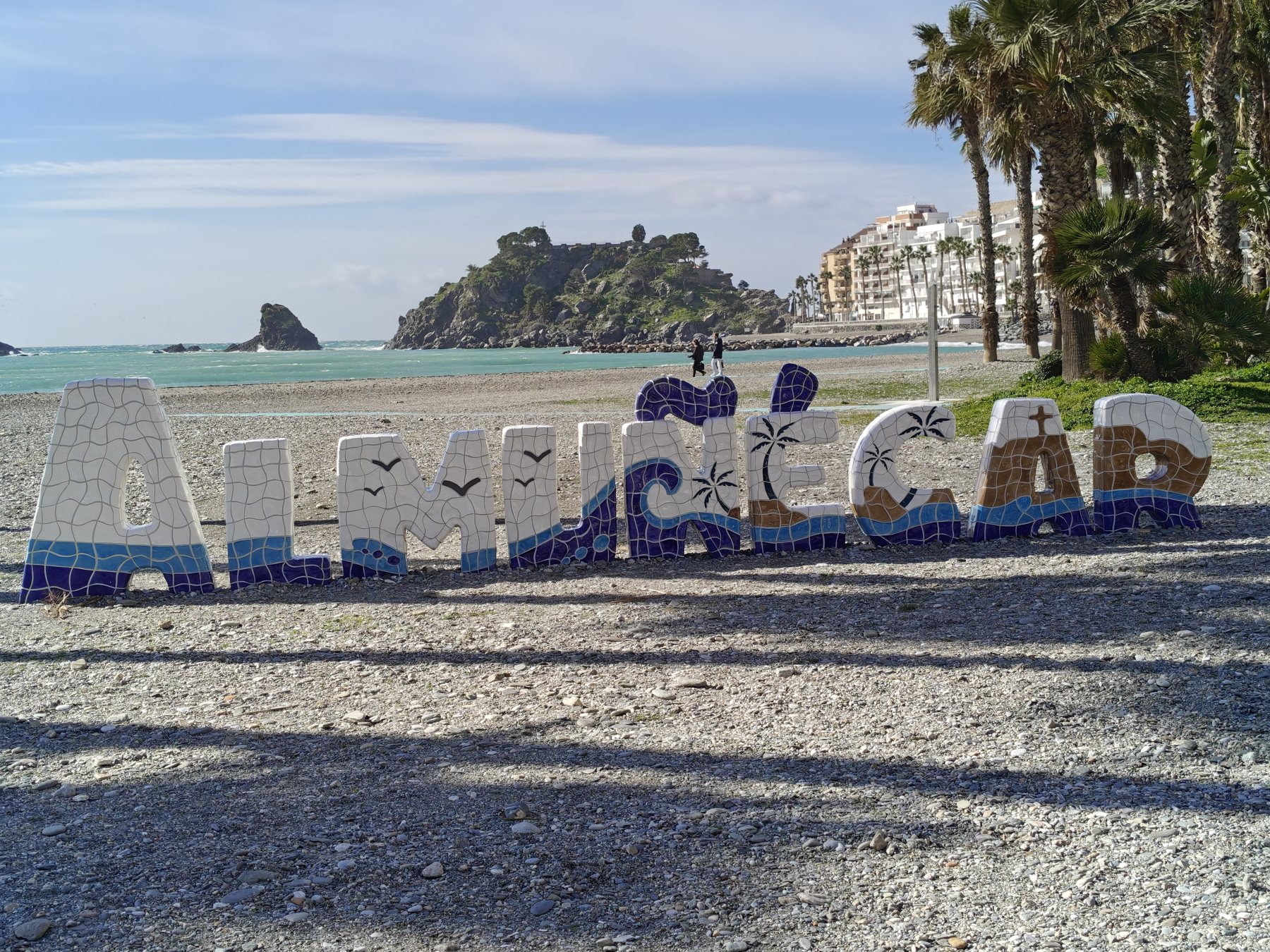
Between the town's two main beaches rises a rocky outcrop that looks like a miniature castle: battlemented walls, palm trees, stone steps and, right at the top, a great white cross. This is Peñón del Santo, "The Saint's Rock", one of Almuñécar's very best viewpoints. The railings are adorned with thousands of padlocks left by couples. Here is the story of the rock, the cross, the padlocks, and why Spain's most famous television funeral took place right here.
Three rocks in the sea
Peñón del Santo is the largest of three rocks known collectively as Peñones de San Cristóbal. It reaches up to 30 metres in height and sits on dry land. The two smaller ones, Peñón de Enmedio (10 m) and Peñón de Afuera (12 m), sit out in the water. These rocky outcrops divide the coastline into two beaches: San Cristóbal to the west and Puerta del Mar to the east. The Junta de Andalucía designated them a natural monument in 2001.

From Roman bridge to hermit's chapel
The rock has formed part of the town's defences for over 2,000 years. The Romans built a bridge with a soaring arch connecting the fortress to the rock, which according to English Wikipedia stood until around 1800. Later, a defensive wall – a coracha – connected the castle to the rock. Today, it has been cut through by the beach promenade. Out on the rock itself lay a water cistern and a small chapel dedicated to San Cristóbal, patron saint of seafarers. In the late 19th century, impoverished fishermen lived inside the old cistern.
The name, "The Saint's Rock", traces back to an old 10th-century tale about Abu Nasr, a famed archer and leader of a Christian (Mozarabic) army, who was executed on the rock during the campaigns of Abderramán III. Whether fact or folklore, no one can say for sure today. At the foot of the rock stands the statue of Abderramán I, who according to legend landed right here in 755 and founded the Emirate of Córdoba. Read more in Phoenician Sexi, Roman fish sauce and the Moorish castle.
The cross – in memory of the sugar baroness
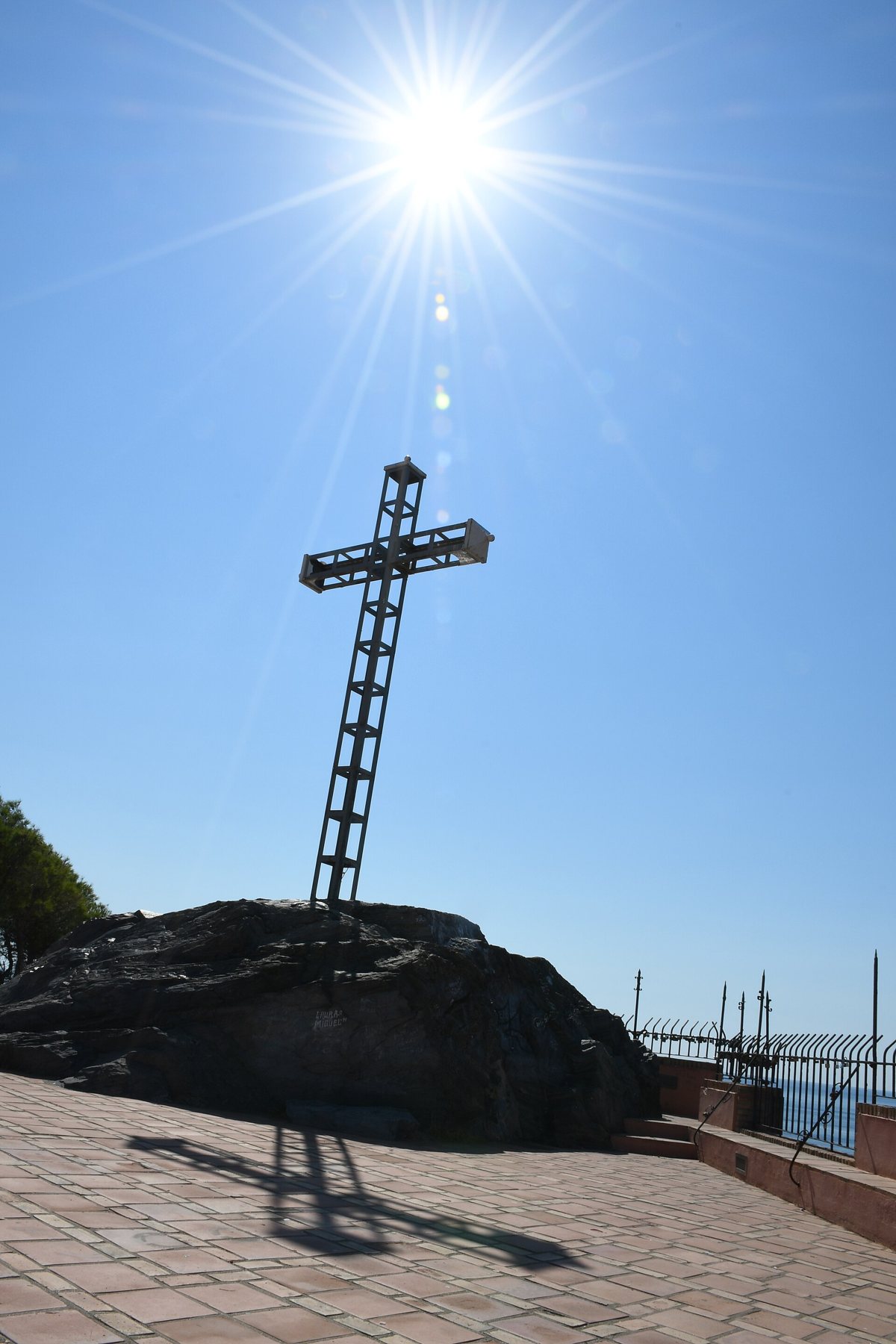
You will often read that the cross commemorates 1489, when the town surrendered to the Catholic Monarchs. It is a romantic thought, but the cross is far newer than that. The first cross was dedicated on 20 April 1901, a year after the death of Encarnación Márquez. She owned the sugar refinery La Encarnación and was one of the most powerful women along the coast. Her heirs had the cross erected where the chapel of San Cristóbal once stood.
The cross was seven metres high, stood on a stone plinth and was designed in the Modernist style by Catalan architect Juan Monserrat y Vergés, born in Reus in 1853, who had studied alongside Antoni Gaudí. Monserrat designed many of the Modernist buildings along Gran Vía de Colón in Granada. The cross was pulled down in 1936, at the start of the Spanish Civil War. Several replacements have been put up since, and the large white cross you see today is the latest. (A few sources, including the local council, state 1900 instead of 1901.)
Thousands of padlocks
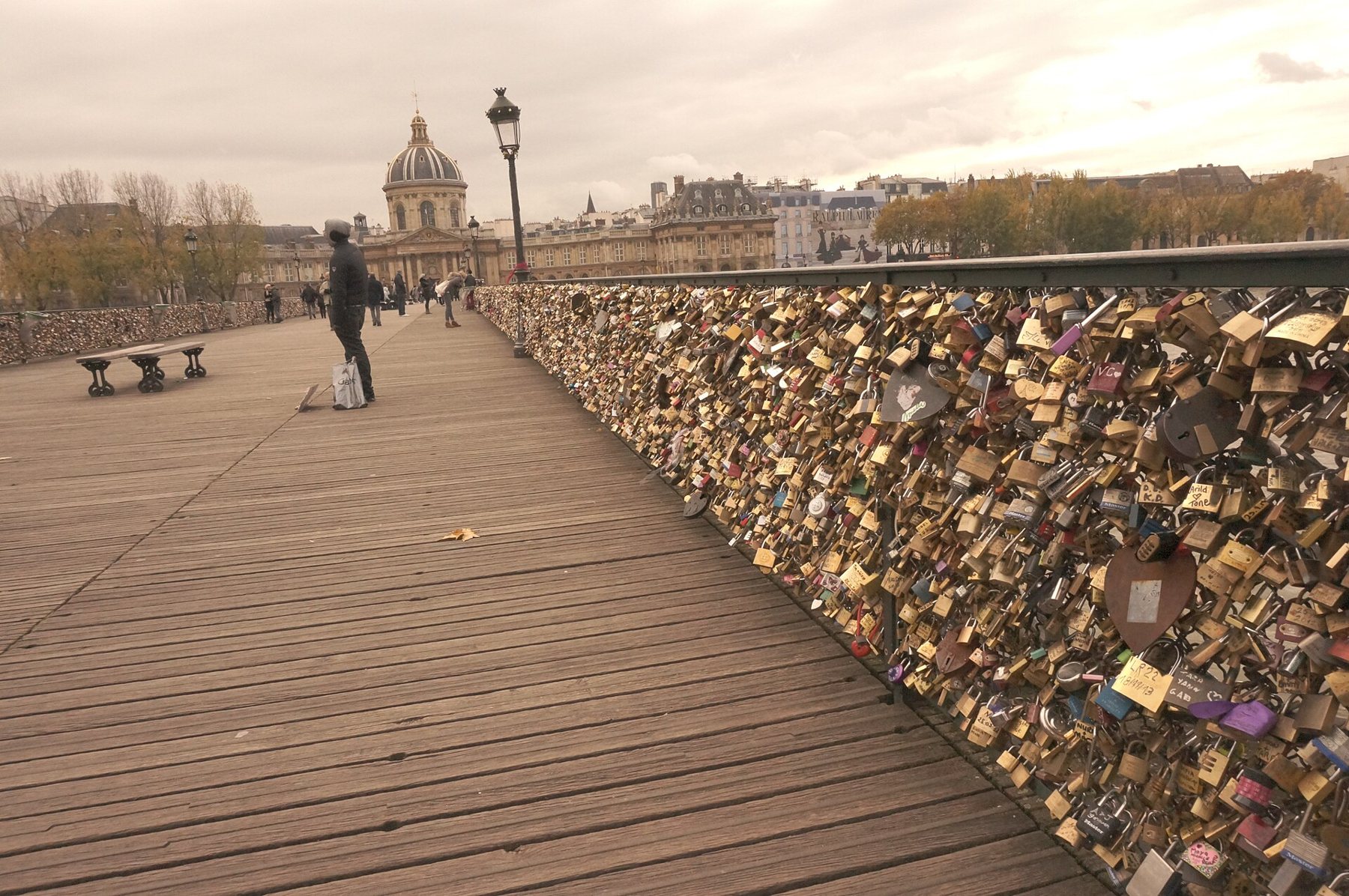
A railing runs around the viewpoint, and it is almost completely smothered in padlocks of every colour and size. Many bear two names, a heart or an etched date. These are love locks: a couple attach a padlock, lock it shut, and keep – or throw away – the key, as a symbol of enduring love.
It is a fairly recent tradition. It caught on across Europe during the 2000s and truly took off in Rome after Italian author Federico Moccia published his 2006 novel Ho voglia di te, in which two lovers attach a padlock to the Ponte Milvio bridge. Before long, locks were appearing on bridges and viewpoints worldwide – including Bryggebroen in Copenhagen. In many places it has simply become too much: on Pont des Arts in Paris, part of the parapet collapsed under the weight in 2014, and in June 2015 all the padlocks were removed.
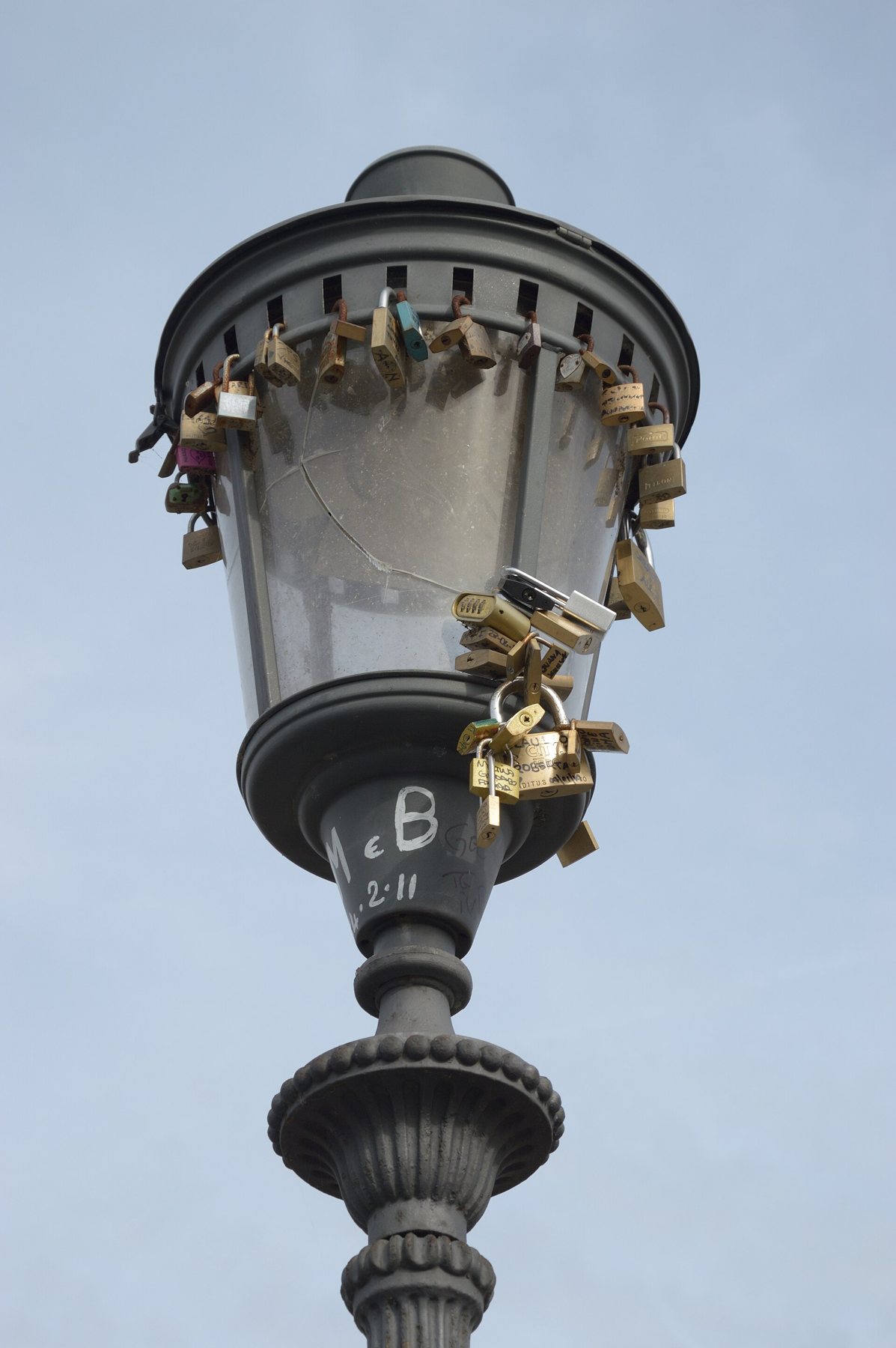
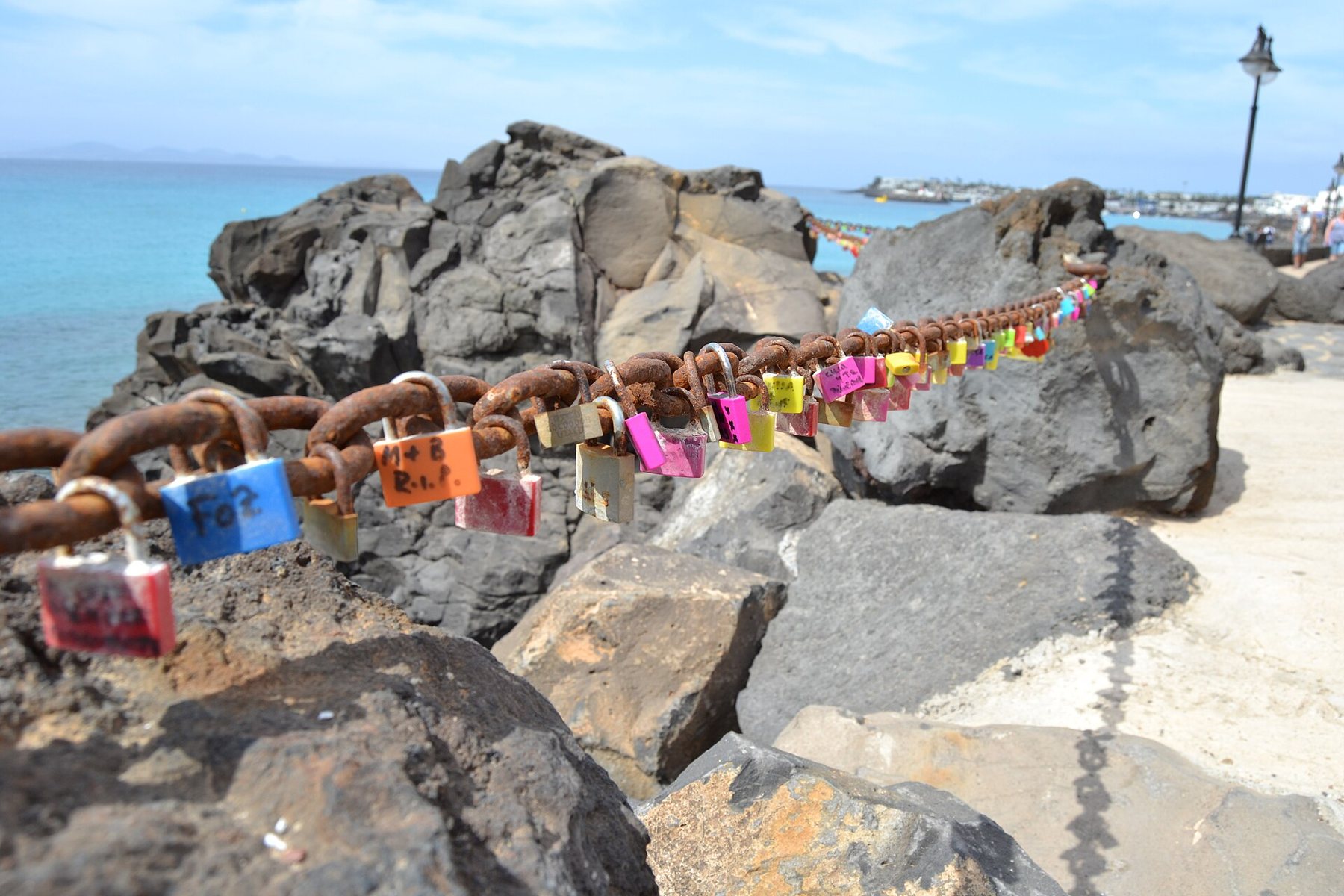
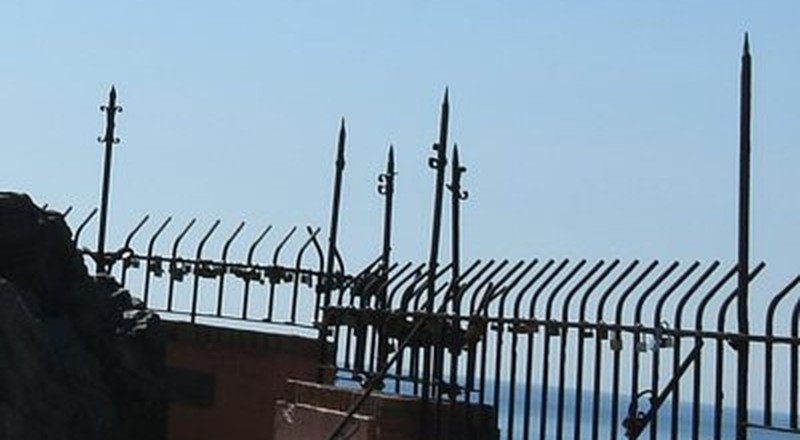
We have not been able to find out when the first locks appeared on Peñón del Santo, nor whether the council trims them off from time to time. For now, they remain – and have become an integral part of the experience.
If you wish to attach your own lock, do take the key home as a keepsake rather than tossing it into the sea. Thousands of keys on the seabed are not good for marine life.
"¡Chanquete ha muerto!"
Every Spaniard over 50 knows the line. The TV drama Verano azul ("Blue Summer") by Antonio Mercero aired on Spanish television in 1981–82 and followed a group of children spending their summer holidays on the coast. It was filmed in Nerja, Vélez-Málaga, Motril and Almuñécar. The emotional heart of the series is the old fisherman Chanquete, and his death towards the end of the series is one of the most famous moments in Spanish TV history. According to Rincones de Granada, his funeral scene was filmed on Peñón del Santo. There has never been a real cemetery on the rock: the gravestones were simply film props, jokingly bearing the names of the crew members.
The view
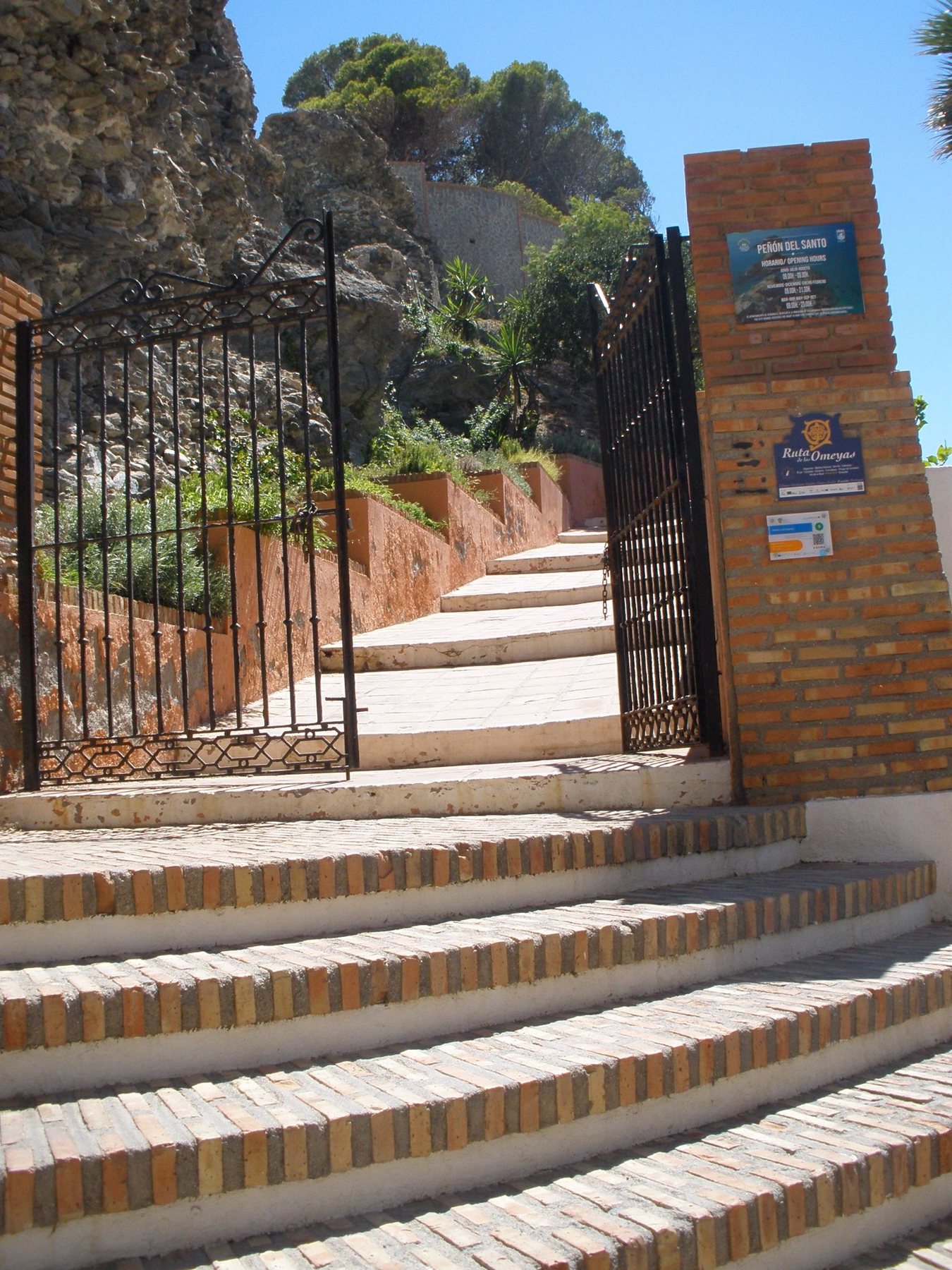
Ramps and steps wind their way up through landscaped terraces to the top. From the summit, you can look out across Castillo de San Miguel, the old town rising on the hillside, the beaches on either side, and the coastline stretching away in both directions. It is at its finest at sunset, when the sky turns crimson behind the cross.
Maps and routes
Red star = Playa Tropical. Click on a point for the name and distance. Map data © OpenStreetMap.
Open the route in Google Maps
- Walk to Peñón del SantoAlong the promenade heading west, past the ALMUÑÉCAR sign and the castle. Approx. 2.5 km, 35 min.
- The town walk: sign, gardens and the crossThe ALMUÑÉCAR sign, El Majuelo below the castle, and up to the cross.
The routes start at Playa Tropical. On mobile devices, they open directly in the Google Maps app, ready for navigation.
Good advice
- Visit at sunset. The viewpoint is open until 24:00 in summer and 22:00 in winter.
- Walk there. It is a lovely stroll along the promenade from Playa Tropical, past the ALMUÑÉCAR sign and the castle – around 35 minutes.
- Wear sensible shoes. There are steps and ramps all the way to the top.
- Combine your visit. The botanical garden El Majuelo and the castle are right next door – and the beach bars on San Cristóbal are ideal for afterwards.
- Look out for Abderramán. The statue of the emir stands on the promenade at the foot of the rock.
Sources
- Wikipedia (es): Peñones de San Cristóbal (heights, natural monument 2001, coracha, chapel and cistern)
- Wikipedia (en): Almuñécar (the Roman bridge)
- Costa Digital 2021: The cross – a Modernist tribute to Encarnación Márquez
- Rincones de Granada: Peñón del Santo (opening hours, Abu Nasr, Verano azul)
- Wikipedia (es): Verano azul
- Wikipedia (en): Love lock (Ponte Milvio, Moccia, Pont des Arts)
- Coordinates: OpenStreetMap contributors (ODbL)