Beneath Plaza Kuwait right in the heart of Almuñécar lies the town's aquarium, home to Mediterranean marine life and a 17-metre-long glass tunnel passing through a large shark tank. It was closed for four years before reopening in December 2025. Tickets cost €12 (≈ 89,52 kr.) for adults, and a visit takes about an hour. At the end of this article, you can also read about the Aquatropic waterpark, located just 500 metres from Playa Tropical.
An aquarium beneath a town square
The aquarium is situated underground, beneath Plaza Kuwait, between Calle San Juan, Calle del Virgo and Avenida de Europa. From the street you will hardly spot it, but inside there are roughly 3,200 m² across three floors. It is a municipal aquarium dedicated exclusively to Mediterranean marine life, focusing particularly on the waters off Almuñécar and La Herradura. Only a single tank displays tropical fish.
The aquarium opened in 2008. Since 2010 it has closed several times, and in November 2021 it shut down entirely due to structural leaks and a failing oxygenation system. According to town councillor Carlos Ferrón, standard iron that rusts in saltwater had previously been used. The town council has spent over a quarter of a million euros repairing the tanks, climate control and flooring. The creatures were cared for continuously throughout the closure. The aquarium finally reopened in late December 2025.
Things have been going splendidly since. In the first eight months of 2026, it welcomed over 32,000 visitors, including 5,500 in July and more than 8,300 in August. The aquarium has also become a centre for research and marine conservation. Here they nurture colonies of coral candelabro, a Mediterranean coral species, with a view to replanting them in open waters. A sick seahorse brought here was well on its way to recovery in September 2026.
Guide: getting around the exhibits
The aquarium is divided into sections, which we describe here in the order presented by our sources. The main highlight is the tunnel, which according to the photographer behind the top photo is situated on the lowest level. Count on about an hour at a leisurely pace, perhaps slightly longer if the children want to watch the sharks over and over.
1. The entrance hall and the grand ocean mural
At the entrance you will find the ticket desk and a small souvenir shop. All four walls are covered by a striking underwater mural spanning roughly 200 m², painted by the celebrated graffiti artist El Niño de las Pinturas from Granada. Near the entrance you will also spot wrought-iron sculptures, alongside a photographic exhibition featuring the seabed off Almuñécar and La Herradura.
2. Marine life from the smallest on up
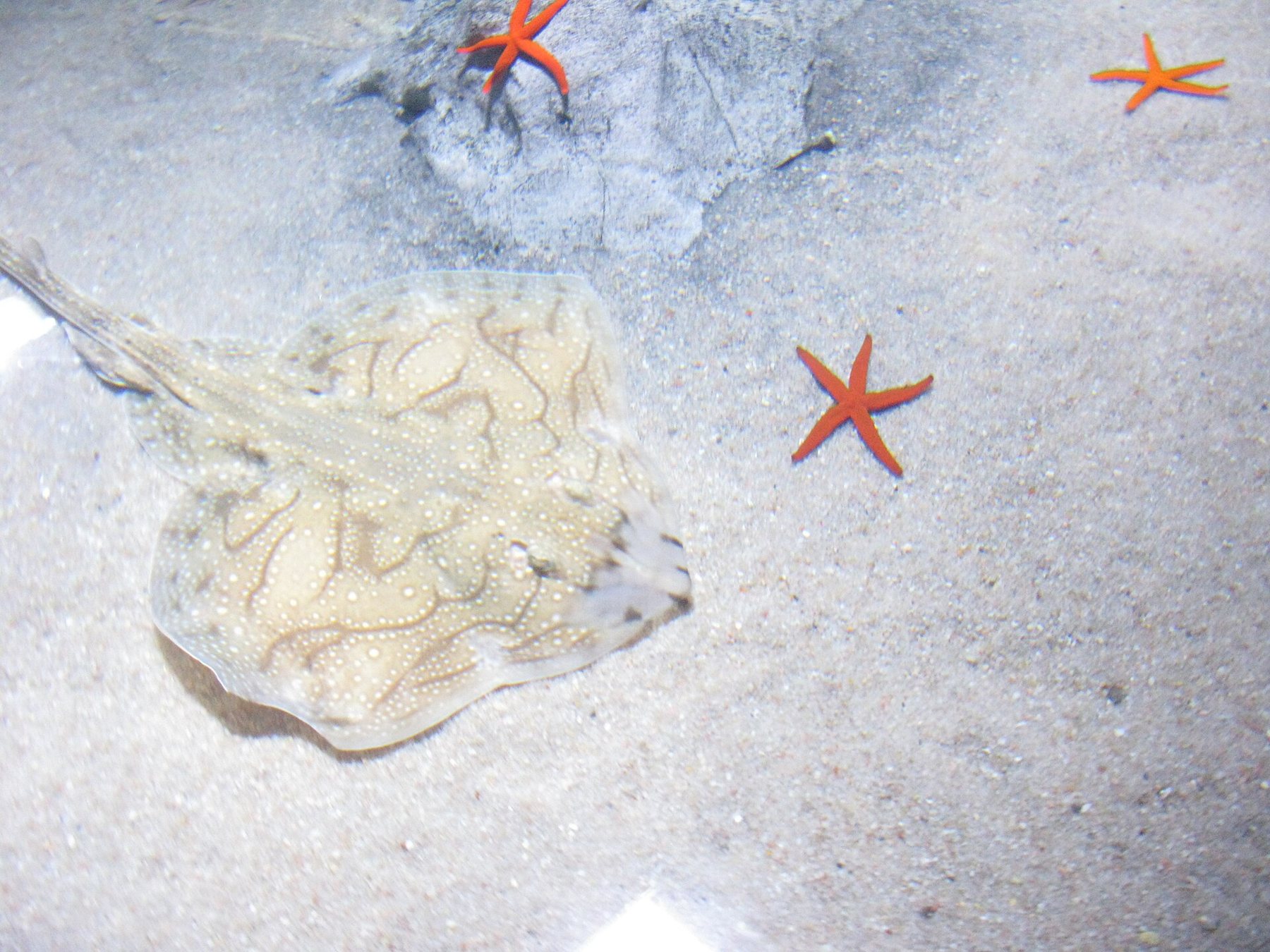
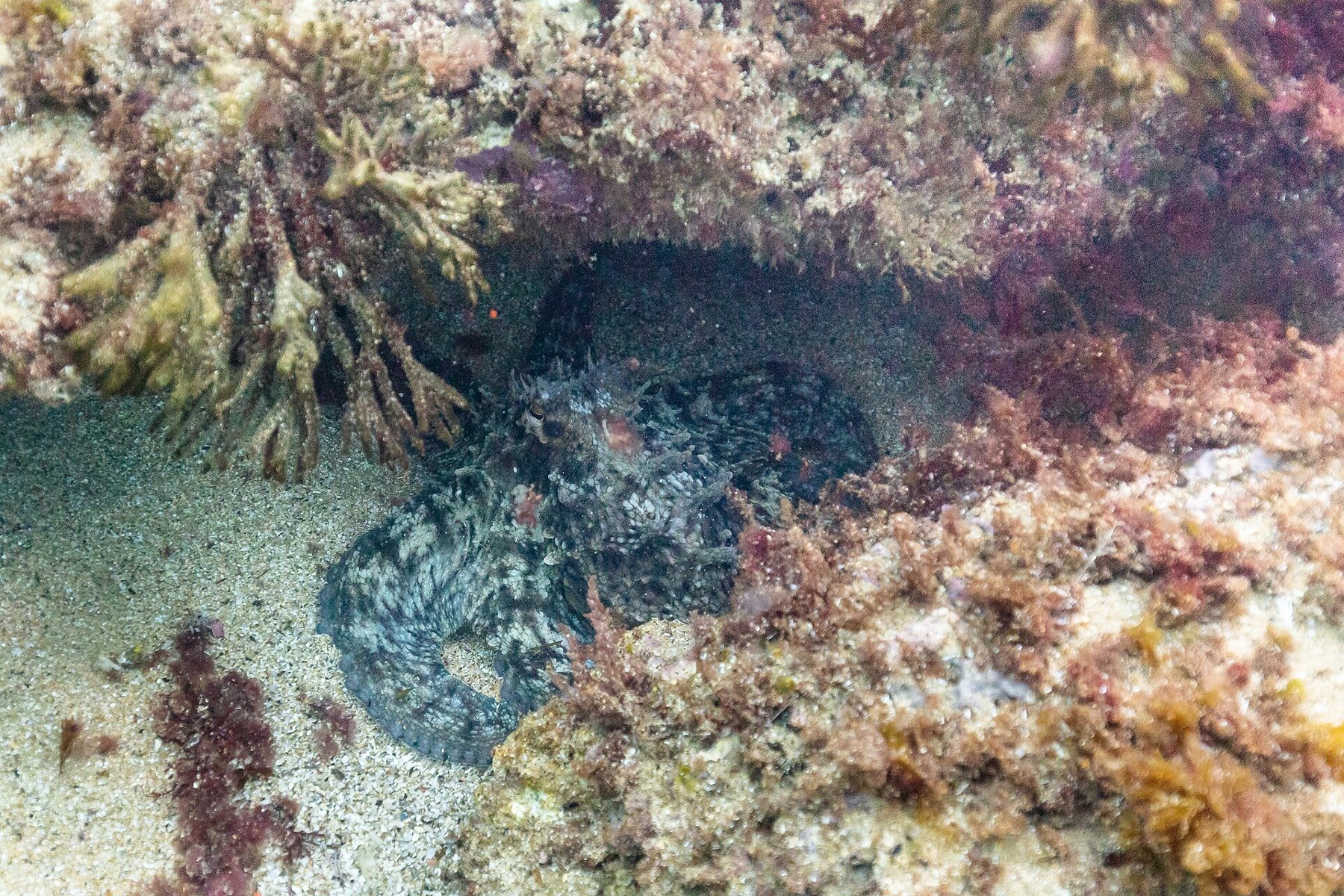
The first section explores the evolution of life in the sea. Here you will see jellyfish, octopuses, cuttlefish, baby sharks and rays, seahorses and pipefish. The seahorses and jellyfish are usually the ones children remember most fondly afterwards.

3. Habitats and species
The second section showcases various coastal habitats, from rocky shores and sandy bottoms to open water. Here you can admire conger eels (congrio), moray eels, large spider crabs (centollos), and several fish familiar from the local fishmonger: red mullet (salmonete), sea bream (besugo), European seabass (lubina), and gilthead seabream (dorada). A circular tank is filled with gilthead seabream and seabass. You will also encounter sea anemones, crabs, and hermit crabs, with a special area dedicated to protected species such as giant triton shells, limpets, and starfish.
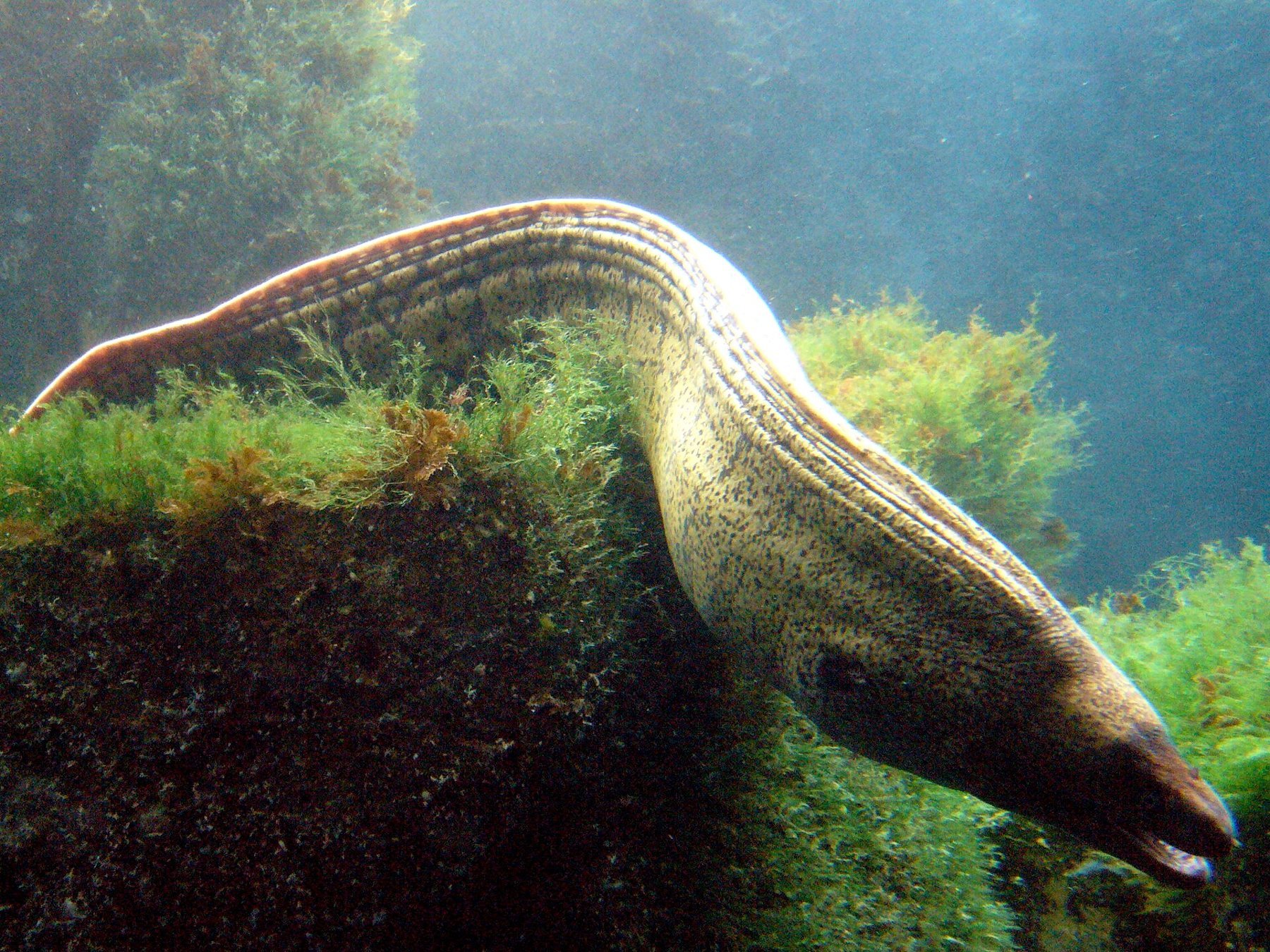
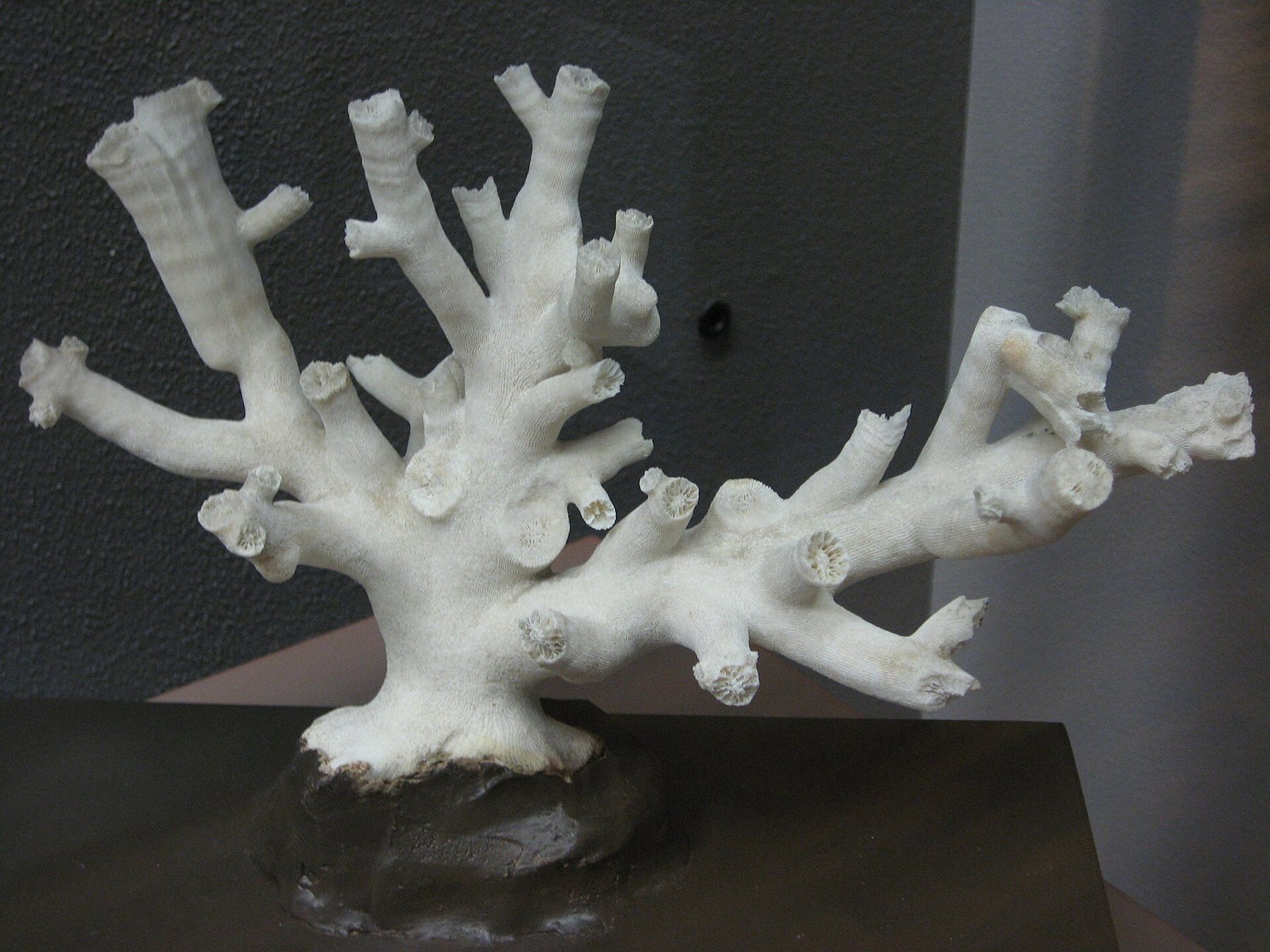
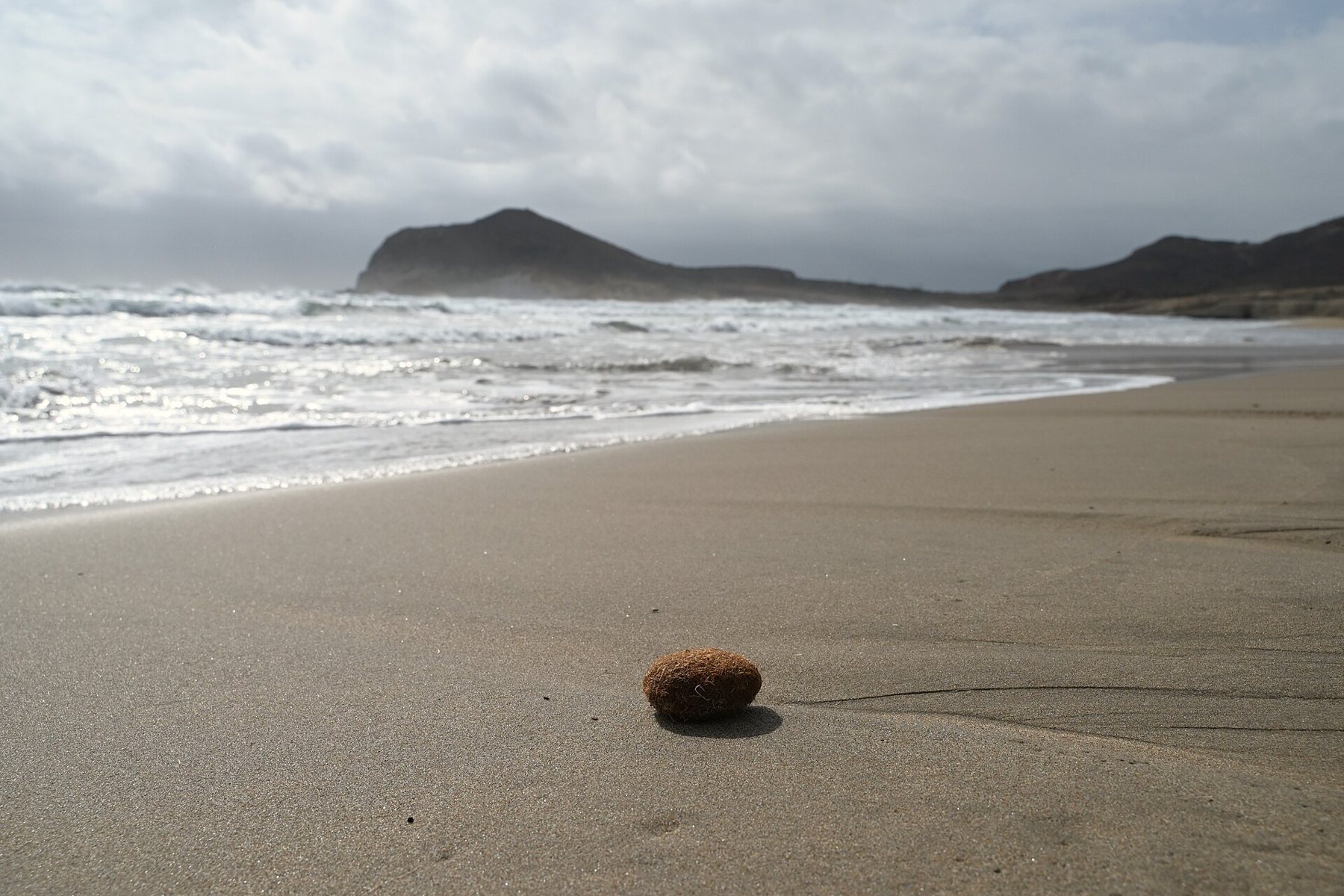
4. The oceanarium and the tunnel
The star of the aquarium is the oceanarium: a basin holding approximately one million litres of seawater, which you traverse via a 17-metre-long glass tunnel. Sharks, rays, and massive fish glide right above and beside you. In Spanish, these large sharks are referred to as tiburones toro. We assume these are sand tiger sharks (Carcharias taurus), which look formidable with their needle-sharp teeth but are generally placid. According to a local site, the aquarium houses two of them, and the council confirmed the sharks remained in residence throughout the closure. You will also spot what sources refer to as tiburones grises (grey sharks), alongside several impressive rays.
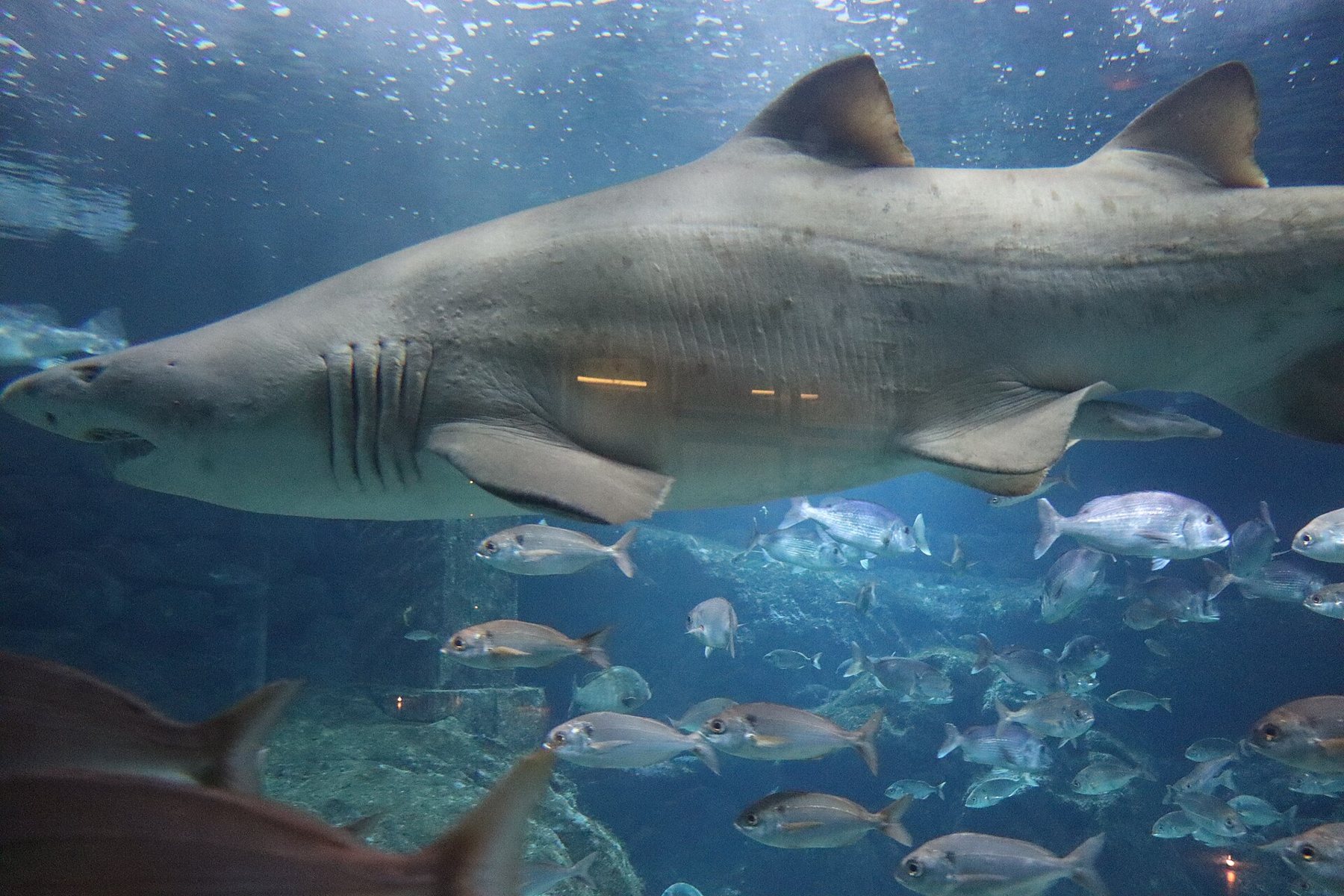
During the summer, the aquarium has previously hosted sleepovers in the tunnel for summer schools: children sleeping right beneath the sharks. Enquire at the ticket desk whether similar family events are planned.
How many animals are there?
It is hard to say for sure. The tourist office cites approximately 3,000 animals across 270 species. At the reopening, the town council mentioned roughly 300 species, while The Seaside Gazette reported over 1,500 animals of around 100 species. Another local site notes 1,000 animals and 125 species. These numbers likely stem from different years.
Prices and opening hours
| Ticket | Price |
|---|---|
| Adults, 13–64 years | 12 € (≈ 89,52 kr.) |
| Children, 4–12 years | 9 € (≈ 67,14 kr.) |
| Over 65 years | 9 € (≈ 67,14 kr.) |
| Children under 4 years | Free |
| Groups of 20 or more: adults / children and over 65 | 10 € (≈ 74,60 kr.) / 8 € (≈ 59,68 kr.) (one free ticket per group) |
Prices are as listed on the tourist office website (April 2026) and match the aquarium's own site. Residents registered on the municipal census in Almuñécar (empadronados) enjoy a €2 (≈ 14,92 kr.) discount upon presenting photo ID. If you have your Spanish certificado de empadronamiento, remember to bring it along.
Opening hours: At the reopening in December 2025, the town council announced Wednesday–Sunday, excluding public holidays, 10:30–13:30 and 14:30–19:30. The tourist office states in 2026 that it is closed on Tuesdays and that ticket sales end 45 minutes before closing. The aquarium's own website still displays older pre-closure seasonal hours: during summer (June–August) daily 10:00–14:00 and 18:00–22:00; in May, September and Easter 10:00–14:00 and 17:00–21:00; the rest of the year 10:00–14:00 and 16:00–20:00 (closed Tuesdays). As we cannot confirm which schedule currently applies, please call 958 882 735 or 615 321 462 before setting off. On Christmas Eve and New Year's Eve the aquarium has historically opened in the morning only, remaining closed on 25 December and 1 January.
How to get there
On foot: Step out onto the promenade and head west, passing Aquatropic and Playa Puerta del Mar. At Paseo del Altillo, head up Avenida de Europa, and Plaza Kuwait will appear a couple of hundred metres ahead. The walk is about 2.5 km and takes around 33 minutes, being comfortably flat almost all the way.
By car: It is 2.9 km and about 7 minutes to the underground car park beneath the new Market Hall (Mercado Municipal) offering around 230 spaces, right next to the aquarium. The car park is managed by Telpark and charges fees. The town council and Telpark introduced 12-hour tickets from €1.19 (≈ 8,88 kr.) (Diario Sexitano, autumn 2026), though hourly rates could not be verified. See also parking.
By bus: The local town bus runs from the stop Playa Tropical 2 just outside our doors towards the centre. According to OpenStreetMap, the stops Avenida Costa del Sol and Plaza de la Carrera sit 100–200 m from the aquarium. We could not verify which specific routes serve these stops. See buses.
The buttons below the map will open the route directly from Playa Tropical in Google Maps.
Sights along the way
If you stroll along the seafront, you will pass these sights in the following order:
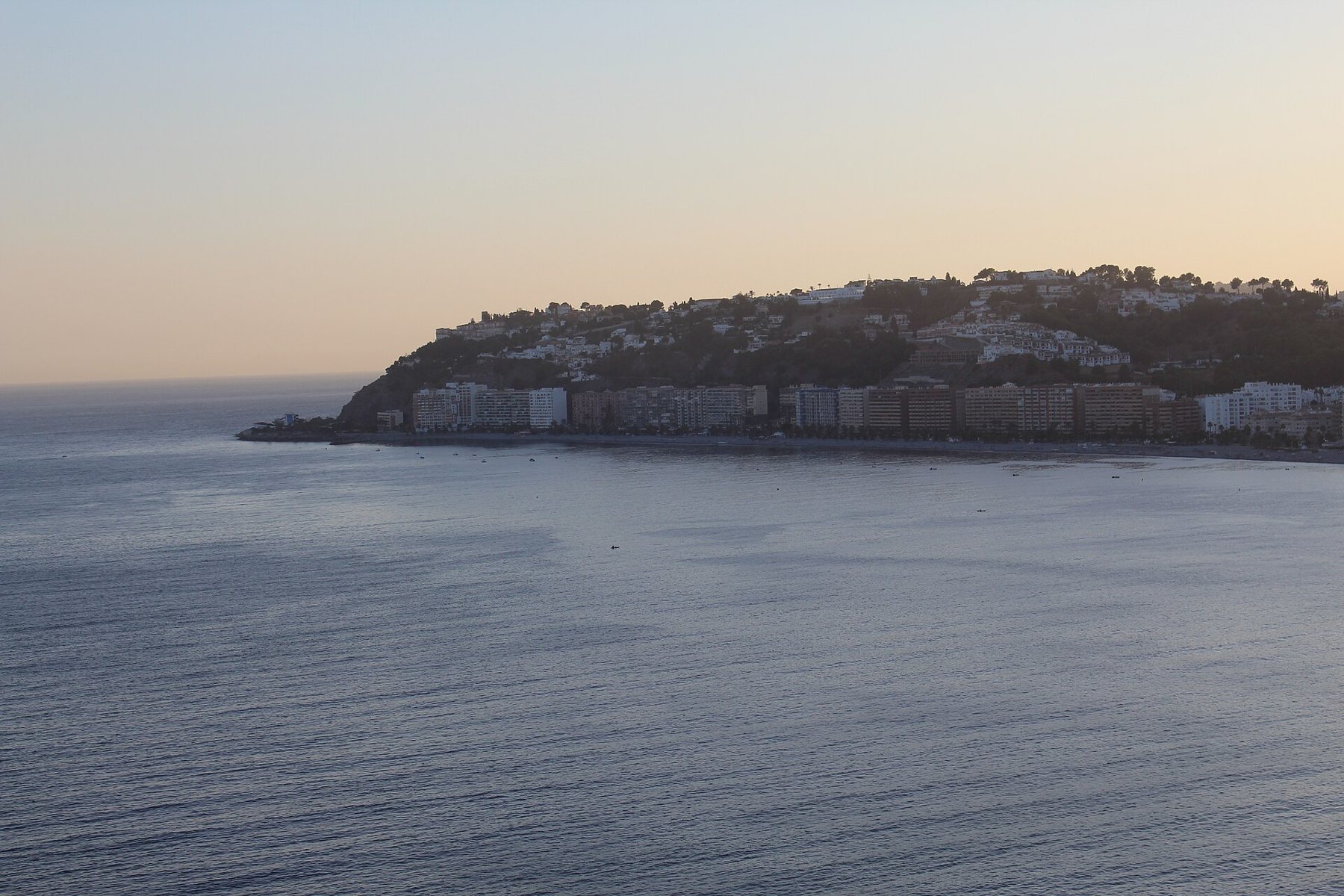
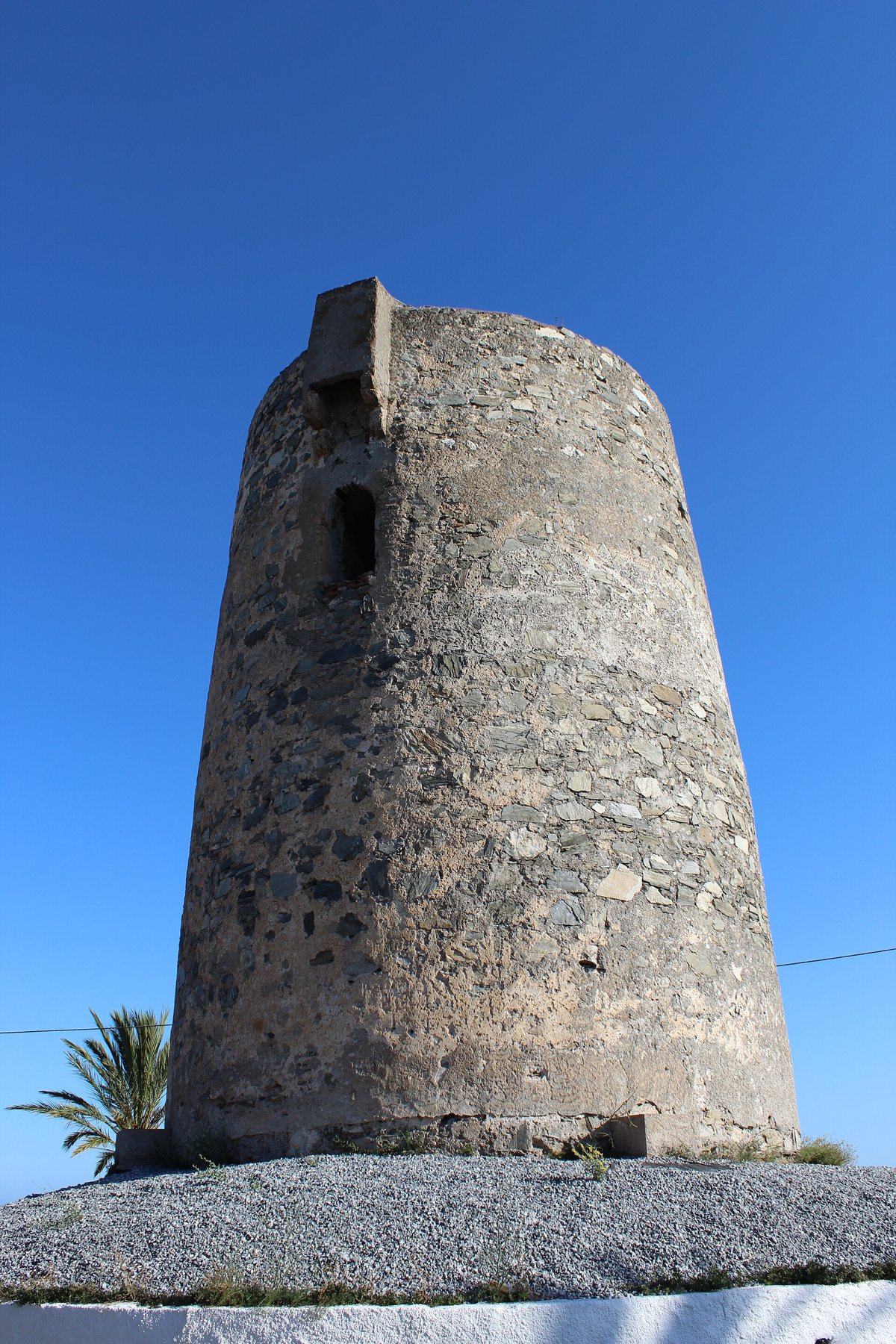
- Aquatropic and Torre de Velilla – immediately past Playa Tropical, the waterpark sits out on the point, guarded from above by the historic watchtower Torre de Velilla. Read more about Aquatropic below.
- Playa Puerta del Mar – the town's main beach, with the fortress of Castillo de San Miguel at its far end and inviting chiringuitos dotted all along the sands.
- Paseo del Altillo – the wide promenade lined with palm trees, fountains and sculptures, including the Monumento a los Fenicios, commemorating the Phoenicians who founded the town.
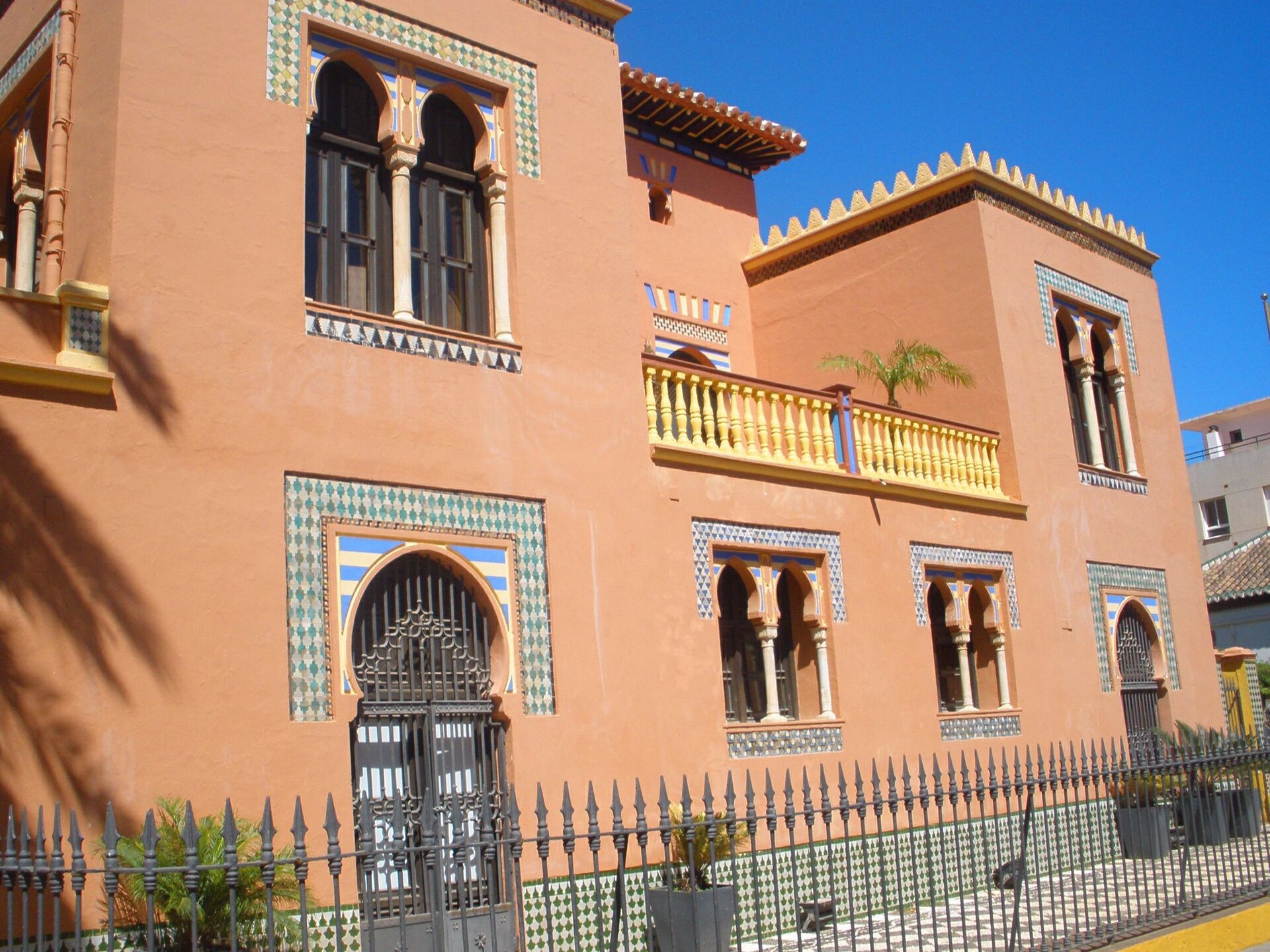
- Palacete de La Najarra – the charming neo-Moorish mansion on Avenida de Europa where the tourist office is based. A lovely place to pick up maps and enquire about current aquarium times.
- The Roman Aqueduct – a preserved section of the ancient aqueduct of Sexi stands right in the town centre, a couple of hundred metres east of the aquarium. Read more in Castillo de San Miguel, the museums and the Roman aqueduct.


Food and drink
We have not found a café inside the aquarium itself. However, right next door sits the town's newly opened Market Hall, inaugurated in March 2026, complete with fresh stalls and several eateries. It is open Monday–Saturday from 8:00 to 15:00, perfect for picking up fruit, seafood and jamón, or savouring a coffee with a couple of tapas.
If admiring seabass, gilthead bream and octopuses has worked up an appetite, why not enjoy some fresh seafood afterwards? Stroll down to Playa Puerta del Mar or San Cristóbal, where the beach bars grill traditional espetos – skewers of fresh sardines roasted over open wood fires. Be sure to ask for pescaíto frito (crispy fried mixed fish) and tender pulpo (octopus). Autumn and winter mark the season for cherimoya, the prized custard apple of our coast. We have not formally reviewed individual eateries and do not single out specific venues. See culinary traditions and 3×10 things to taste, eat and visit.

Toilets
- In the aquarium: We found no specific mention of customer toilets on the official websites. Please ask at the ticket desk.
- The Market Hall: Located directly adjacent. Ordering a quick coffee will normally allow you access to their facilities.
- Public toilets: OpenStreetMap marks a public facility around 300 m east of the aquarium, near the Roman aqueduct. We do not know whether a fee applies or what its opening hours are.
- At the beach: Several public conveniences are situated along the promenade, including one right by Playa Tropical (OpenStreetMap).
Traditions and festivals
The aquarium celebrates the sea, and so do the town's grandest festivals:
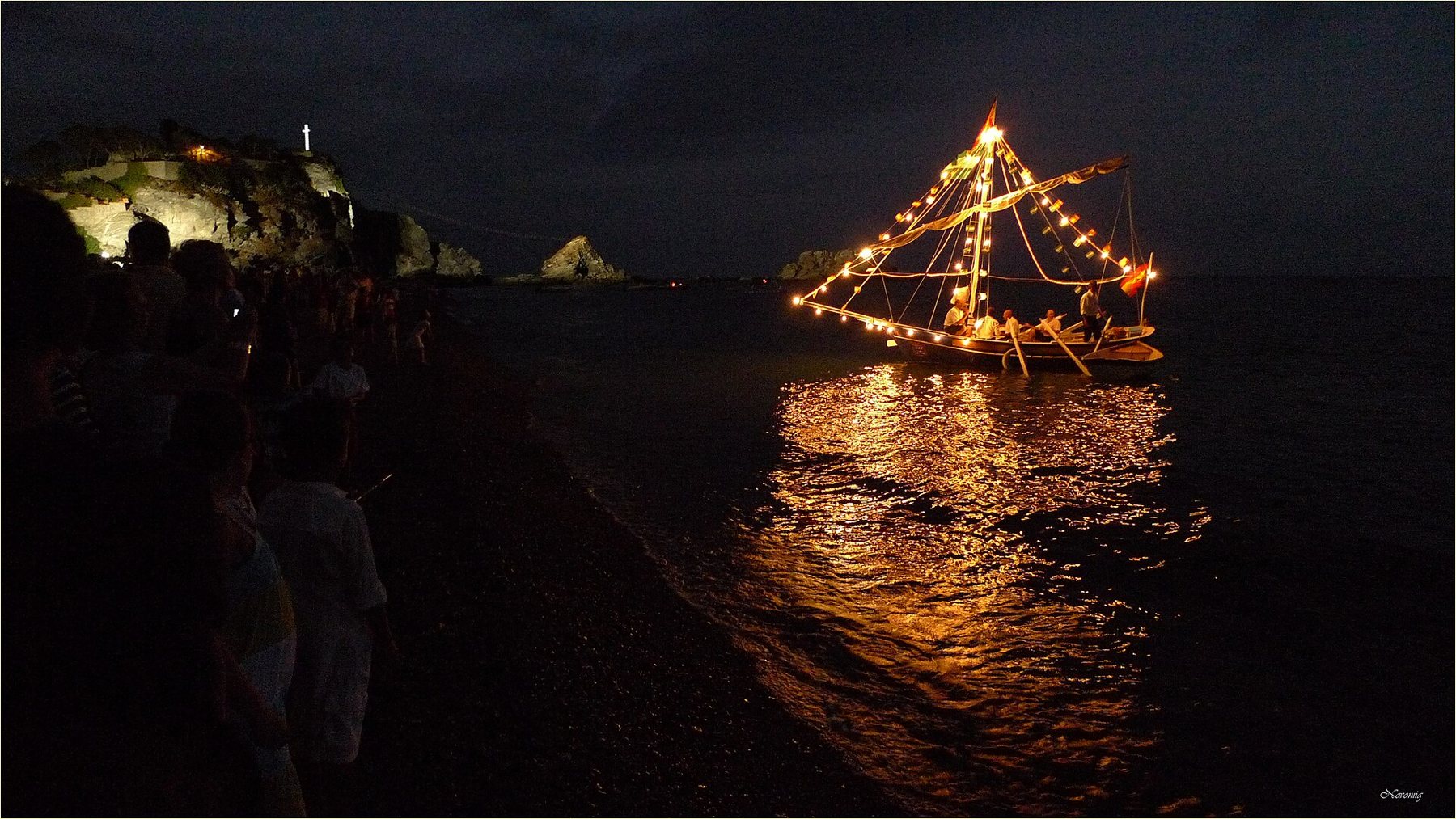
- Virgen del Carmen, 16 July: The fishermen's festival. The Virgin is borne through the old fishermen's quarter of Los Marinos, before a maritime flotilla escorts her across the bay off San Cristóbal in the evening, culminating in fireworks. Read about the fishermen in El Upa – the little fishing boat on the promenade.
- Virgen de la Antigua, 15 August: The patron saint of Almuñécar is celebrated with a week of festivities. On 15 August, the Virgin is taken by boat from San Cristóbal to Paseo del Altillo, accompanied by spectacular fireworks.
- Fiestas de San Miguel, 29 September: Also featured on the official tourist calendar.
- Cruces de Mayo in May: Floral crosses adorned throughout the town's squares and courtyards.
Explore all local celebrations on our festivals page. The Town Hall on Plaza de la Constitución in the old quarter is just a few minutes' walk from the aquarium.

Aquatropic – the waterpark at Playa de Velilla
If you have children or grandchildren visiting during the summer, Aquatropic is practically next door. The waterpark sits right on Paseo Reina Sofía by Playa de Velilla, just about 500 m and a 6-minute walk from Playa Tropical. First opened in 1988, it uses filtered seawater across its pools and waterslides. According to the park and the press, it remains the only saltwater waterpark in Spain.
Season: Summer months only. In 2026, the park operated from 12 June to 6 September, daily from 11:00 to 19:00. The rides close at 18:45. The 2027 season has not yet been announced (October 2026).
Attractions to enjoy: A wave pool, thrilling slides including Kamikaze, Black Hole, Hidrotubo, Torbellino, Zig-Zag, Gemelos and Montaña Tropical, soft multi-lane chutes, a splash tower, a jacuzzi, a cascading lake, plus a dedicated children's pool and splash zone for the youngest guests. In 2026, new interactive water play features were added for toddlers, including a playful water-squirting giraffe.
| Tickets, 2026 season | Online | At the ticket desk |
|---|---|---|
| Over 1.40 m | 25,00 € (≈ 186 kr.) | 27,00 € (≈ 201 kr.) |
| Junior, 1.20–1.40 m | 17,50 € (≈ 131 kr.) | 19,50 € (≈ 145 kr.) |
| Children, 0.95–1.20 m | 14,00 € (≈ 104 kr.) | 16,00 € (≈ 119 kr.) |
| Over 65 years | 17,50 € (≈ 131 kr.) | 19,50 € (≈ 145 kr.) |
| Under 0.95 m | Free | Free |
- Discounts: At the ticket window, large families (with an official carnet de familia numerosa) and visitors with disabilities receive a 20% discount. From 15:00 onwards, discounted afternoon tickets are available at the entrance. The exact afternoon price is not listed online. A 3-day multi-visit pass costs €54 (≈ 403 kr.) for adults and €39 (≈ 291 kr.) for seniors.
- Food & drinks: You are welcome to bring your own packed lunch, though glass bottles, tinned food and sharp objects are strictly prohibited. The park boasts Pipote restaurant, a barbecue grill, picnic areas, ice cream and waffle stalls, as well as the Havana cocktail bar. Meal deals ranged from €9.90 to €17.90 (≈ 134 kr.) in 2026.
- Toilets and changing rooms: The park provides well-maintained toilets and changing facilities (servicios y vestuarios), as well as a medical team on duty throughout opening hours.
- Please do not bring: your own chairs, sun loungers, parasols, footballs or inflatable lilos. Regular chairs can be hired for €3 (≈ 22,38 kr.), sun loungers for €5 (≈ 37,30 kr.), and Balinese daybeds for €22 (≈ 164 kr.).
- Lockers: Small lockers cost €5 (≈ 37,30 kr.) and large lockers €6 (≈ 44,76 kr.), plus a refundable €5 (≈ 37,30 kr.) deposit.
- Parking: €5 (≈ 37,30 kr.) plus a €5 (≈ 37,30 kr.) deposit returned upon departure (10:30–19:30). From Playa Tropical, you can easily walk in minutes.
- Telephone: 958 632 081, WhatsApp 620 615 630, aqua-tropic.com.
Maps and routes
Red star = Playa Tropical. Click on a point for the name and distance. Map data © OpenStreetMap.
Open the route in Google Maps
- Drive from Playa Tropical to Acuario de AlmuñécarApprox. 2.9 km, around 7 min. Park in the market hall underground car park (pay-and-display) – the aquarium is right next door.
- Walk along the beach to the aquarium with sightsAquatropic, Monumento a los Fenicios on Paseo del Altillo and the tourist office in La Najarra – arriving finally at the aquarium. Approx. 3.1 km and 40 min on foot, easy flat route.
- Walk from Playa Tropical to AquatropicApprox. 500 m, 6 min heading west along Paseo Reina Sofía. Summer season only.
- Aquarium, aqueduct and returnFrom the aquarium past the Roman aqueduct and returning along the beach – approx. 2.7 km, 35 min.
The routes start at Playa Tropical. On mobile devices, they open directly in the Google Maps app, ready for navigation.
Good advice
- Call before heading out. Opening hours have varied since the reopening. Phone 958 882 735 or 615 321 462 – and bear in mind it is usually closed on Tuesdays.
- Arrive in good time. Ticket sales close 45 minutes before the venue closes, and it typically shuts for a break in the middle of the day.
- Perfect for overcast days. Being situated underground, the aquarium makes a lovely destination when it rains, turns breezy, or gets too scorching on the beach.
- Combine with the market hall. Visit the aquarium in the morning, grab lunch in the market hall or along the beach, then enjoy a scenic stroll home along the promenade.
- Spot the marine life in the wild. Many of the exact same fish can be encountered with a simple mask and snorkel off La Herradura – see the waters around La Herradura.
- The bird park is nearby. Loro Sexi bird park, nestled beneath the castle, is only about 600 m from the aquarium, making the two a wonderful combined day out with children.
- Aquatropic: Purchase tickets online in advance to save €2 (≈ 14,92 kr.) per person. Aim to arrive early during July and August, and remember to pack suncream and swim shoes.
The aquarium was closed from November 2021 to December 2025. Many online reviews, guides and map listings date from before the reopening and show outdated schedules. Rely primarily on municipal announcements and the local tourist office, and don't hesitate to give them a quick call.
Sources
- Acuario de Almuñécar: Horarios y tarifas and Ubicación (Internet Archive snapshot from January 2026; the official website acuariodealmunecar.almunecar.es blocks access from outside Spain)
- Visit Almuñécar (Patronato Municipal de Turismo): Acuario de Almuñécar – prices, 18 aquariums, oceanarium, closed Tuesdays (retrieved from copy dated 13-04-2026)
- El Faro de Motril 29-12-2025: Reabre el Acuario de Almuñécar después de 4 años cerrado
- The Seaside Gazette, November 2025: Almuñécar Aquarium News (the repairs, the 2021 closure) and December 2025: Aquarium Reopens
- Diario Sexitano 08-09-2026: Over 32,000 visitors, coral candelabro and sleeping with the sharks
- Almuñécar Hoy: Acuario de Almuñécar – sections, 3,200 m², the ocean mural by El Niño de las Pinturas
- Nerja Today 2012: Almuñécar Aquarium – opened 18 July 2008
- Aqua Tropic: homepage, 2026 season, ticket prices 2026, FAQ, services and attractions
- Andalucía Informa 04-08-2026: Aquatropic – rates, opening and news 2026 (opened 1988, saltwater)
- Euro Weekly News 08-06-2026: Aquatropic 2026 – opening date with brand new attractions
- Visit Almuñécar: Parque Acuático Aquatropic (copy from 17-04-2026)
- 101TV: Virgen del Carmen on the Costa Tropical
- Festivales de España: Fiestas Virgen de la Antigua
- Distances: OSRM (routing.openstreetmap.de)
- Coordinates: OpenStreetMap contributors (ODbL)
Krone amounts are converted at 1 € ≈ 7.46 kr. and rounded.