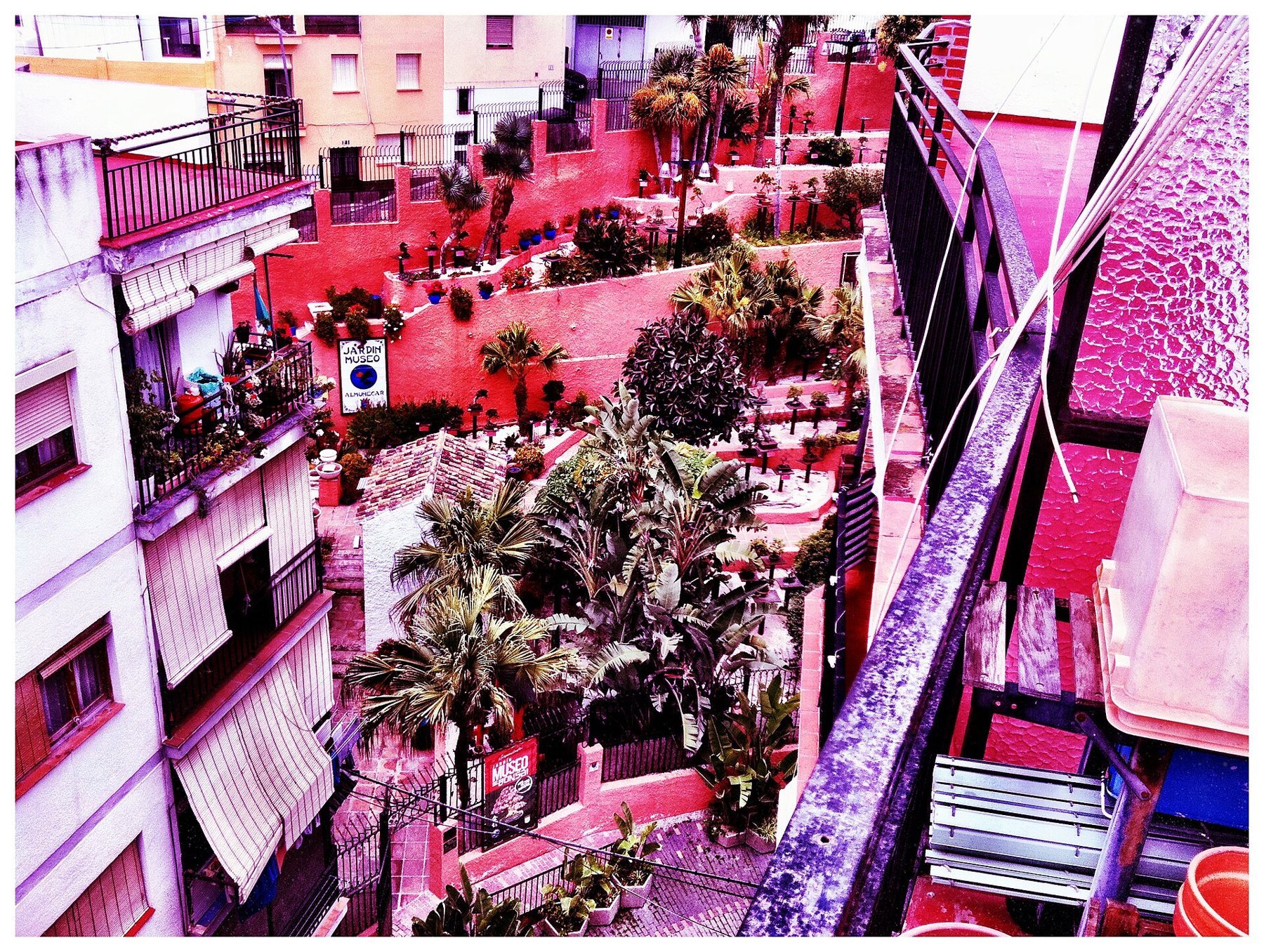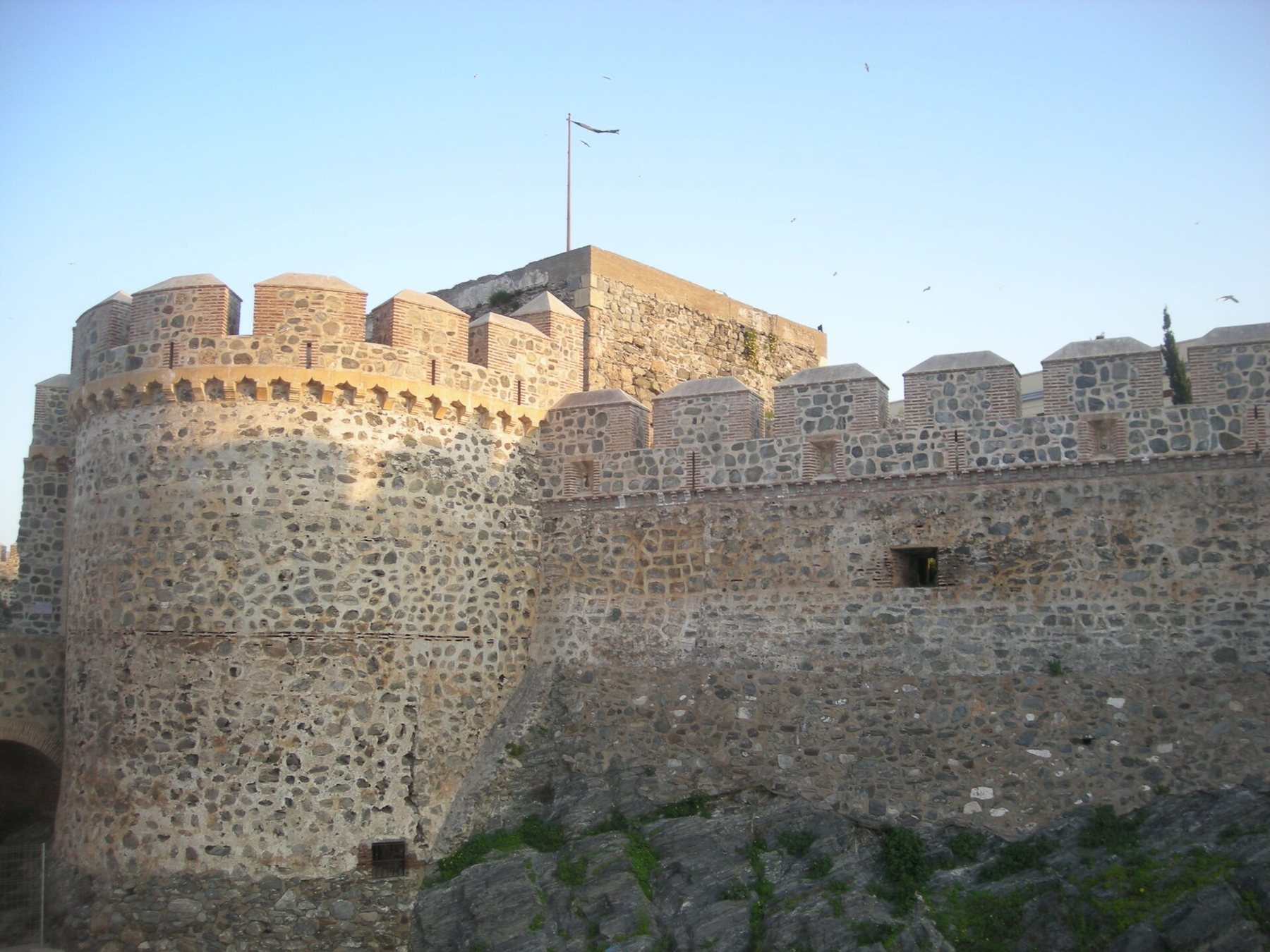
Perched atop the hill in the heart of Almuñécar stands the castle, Castillo de San Miguel. Phoenicians, Romans, Moors and Christians have all lived here, and from the ramparts you can take in views over the entire town and the sea. Later, the castle served as the town cemetery. Here you can read about the castle's 2,000-year history, the small museum and ticket prices. You'll also find opening times, advice on steps and toilets, and a walking route from Playa Tropical.
Guide: how to visit the castle
The castle is compact. In just over an hour, you can comfortably see it all at a leisurely pace. The ticket also covers the Cueva de Siete Palacios museum, located a 4–5 minute walk away. We suggest the following order:
- Cueva de Siete Palacios (approx. 30 mins) – start down in the town inside the museum's Roman vaults. The ticket covers both sites.
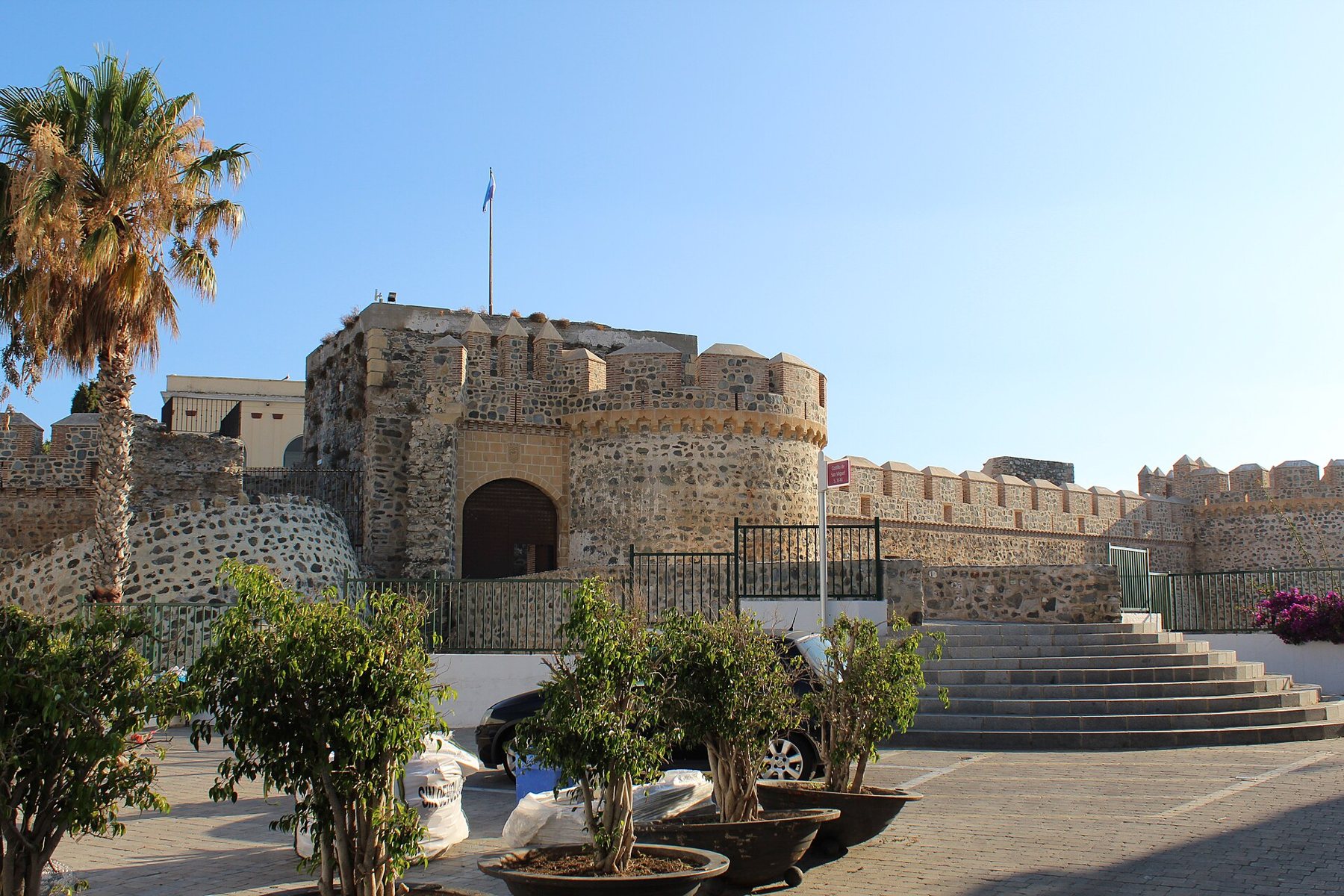
- Up the hill to the castle square – the street Calle Acceso al Castillo leads right to the entrance. You cross the old drawbridge and enter through the gate between the round towers.
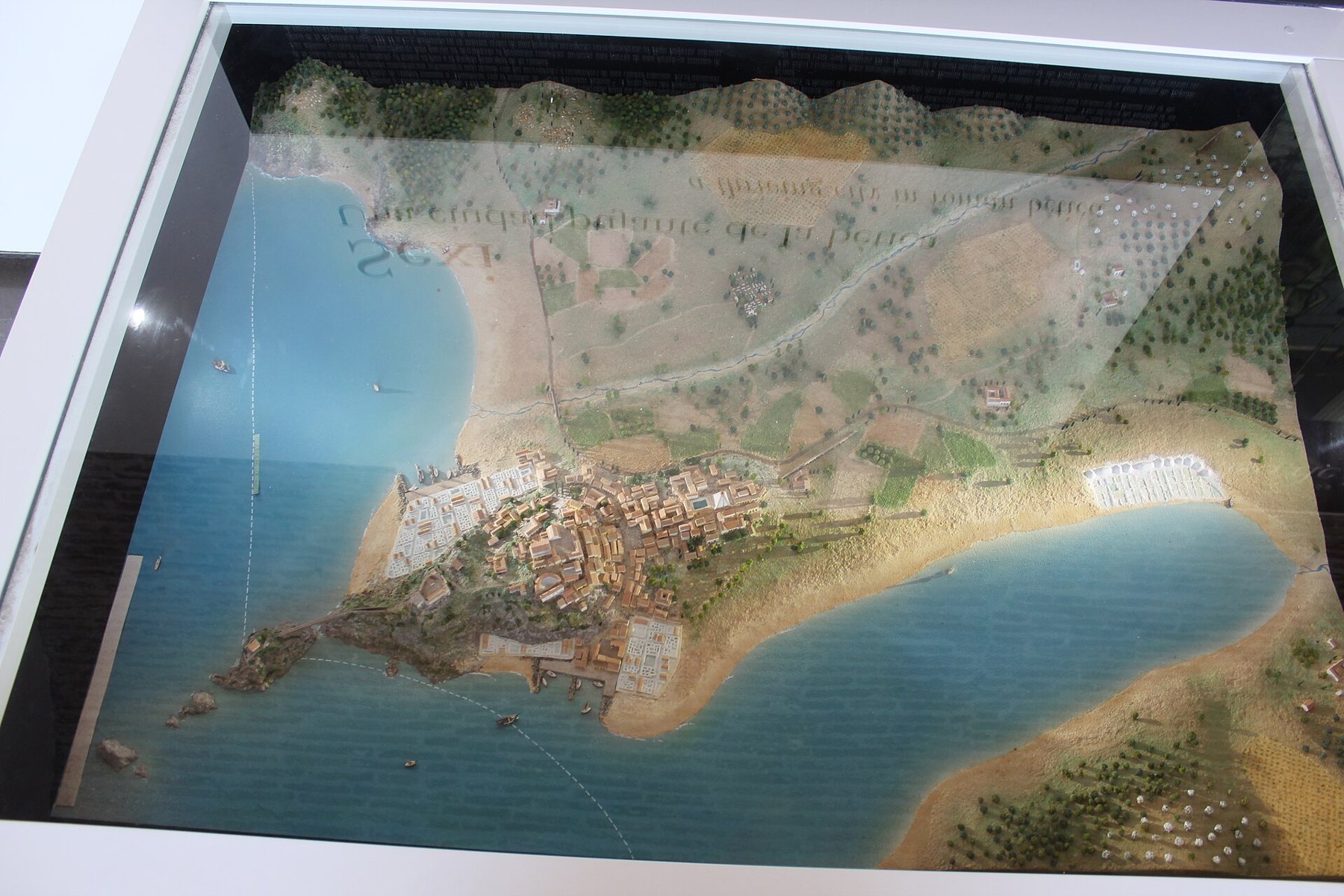
- The keep and the museum (approx. 30 mins) – town models, archaeological finds and chains from the dungeon.
- Walk the ramparts (approx. 30 mins) – the Moorish baths, views over Puerta del Mar and out towards Peñón del Santo.
- Down to El Majuelo – the town's botanical park lies just below the castle. Admission is free, with plenty of shade and public toilets.
Visit in the morning. The castle closes during the middle of the day, and ticket sales end half an hour before closing. In summer, the mornings are also much cooler.

Opening hours and prices
| Period | Tuesday–Saturday | Sunday |
|---|---|---|
| 1 November – 31 March | 10.00–13.30 and 16.00–18.30 | 10.00–13.00 |
| 1 April – 30 June | 10.00–13.30 and 17.00–19.30 | 10.00–13.00 |
| 1 July – 15 September | 10.00–13.30 and 18.30–21.00 | 10.00–13.00 |
| 16 September – 30 October | 10.00–13.30 and 17.00–19.30 | 10.00–13.00 |
Closed on Mondays all year round. The ticket desk closes 30 minutes before closing time. Opening times and prices are sourced from the official Granada province website and the Almuñécar tourist office as of October 2026. 31 October is not listed under either period, so please call ahead if planning to visit on that day.
- Adults: €4 (≈ 29,84 kr.)
- Children, pensioners, carnet joven and tarjeta cultural: €2.50 (≈ 18,65 kr.)
- Groups of at least 15 people: €2 (≈ 14,92 kr.) per person
- Free: every Friday 10.00–13.30
The ticket is a combined ticket for the castle and Cueva de Siete Palacios. The aquarium is not included. We found no combined ticket with Acuario de Almuñécar, which requires separate entry. We haven't found any online ticket sales, so expect to purchase tickets on site. For enquiries: contact the castle on tel. +34 650 027 584 or the tourist office on +34 958 631 125. Older guidebooks and websites cite €2.35 (≈ 17,53 kr.) or €1.95 (≈ 14,55 kr.); these are outdated prices.
2,000 years of history on a single hill
According to the Diputación de Granada, excavating the hill has proved challenging because the many civilizations settling here continually built on top of previous layers. Archaeologists have uncovered traces of Phoenicians and Carthaginians (the Punic strata), Romans, several Moorish periods, and post-1489 Christian construction.
Phoenicians and Romans
In ancient times, Almuñécar was known as Sexi. The Phoenicians founded the town, and the Romans prospered here through salted fish and the fermented fish sauce garum. On the hill itself, only potsherds remain from the Phoenician era. The Romans, however, left behind remains of a fortification. A local castle encyclopaedia (Mis Castillos) also notes a Roman cistern and late Roman graves within the fortress. Read more about the town's Roman heritage in Castillo de San Miguel, the museums and the Roman aqueduct and El Majuelo, where the Roman salting vats can be seen.
The Moorish Castle
The castle itself is Moorish. It was probably built during the Caliphate era in the 10th–11th centuries using rammed earth and poured concrete (tabiya) and later expanded by the Nasrid dynasty of Granada with natural stone walls. The layout is triangular, following the contour of the rock. According to the Diputación, there are nine wall sections and eleven towers. The municipal archaeologist counts ten towers.
The keep, the Torre del Homenaje, was according to the municipal archaeologist the governor's residence. The castle was also a holiday retreat for Granada's royal family, the Nasrids. You can still see the foundations of a palace with baths and a water cistern. Spain's official tourism site notes that the fortress was famed for its prison and dungeon. Deposed sultans, ministers, and military commanders who had fallen from favour were held here. In 1489, the castle commander, Ibn al-Hay, surrendered the fortress to the Catholic Monarchs. The entire coastline passed to Castile under the agreements (capitulations) signed that year. You can read more about the battles along the coast on the page The Battles.

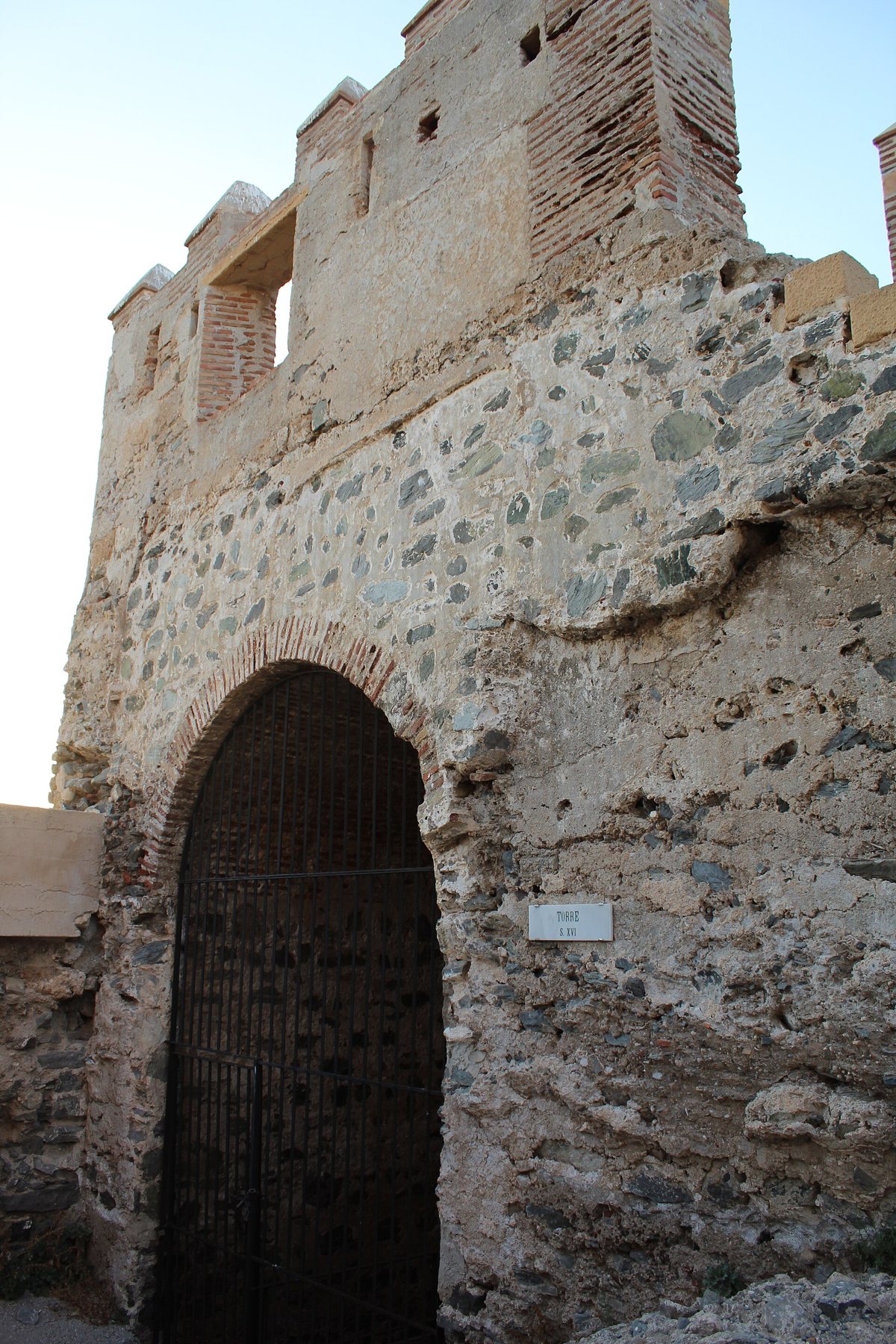

The Christians Rebuild
After 1489, the Christians rebuilt the fortress to withstand artillery fire. Late in King Ferdinand's reign, the moat, drawbridge, and large entrance facade with four round towers were added. These are the ones you see today as you walk up the hill. Under Charles V, large parts of the Moorish castle were demolished or hidden behind new walls. To the south, a cannon battery was constructed alongside a defensive wall, the coracha, stretching right down to the rock of Peñón del Santo by the beach. That wall is today intersected by the seaside promenade.
During the Napoleonic Wars, the fortress was bombarded from the sea by the Royal Navy and reduced to ruins. Spain's tourism site states 1808. Spanish Wikipedia and other sources state that the French occupied the castle in 1812 and that the British drove them out by shelling.
The Castle Cemetery
This comes as a surprise to many: from 1851 to 1977, the castle served as the town cemetery. The ruin was elevated and empty, and for over 125 years the town's deceased were buried within the walls. In 1977, the municipality relocated the cemetery elsewhere. The dates are given on the Granada province's official site. The tourist office writes more vaguely "until the mid-20th century". The fortress was declared a National Monument in 1931 and a Bien de Interés Cultural in 1993. Thus, the castle was a protected monument for more than 40 years while still functioning as a cemetery. Restoration began in earnest only towards the end of the 20th century, with the major works carried out after 2005. We have not been able to find out where the graves were relocated.
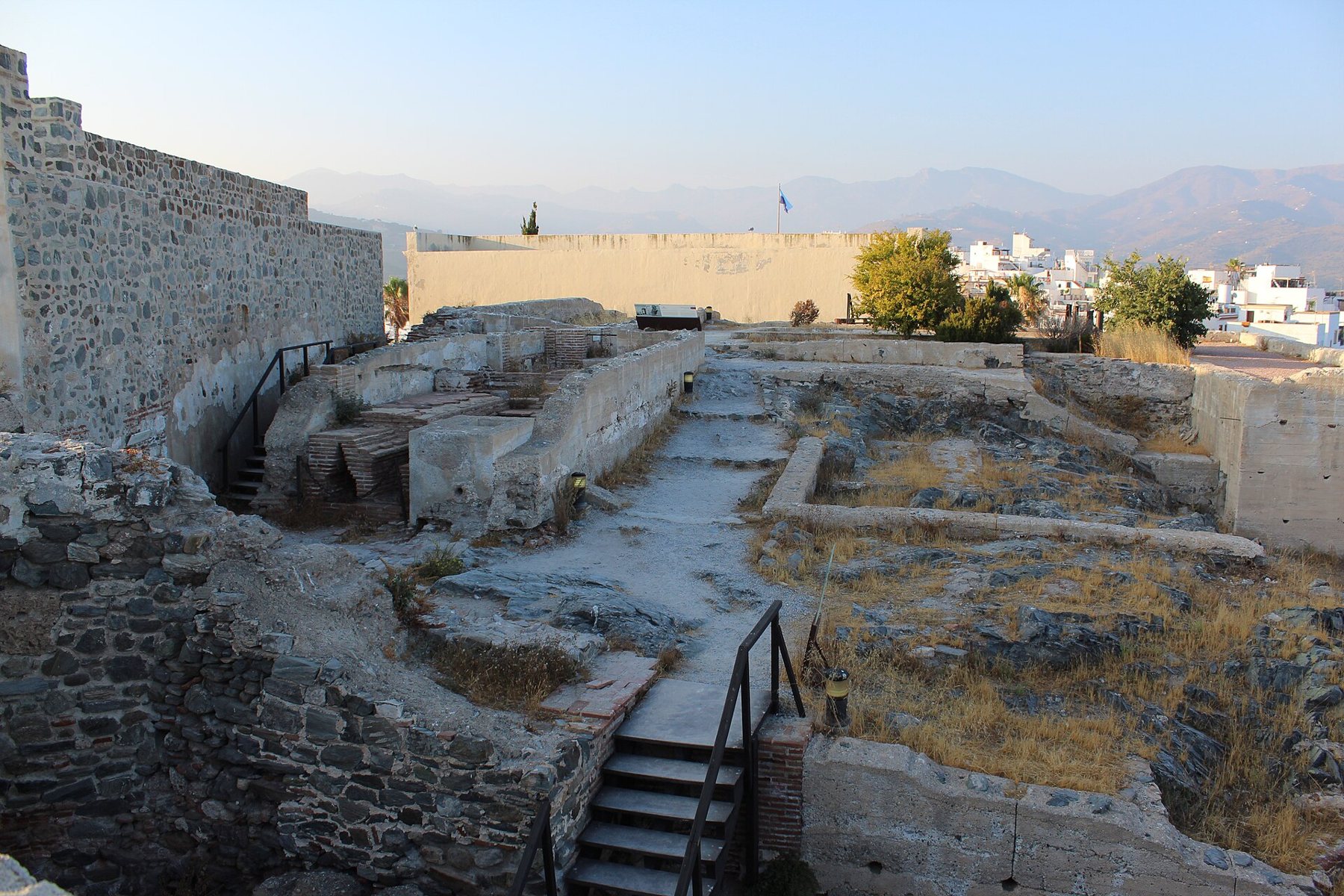
The Castle Museum
In the centre of the castle stands a small neoclassical pavilion that stands separate from the other buildings. It probably dates from the 18th century. Today it houses the town's historical museum, the Museo de la Ciudad (also known as Museo Histórico). According to The Seaside Gazette, the exhibition was redesigned in 2013. Information panels were installed around the castle, an exhibition on the three cultures that shaped the town was set up in the Torre del Homenaje, and models in the Pabellón Militar illustrate how the town grew over the centuries. At the same time, the shackles from the dungeon were put on display.
In June 2020, the municipality also opened the west tower (torre de poniente) to the public. It is a Christian tower built directly on the bedrock, featuring a vaulted brick ceiling. The town council plans to open more of the castle, including parts of the long wall running down towards the beach.
"Casa del Gobernador": We have not found any building by that name in any official source about the castle. The keep served as the governor's residence, and the museum is housed in the pavilion. If you have spotted the name on a sign inside the castle, we would love to hear from you.

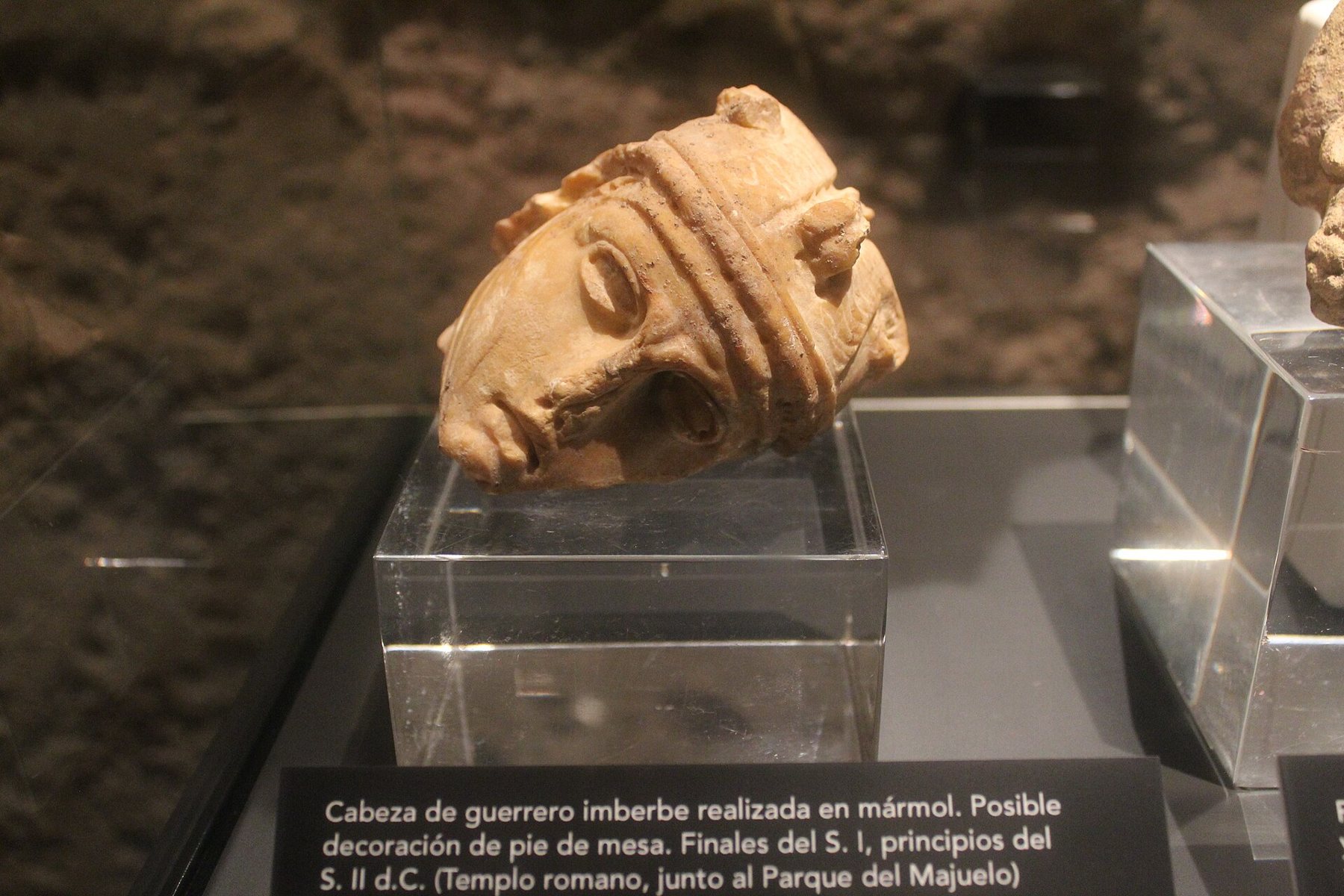
Cueva de Siete Palacios – Included in the Ticket
A short walk down the hill brings you to the town's archaeological museum, the Cueva de Siete Palacios ("Cave of Seven Palaces"), on Calle San Joaquín. It is housed in the vaulted cellars of a Roman building. Displayed here are finds from the Phoenician necropolises of Puente de Noy and Laurita, as well as from the fish-salting factory in El Majuelo. The most famous discovery is an Egyptian amphora dating from the 17th century BC, bearing hieroglyphs linking it to Pharaoh Apophis I, as noted on spain.info. According to OpenStreetMap, the museum keeps the same opening hours as the castle. Allow about half an hour for your visit.
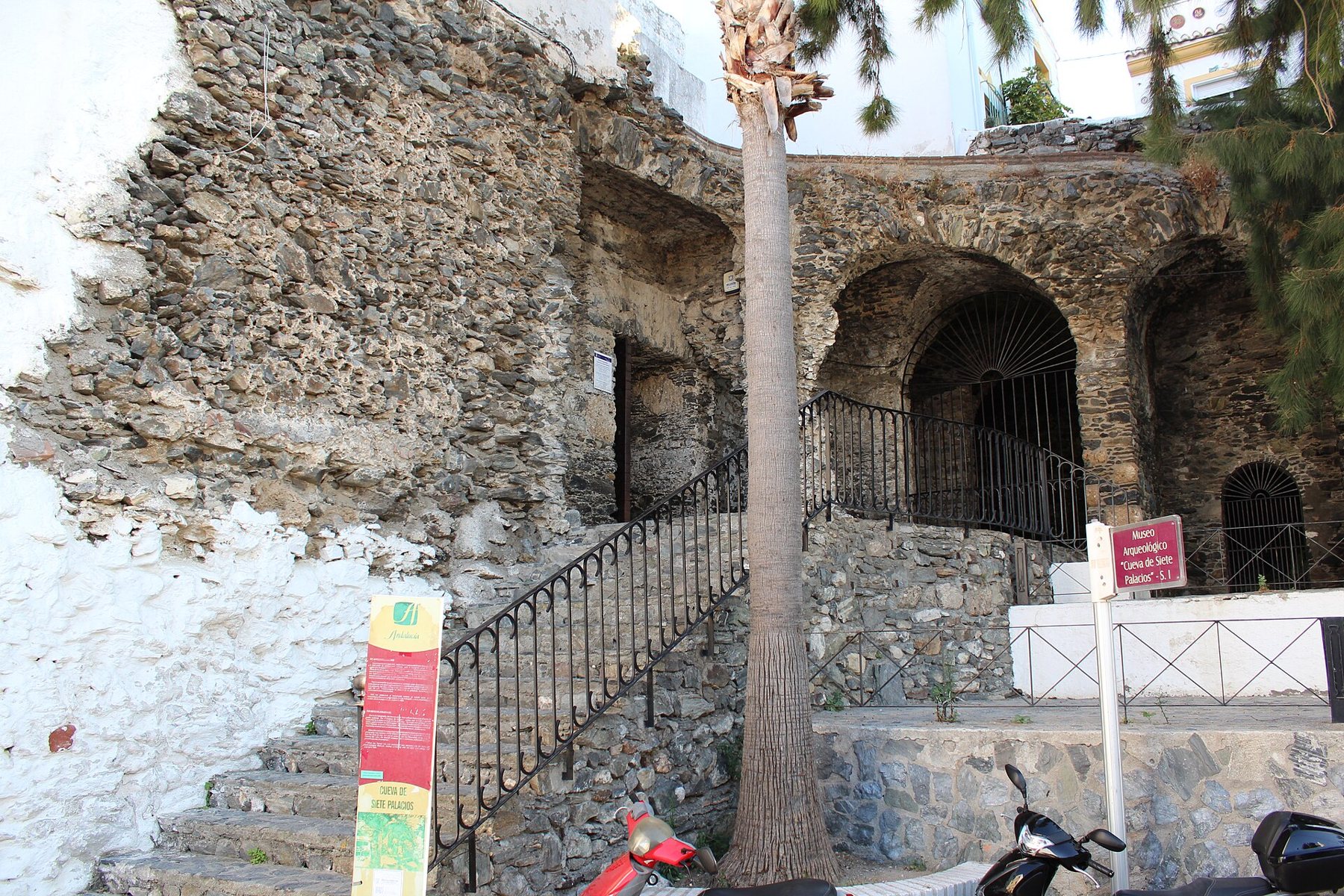

The view
From the battlements, you look out over Playa Puerta del Mar and Velilla beach to the east, and over the palm trees of El Majuelo and San Cristóbal beach to the west. Peñón del Santo with its cross sits right below, backed by the mountains rising behind the town. The light is best in the morning and late afternoon. In summer, the castle reopens at 18:30, giving you plenty of time to enjoy the evening glow over the sea before closing at 21:00.

Steps and Accessibility
According to the Diputación de Granada, there are numerous steps throughout the castle, making it unsuitable for visitors with mobility difficulties. There are also steps leading up to the main gate. The walk up from town is steep, though it follows a regular paved street. You can drive right up to the gate, but there is no proper parking area at the top (sources differ slightly on this). The Diputación therefore recommends parking down in town and walking up. Cueva de Siete Palacios also features steps at the entrance.
How to get there
On foot: From Playa Tropical, walk west along the promenade past Playa de Velilla and Playa Puerta del Mar to Paseo del Altillo. From there, head up the hill through the old town. It is around 2.3 km and takes roughly 30 minutes. The final stretch is steep.
By bus: The local town bus, line 3A Velilla–Taramay, runs between Velilla and the centre. A ticket costs 1 € (≈ 7,46 kr.) (as of October 2026). There are bus stops on Paseo del Altillo and near Calle Geraneos close to the castle. We have not been able to verify exactly which lines call there. Check the timetable at urbanosalmunecar.es and see buses.
By car: It is 2.2 km and about 6 minutes to the municipal underground car park, Parking El Altillo on Paseo del Altillo, which is open 24 hours a day (charges apply). We have not been able to confirm the exact parking rates. From there, it is about 600 m and an 8-minute uphill walk to the castle. The streets in the old town are narrow. See also parking.
The buttons below the map will open the route directly from Playa Tropical in Google Maps.
Sights along the way
- El Upa – the old fishing boat on Paseo de Velilla, just minutes from Playa Tropical. Read more.
- Playa Puerta del Mar – the town's main beach. Looking up from here, you can see the castle perched on the hill above the houses.
- Monumento a los Fenicios on Paseo del Altillo – the monument commemorating the Phoenicians who founded Sexi.
- Plaza de la Constitución – the town hall square lined with cafés, just a few minutes from both Cueva de Siete Palacios and the castle.
- Cueva de Siete Palacios – the museum housed in Roman vaults, included with your castle ticket.

Food and drink
There is no café inside the castle grounds. Head down to Plaza de la Constitución and the surrounding streets, where you will find plenty of cafés and tapas bars. For lunch, the beach bars along Playa Puerta del Mar and San Cristóbal are ideal. Be sure to order espetos, fresh sardines skewered and grilled over an open fire. Spanish Wikipedia highlights three traditional local sweets: cazuela mohína (made with almonds, cinnamon, and aniseed), torta de al-Hajú (almonds and honey between thin wafers), and merengazo (almond sponge with custard cream and meringue). Autumn and winter are prime season for the coast's delicious cherimoya (custard apple), which you can buy at the Market Hall. We do not single out specific restaurants as we have not been able to review them individually. See also our guide to local food traditions.

Toilets
None of the sources mention toilets inside the castle or Cueva de Siete Palacios. It is worth asking at the ticket desk. According to OpenStreetMap, there are public toilets nearby:
- El Majuelo – in the park just below the castle, about 200 m as the crow flies from the main gate (free entry to the park)
- Plaza San Cristóbal – near the entrance to the Loro Sexi bird park, below the castle towards the sea
- By San Cristóbal beach – close to the Palacete de La Najarra (tourist office)
We do not know whether a fee is charged or if they remain open year-round. Alternatively, you can pop into a local café and use their facilities when buying a coffee.
Festivals and traditions
The neighbourhood surrounding the fortress is known as Barrio de San Miguel, named after the Archangel Michael, who also gave the castle its name. His feast day falls on 29-09-yyyy (29th September), and the district holds its fiesta around that time. In 2026, the celebrations ran from 25 to 29 September, featuring live music, a brass band (charanga), bingo, children's shows, a foam party, and evening concerts on the Explanada de San Miguel right by the castle. The programme was organised by the municipality and the local residents' association.
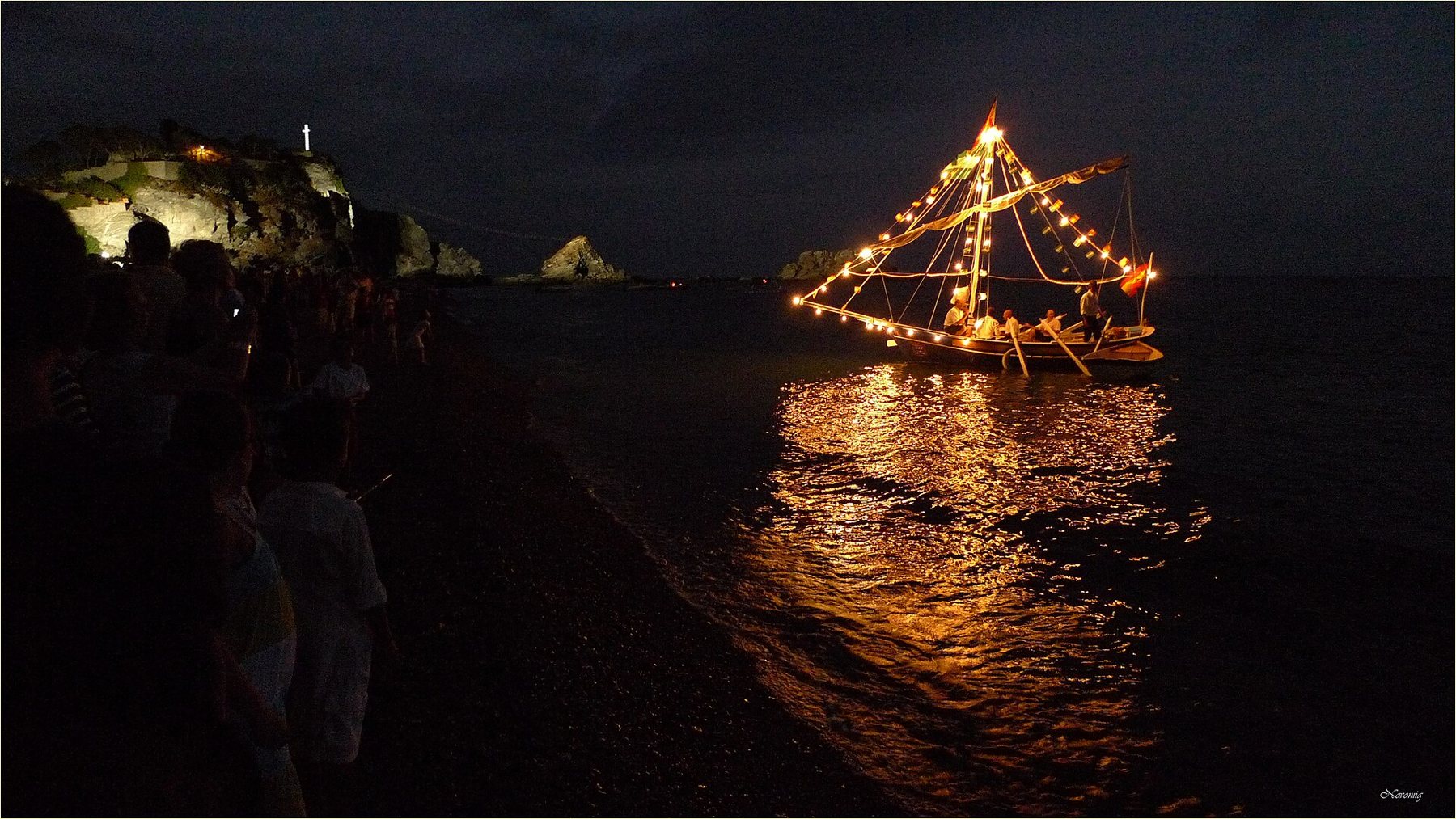
The town's grandest festival is the Fiestas de la Virgen de la Antigua from 9 to 15 August. On 15 August, the patron saint is carried out to sea in a boat procession from San Cristóbal to Puerta del Mar, followed by a spectacular fireworks display from Peñón del Santo. You get a wonderful view of this from the beach beneath the castle. During the Cruces de Mayo on 3 May, elaborate flower-decked crosses are erected throughout the town. Explore all the town's festivities on the festivals page.
Maps and routes
Red star = Playa Tropical. Click on a point for the name and distance. Map data © OpenStreetMap.
Open the route in Google Maps
- Drive from Playa Tropical to the castleApprox. 2.2 km, around 6 mins to the Parking El Altillo underground car park (charges apply). From there, it is about 600 m and an 8-min uphill walk to the castle – there is no proper parking up by the gate.
- Walk from Playa Tropical to the castleApprox. 2.3 km, around 30 mins along the beach promenade and up through the old town. The final stretch is steep.
- Walk to the castle with stops on the wayPass by El Upa, the Monumento a los Fenicios, and the Cueva de Siete Palacios museum – then up to the castle. Approx. 3.2 km and 45 mins on foot plus sightseeing time.
- Circular walk: castle, El Majuelo, Peñón del Santo, and backUp to the castle, down through El Majuelo (toilets available), out onto Peñón del Santo, and return along the beach. Approx. 5.8 km and 1 hr 20 mins walking plus visits.
The routes start at Playa Tropical. On mobile devices, they open directly in the Google Maps app, ready for navigation.
Good advice
- Visit on a Friday between 10:00 and 13:30 – admission is free to both the castle and Cueva de Siete Palacios.
- Avoid Mondays – the sites are closed. On Sundays, they are open in the morning only.
- Wear comfortable shoes. You will encounter steps, uneven stone surfaces, and a steep climb up to the main gate.
- Bring water in summer. There is very little shade along the ramparts and no café on site.
- Walk there and take the bus back. It is a lovely walk along the seafront, and you will appreciate skipping the return walk after touring the castle.
- Combine your visit. El Majuelo, Peñón del Santo, and the Loro Sexi bird park are all situated directly below the castle.
The castle is not suitable for wheelchairs, walking frames, or prams. Times and prices may change – ring the tourist office on +34 958 631 125 to check current details.
Sources
- Diputación de Granada, Tu Patrimonio: Castillo de San Miguel (Almuñécar) (times, prices, the 1851–1977 cemetery, structure, steps)
- Almuñécar Tourist Office: Castillo de San Miguel (prices, times, history, pavilion; accessed via Internet Archive, archived January 2026)
- spain.info: Castillo de San Miguel (the prison, the 1489 surrender, 1808) and Cueva de Siete Palacios (the vase from Apophis I's reign)
- Junta de Andalucía, Cultural Agenda: Castillo de San Miguel y Museo de la Ciudad
- Diario Sexitano 15-06-2020: West Tower opens to the public (municipal archaeologist on the keep, baths, and remodelling)
- The Seaside Gazette 2013: Modifications up at the Castle (the exhibitions and shackles)
- Mis Castillos: Castillo de San Miguel (Roman remains, 1812, restoration post-2005)
- Wikipedia (es): Castillo de San Miguel (Almuñécar) and Almuñécar (festivals, gastronomy)
- Planomato 24-09-2026: San Miguel – Five Days of Festivities in Almuñécar
- Festivales de España: Fiestas Patronales Virgen de la Antigua 2026
- Urbanos Almuñécar: Line 3A Velilla–Taramay
- Coordinates: OpenStreetMap contributors (ODbL)
Krone amounts are converted at 1 € ≈ 7.46 kr. and rounded.