Frigiliana sits 300 metres up the mountainside above Nerja, an easy half-hour drive west of Playa Tropical. Its ancient Moorish quarter is one of the best preserved in Málaga province, featuring steep steps, whitewashed houses and twelve ceramic tile plaques depicting the 1569 Morisco rebellion. It is also home to Europe's only sugarcane honey factory. Here is our guide to parking, toilets, dining, local fiestas and places to stop along the way.
The Moorish quarter – Barribarto
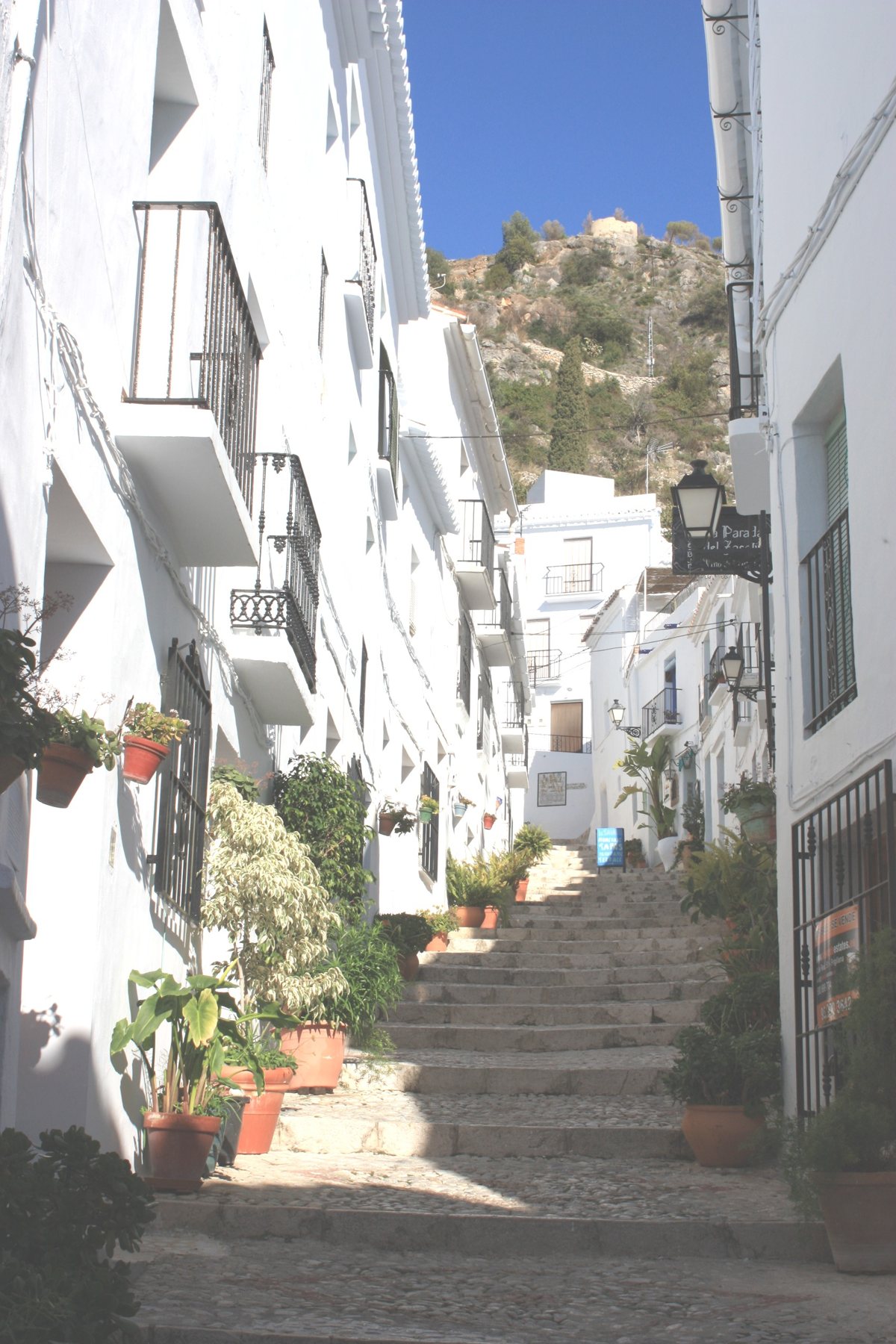
The old quarter is known locally as Barribarto, meaning "the upper quarter". Built by the Moors and Mudéjars – Muslims living under Christian rule – the tourist office describes it as one of the best preserved in the entire province. The district is officially protected as a Conjunto Histórico Artístico. In 1982 Frigiliana won first prize in Spain's national town beautification contest, and since 2015 the village has been a member of Los Pueblos Más Bonitos de España, the very first town in Málaga province to be included.
The layout here was never planned. Houses are clustered tightly against each other and the hillside, while narrow alleys twist and turn, turning into flights of steps and ending in quaint cul-de-sacs. These dead ends are known as adarves, originally leading into private courtyards for houses without direct street access. The alleys are paved with intricate pebble mosaics, and the cottages are kept immaculately whitewashed. According to the tourist office, it is mostly individual residents who sweep and care for the street outside their own front door.

Calle Real is the main thoroughfare and the only street in the old quarter open to cars. From here, all steps and lanes ascend into Barribarto. The route that best illustrates the Moorish street plan, according to the tourist office, begins where Calle Hernando el Darra meets Travesía, continues along Calle Amargura and Calle Alta, leads into Calle Zacatín, and ends just behind the church of San Antonio. "Zacatín" was historically the name for streets where fabrics and clothing were sold.

The twelve ceramic plaques depicting the 1569 rebellion
Scattered throughout Barribarto are twelve large painted ceramic tile panels mounted on the walls. Together, they tell the story of the Morisco uprising and its tragic climax on the cliff above Frigiliana. The Moriscos were Muslims who had been forced to convert to Christianity. Each plaque features an illustration alongside a quote from historical chronicles, largely drawn from Luis del Mármol Carvajal, who served as a soldier in the campaign and penned the account in 1600.

The story in brief
In 1567, Philip II banned the Moriscos from speaking or writing Arabic, wearing their traditional attire, and observing their customs. At Christmas 1568, the Moriscos of the Alpujarras rose in revolt, and by April 1569 the rebellion had spread to the Axarquía region. Thousands gathered from the mountain villages in Cómpeta before making their stand on the craggy rock of Peñón de Frigiliana. There, they defended an ancient fortress supplied with fresh water via an aqueduct. Their commander was Hernando el Darra, whose ancestors had been lords of the castle in Frigiliana.
The first assault on Saturday 28 May 1569 by 1,500 troops from Málaga and Vélez was repelled. On 11 June 1569, Luis de Requesens launched a major assault with around 6,000 men, and the stronghold fell. According to the plaques, roughly 7,000 Moriscos had gathered on the rock, and some 2,000 perished: "500 men, mostly elderly, and nearly 1,300 women and children". Mármol records that some women chose to leap from the cliffs rather than be captured. About 2,000 young men escaped to the Alpujarras, including el Darra. The Moriscos were banished from the region, and the castle was razed to the ground so it could never be used as a refuge again. Frigiliana was repopulated by "Old Christians" brought in from places such as Granada and Valencia.
Historical sources disagree on what eventually became of el Darra. The tourist office's guide to the streets notes that he escaped to Africa via Maro and was later pardoned by the king. The plaque text, by contrast, notes that he never crossed the sea and that it remains unknown whether he ever reached North Africa.
How to find the plaques
The plaques trace the chronological story, running from Calle Hernando el Darra to the far end of Calle El Garral. The tourist office details eleven of them on its website: The Land, The People, The Rebellion, The Identity, The Exodus, The Leaders, The Christians, The Siege, The Moriscos, The Expulsion and The Destruction. A leaflet with a map showing the plaques is available at the tourist office in both Spanish and English. The texts on the plaques themselves are written in Spanish.
Sources differ on when the plaques were originally mounted. The tourist office states they were installed during the restoration of Barribarto in the mid-1960s, whereas Spanish Wikipedia gives the year 1982.
Guide: a walking tour of Frigiliana
The entire route is less than a kilometre long, but it winds up and down steps the whole way. Allow 2–3 hours including leisurely stops. It is best enjoyed early in the day or late in the afternoon. The tourist office also recommends an evening stroll when the alleys become wonderfully peaceful.
- Plaza de las Tres Culturas – park in the underground car park directly beneath the square. Enjoy sweeping views across the valley from neighbouring Avenida Carlos Cano.
- El Ingenio – the stately Renaissance palace where sugarcane honey is produced (see below). Right next door sits Casa del Apero, housing the tourist office and the free archaeological museum.
- Calle Real – the charming main street lined with independent shops, the town hall and the church square.
- Calle Hernando el Darra and the stone steps leading up into Barribarto, where you will find the first ceramic plaque.
- Callejón del Peñón – this alley climbs up towards the cliff peak. According to the tourist office, it offers panoramic vistas over the whole village and the coastline towards Nerja.
- Calle Zacatín and down to the church of San Antonio.
- Fuente Vieja – the historic 17th-century fountain, down Calle Chorruelo.
- Back along Calle Real to the square. If you are still following the ceramic trail, the plaques conclude in Calle El Garral.
Frigiliana is not well suited to wheelchairs, walkers or prams outside Calle Real. The streets are steep, cobbled and feature numerous steps. Wear shoes with good grip, as the cobblestones can be slippery underfoot.
Church of San Antonio de Padua
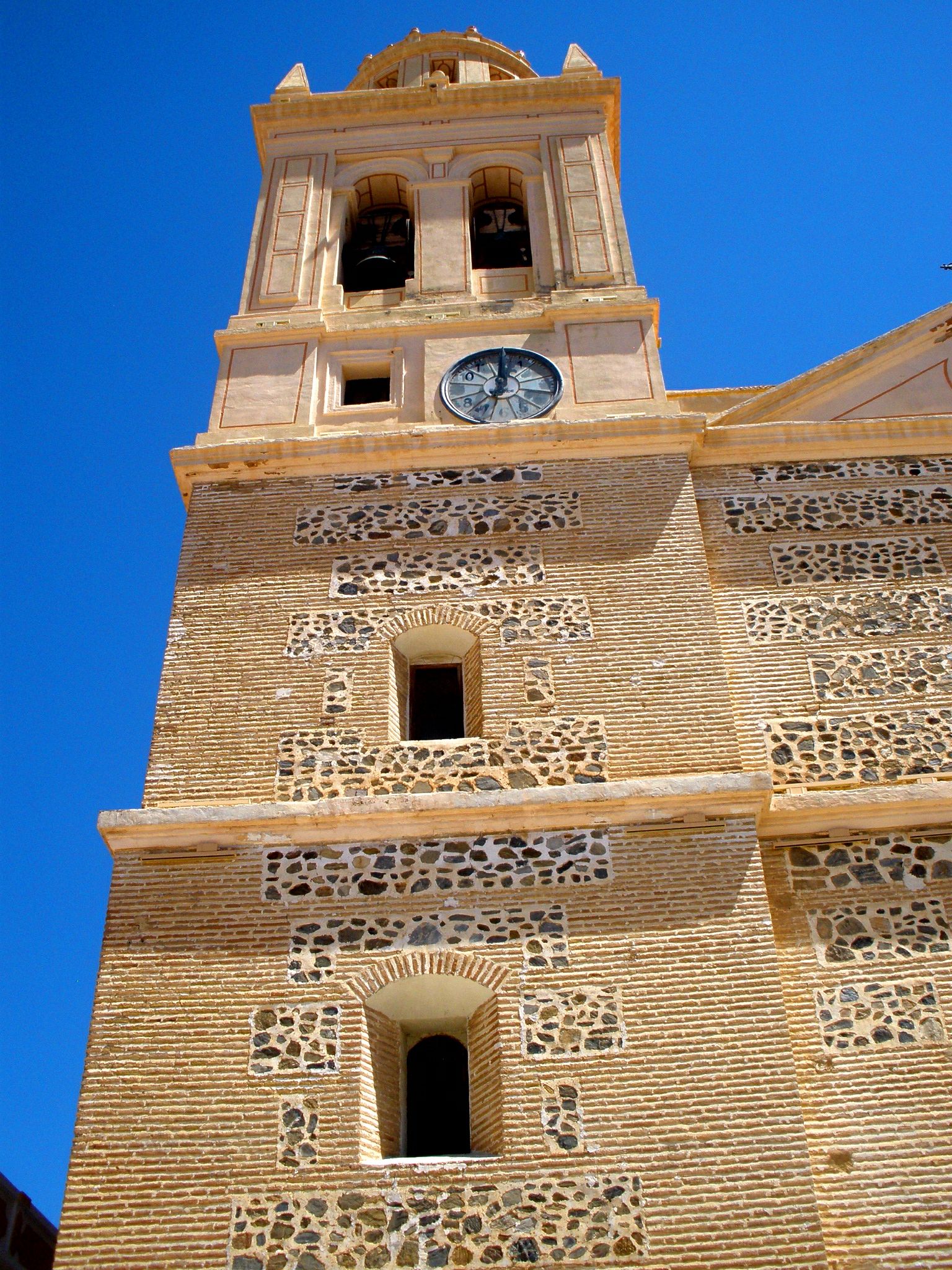
The church was completed in 1676 for the noble Manrique de Lara family, who held the lordship of Frigiliana. The master builder was Bernardo de Godoy. Built predominantly in the Renaissance style, it features three naves and a dome over the transept. Inside, beneath the choir loft, stands an ornate carved wooden inner porch created by 23-year-old Bartolomé de la Cruz Arjona from Córdoba. The church underwent alterations a century later.

Fuente Vieja and the Torreón
Fuente Vieja was built around 1640 by Íñigo Manrique de Lara, the first Count of Frigiliana, whose family coat of arms adorns the fountain. It was built to supply fresh water to villagers and their livestock. Oddly enough, it was originally dubbed "The New Fountain". Standing close by is the Torreón, a small watchtower likely erected in the 18th century as a coastal lookout against marauding pirates. Here you will see an amphora bearing the symbols of the three great religions: the cross, the crescent and the Star of David. According to the tourist office, this very vessel inspired the name of the Festival 3 Culturas.

Museo Arqueológico de Frigiliana
The museum is housed inside Casa del Apero, the palace's former 17th-century granary and stables, sharing the premises with the tourist office and local library. Highlights include artefacts spanning from the Neolithic era to Moorish times, such as a child's skull from Cueva de los Murciélagos (circa 5000 BC), Phoenician vessels from the Cerrillo de las Sombras necropolis, and a 16th-century Morisco dagger uncovered by the cliff. Admission is free.
According to the museum's website, opening hours from 16 September to 30 June are Monday–Friday 10:00–18:00, Saturday 10:00–14:00 and 16:00–20:00, and Sunday 10:00–14:00. From 1 July to 15 September: Monday–Saturday 10:00–14:30 and 17:30–21:00, Sunday 10:00–14:30. The tourist office lists slightly different Saturday times in winter, so it is best to telephone ahead on +34 95 253 42 61.
Castillo de Lízar
Perched on the summit of Cerro de Lízar overlooking the village stood the Moorish fortress, spanning roughly 4,000 m². Erected in either the 9th or 11th century – sources differ – it was demolished following the battle of 1569 under orders from Requesens. Very little survives today aside from low stone remnants and footings, and archaeological excavations have never been carried out.
Miel de caña – honey without bees
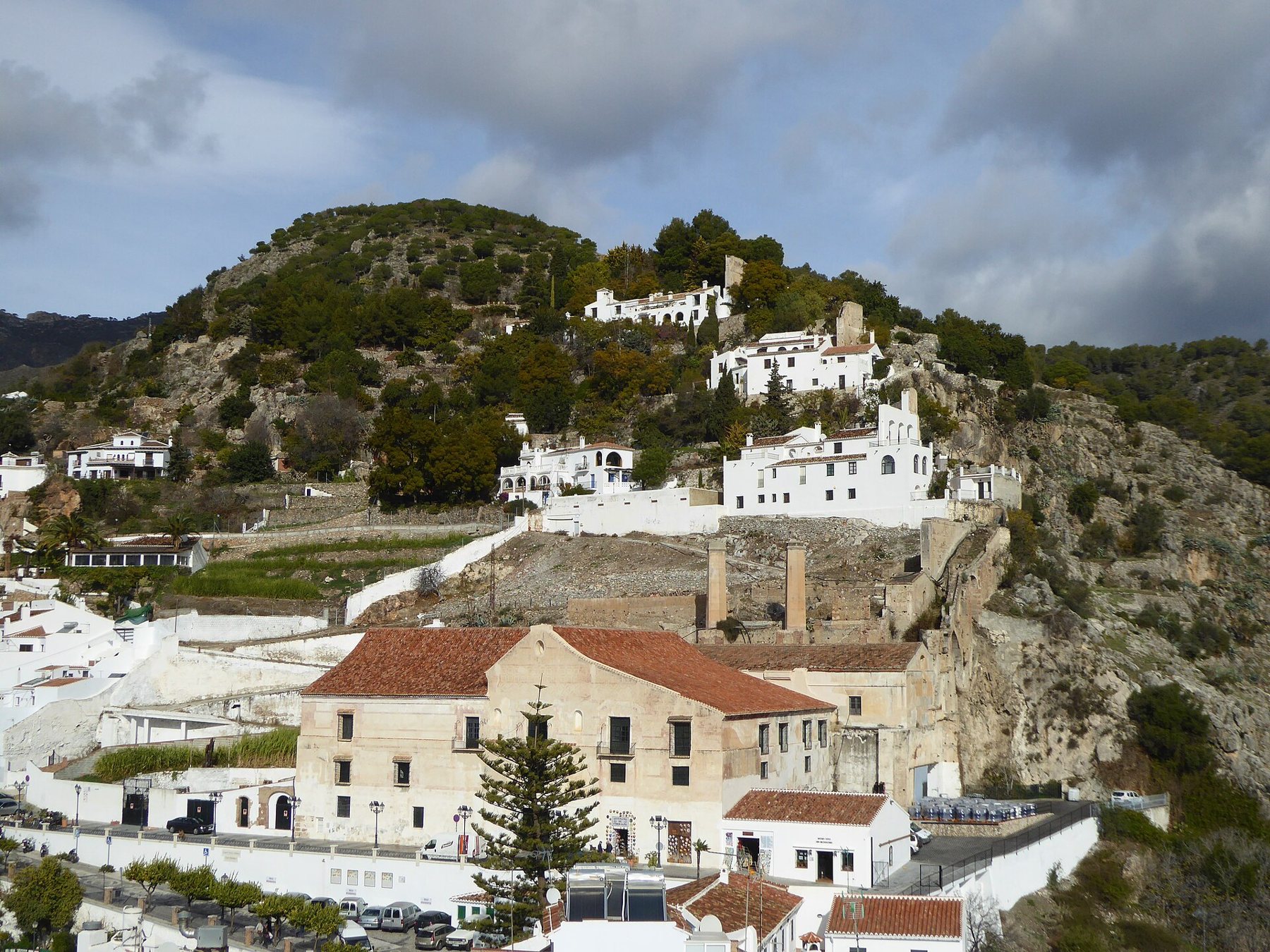
Miel de caña literally translates as "sugarcane honey", but no bees are involved. It is a rich, dark treacle boiled down purely from concentrated sugarcane juice. The Moors originally introduced sugarcane to the region, and after the expulsion of the Moriscos, it became Frigiliana's primary cash crop.
The syrup is crafted at El Ingenio, the grand Renaissance mansion of the Manrique de Lara family, completed in the late 16th century. Spanning over 2,000 m², it was partly constructed using salvaged stone from the ruined castle. A sugar mill has operated on the site since at least the 1720s. The De la Torre family purchased the property in 1928, renaming the works Ingenio Nuestra Señora del Carmen. According to town officials and the tourist office, it is now the only factory in Europe still manufacturing traditional sugarcane molasses. Some of the machinery dates from 1909, including wood-fired boilers.
The factory is generally not open to the public. The tourist office notes that it first opened its doors to visitors during the Día de la Miel de Caña in 2014. Take time to admire the façade, adorned with painted geometric patterns in ochre and blue alongside two vacant niches once reserved for statues of saints. Jars of the treacle are sold in shops throughout the village. According to a Spanish travel site, the raw cane juice is nowadays mostly imported from Latin America, as sugarcane cultivation has almost entirely vanished in Spain. We have not been able to verify this directly with the factory.

The view
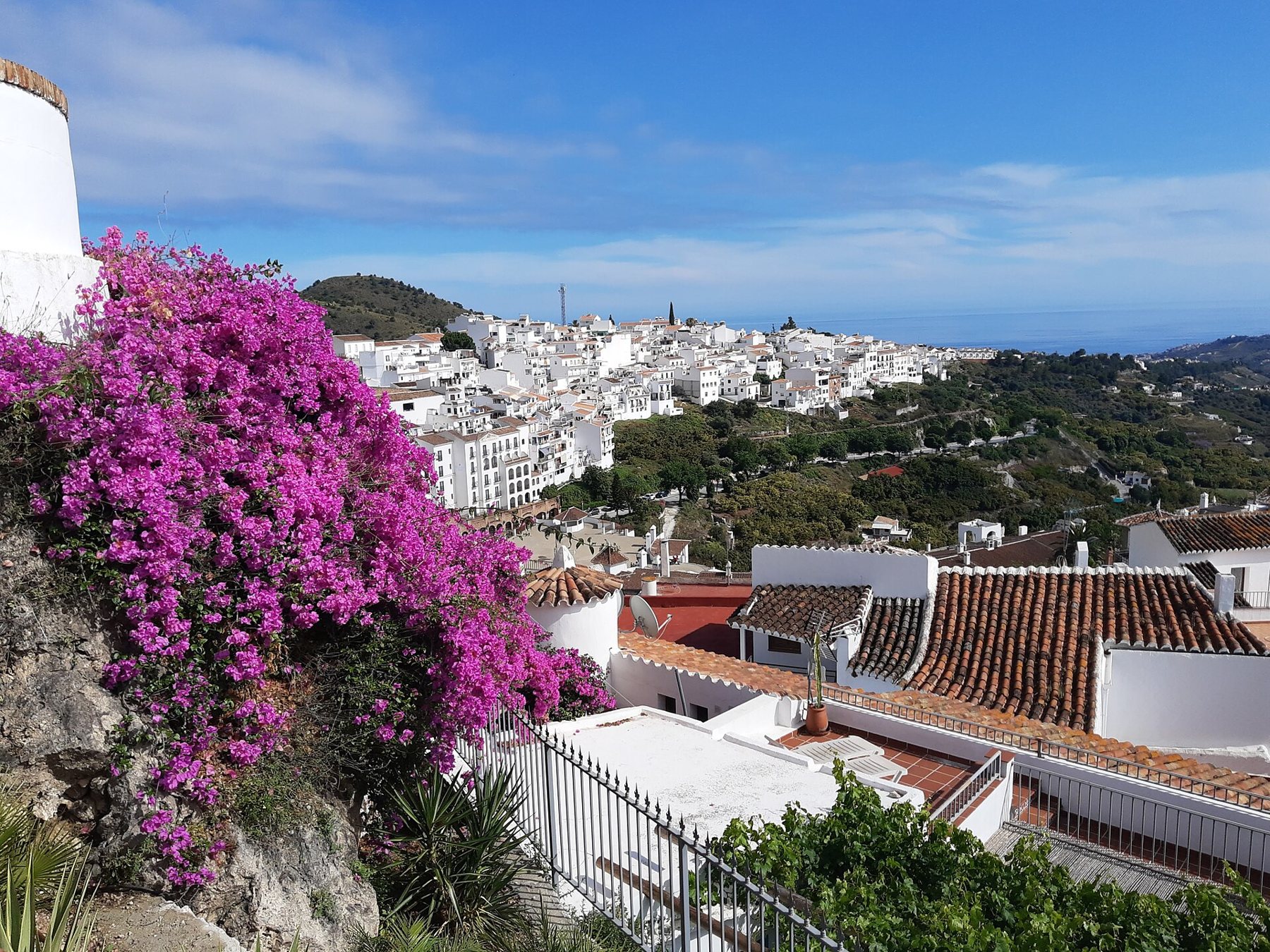
Frigiliana sits on a south-facing slope, offering wide vistas over avocado and mango orchards stretching down towards Nerja and the sea. The finest viewpoints, according to the tourist office, are found near the cliff at the head of Callejón del Peñón, while OpenStreetMap highlights a lookout along Avenida Carlos Cano right by the multi-storey car park. From the terrace by Fuente Vieja, views look inland towards the rugged mountains.
How to get there
By car
Drive along the A-7 towards Málaga and take the exit at Nerja. Follow the signs towards Frigiliana. The tourist office notes that the final stretch from the motorway is 3.5 km along a good secondary road. It is approx. 29 km and 35 minutes from Playa Tropical to the underground car park. The A-7 is toll-free here. See also speed cameras.
The buttons under the map at the bottom open the route from Playa Tropical directly in Google Maps: both the fast way via the A-7, the slower scenic coastal road with stops, and a round trip back home via Torrox.
Parking
The easiest parking is the covered underground car park beneath Plaza de las Tres Culturas, right next to the old town. The operator Clubö states that the car park is open 24 hours a day and costs €0.0417 per minute (approx. €2.50 (≈ 18.65 kr.) per hour), capped at a maximum of €15 (≈ 112 kr.) per 24 hours (as of October 2026). The clearance height is 2.20 m, so take care with high vans and campervans. There are accessible spaces and a toilet. The municipality has also created free parking spaces along the road skirting the village (Paseo de las 3 Culturas), but these fill up quickly. See also parking.
By bus
From Almuñécar, ALSA's coastal bus runs to Nerja (approx. 20–30 minutes according to ticketing sites – check the timetable at alsa.com). From Nerja, the bus company Grupo Verano Azul runs to Frigiliana, according to the municipal timetable (updated 09-09-2026):
| Route | Monday–Saturday | Sundays and public holidays |
|---|---|---|
| Nerja → Frigiliana | 7:20, 9:30, 10:30, 11:30, 12:30, 13:30, 15:40, 16:30, 17:30, 19:30, 20:30 (and 21:30 from 1 July to 14 September) | 9.30, 12.00, 13.00, 16.15, 17.30, 20.00, 20.50 |
| Frigiliana → Nerja | 7:00, 8:00, 10:00, 11:00, 12:00, 13:00, 14:00, 15:20, 16:00, 17:00, 18:00, 20:00, 21:00 (and 22:00 from 1 July to 14 September) | 10.00, 12.30, 13.30, 17.00, 18.00, 20.30, 21.10 |
The bus company may change times without prior notice. In Frigiliana, the bus stops at Plaza del Ingenio. See the map showing both stops on the municipality's bus page and read more on buses.
Sights along the way
Take the old coastal road N-340 for part of the journey instead of the motorway. It winds along the cliffs between La Herradura and Nerja.
- Mirador de Cerro Gordo (13 km): viewpoint and roadside restaurant, with the bay of La Herradura on one side and the cliffs towards Maro on the other.
- Maro (approx. 23 km): the little white village beside the Nerja caves. The caves can easily be combined with Frigiliana – see the Nerja caves and Balcón de Europa.
- Acueducto del Águila: the red four-tiered aqueduct arches over the ravine between Maro and Nerja. It was built in the 19th century to supply water to the sugar factory in Maro – also part of the area's sugar history.
- Nerja and Balcón de Europa (approx. 26 km): the palm-lined promenade ending out on the cliff over the sea. Park in the underground car park beneath Plaza de España.
- Torrox (on the way home): the old town of Torrox lies 12.5 km from Frigiliana, about a 16-minute drive inland. Under Moorish rule, it was a centre for silk production. Down by the coast stands Faro de Torrox, a lighthouse dating from 1864. Surrounding it, excavations have revealed the remains of a Roman settlement, presumed to be Caviclum, featuring a villa with mosaics, baths, a fish-salting factory, and pottery kilns. The area was declared a heritage site in 2007.



Food
Frigiliana belongs to the Axarquía region, and according to the tourist office, its cuisine is based on home-grown produce: sugar cane molasses (miel de caña), olive oil, grapes, and fresh vegetables.
- Choto – kid (young goat), the village's signature dish. It is sautéed and served with garlic (al ajillo) or in an almond sauce.
- Migas – fried breadcrumbs and cornmeal with fish, vegetables, or chorizo and black pudding. According to the tourist office, locals prefer to eat it on rainy days.
- Potajes – hearty stews made with cabbage or fennel. During Holy Week, a stew with salt cod is traditionally prepared.
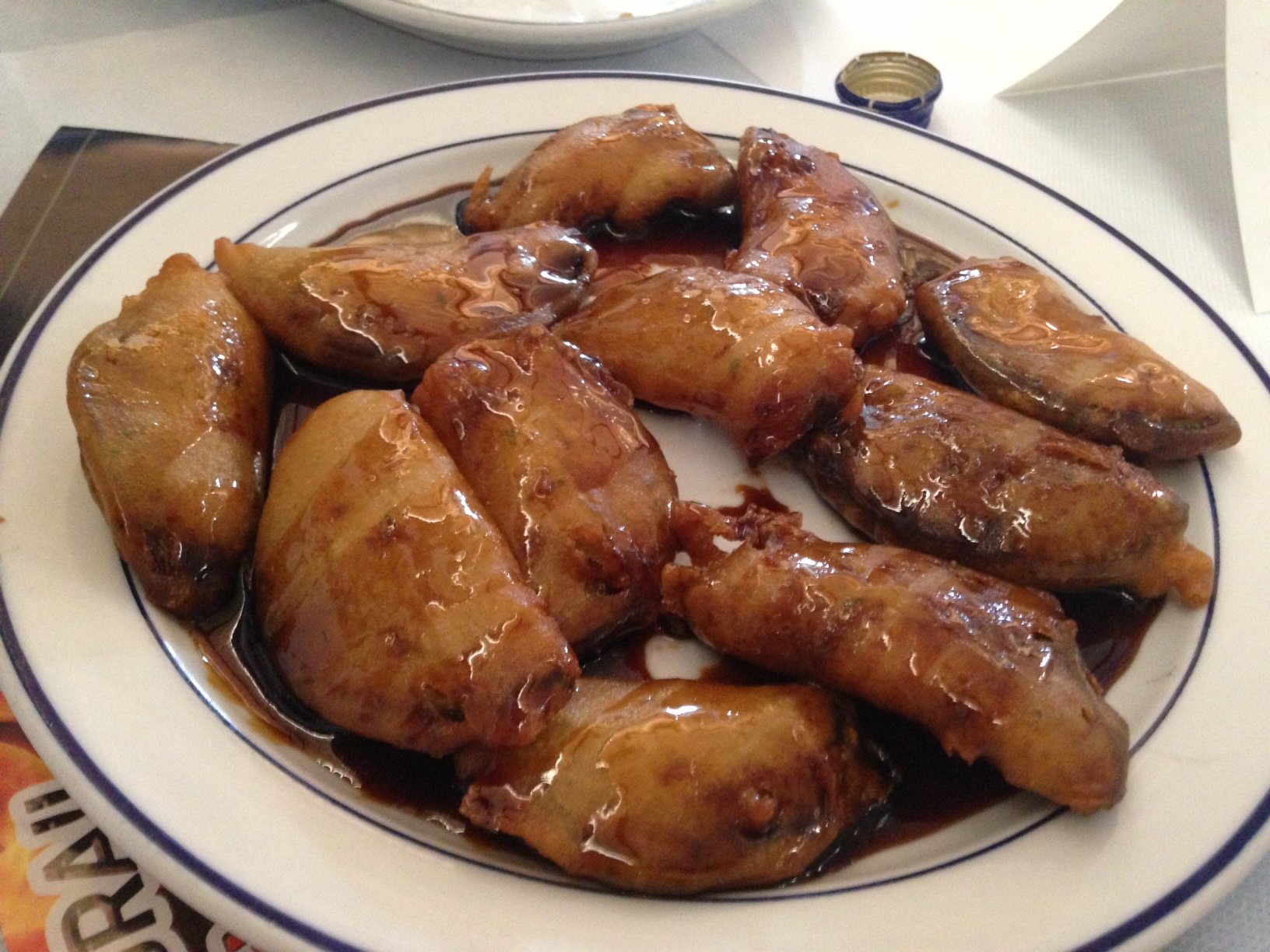
- Berenjenas con miel de caña – deep-fried aubergines drizzled with sugar cane molasses. They are found right along the coast, but here the molasses is made locally.
- Arropía and marcochas – traditional local sweets made from sugar cane molasses, especially for Día de la Cruz. Try also sweet potatoes with molasses (batatas con miel).
- Vino del terreno – wine pressed by local farmers, ranging from dry to sweet moscatel. The village also boasts its own craft beer, La Axarca.
There are bars and restaurants along Calle Real and up in the old town, several boasting panoramic terraces. We have not been able to verify independent reviews for every individual venue, nor have we checked current prices – keep an eye out for the menú del día at lunchtime. During the festival in August, a Ruta de la Tapa takes place across the local bars. Read more about the local cuisine: food traditions and 3×10 things to taste, eat, and visit.
Toilets
- Plaza del Ingenio: public toilets right by the bus stop and the underground car park. Free of charge according to OpenStreetMap.
- The car park under Plaza de las Tres Culturas: features toilet facilities according to the operator.
- At the entrance to the village: OpenStreetMap also indicates a toilet by the parking areas below the village. We have not been able to confirm its opening hours.
- Up in the old town: there are no public toilets that we could locate. Be sure to use the facilities before tackling the steps, or pop into a café – simply buy a coffee and you'll be welcome.
Festivals and traditions
Frigiliana calls itself the 'Village of Three Cultures' because Christians, Muslims, and Jews once lived here together. Holy Week is its oldest tradition; the festival is its newest.
- San Sebastián, 20 January: one of the village's patron saints. Until 1967, this was the main annual patronal festival. Nowadays, there is a Mass and a procession accompanied by fireworks along the route.
- Carnival, February: parades with lively music and fancy dress wind through the village towards a marquee on Plaza de las 3 Culturas.
- Semana Santa: processions begin on the Friday before Palm Sunday. On Good Friday evening, the Soledad procession winds through the darkened old quarter. Only women participate, dressed in black and bearing candles.
- Día de la Miel de Caña, April–May: a day dedicated to sugar cane molasses on Plaza del Ingenio, held since 2014. Local women prepare traditional dishes featuring the syrup, which visitors can sample for free. The date varies, so check with the tourist office. We have seen reports that the event was cancelled in 2026, but this could not be confirmed by the municipal council.
- Día de la Cruz, 3 May: residents decorate crosses with flowers throughout the streets and offer passers-by sausages, tortilla, migas, arropía, and local wine. In the evening, festivities take place in the church square.
- Feria de San Antonio, around 13 June: a five-day town fair. On the 13th, oxen pull the statue of the patron saint through the streets on a cart in a traditional romería. According to the tourist office, this commemorates the Christian victory over the Moriscos in June 1569.
- Festival Frigiliana 3 Culturas, final weekend of August: four days packed with concerts, lectures, street theatre, belly dancing, craft markets, and a tapas trail, held annually since 2006. The tourist office cites around 20,000 visitors, and the council reported up to 40,000 one year. In 2026, the festival took place on 27–30 August, with free admission. According to Euro Weekly News, the 2026 fireworks display was cancelled due to wildfire risk and replaced with a multimedia show.
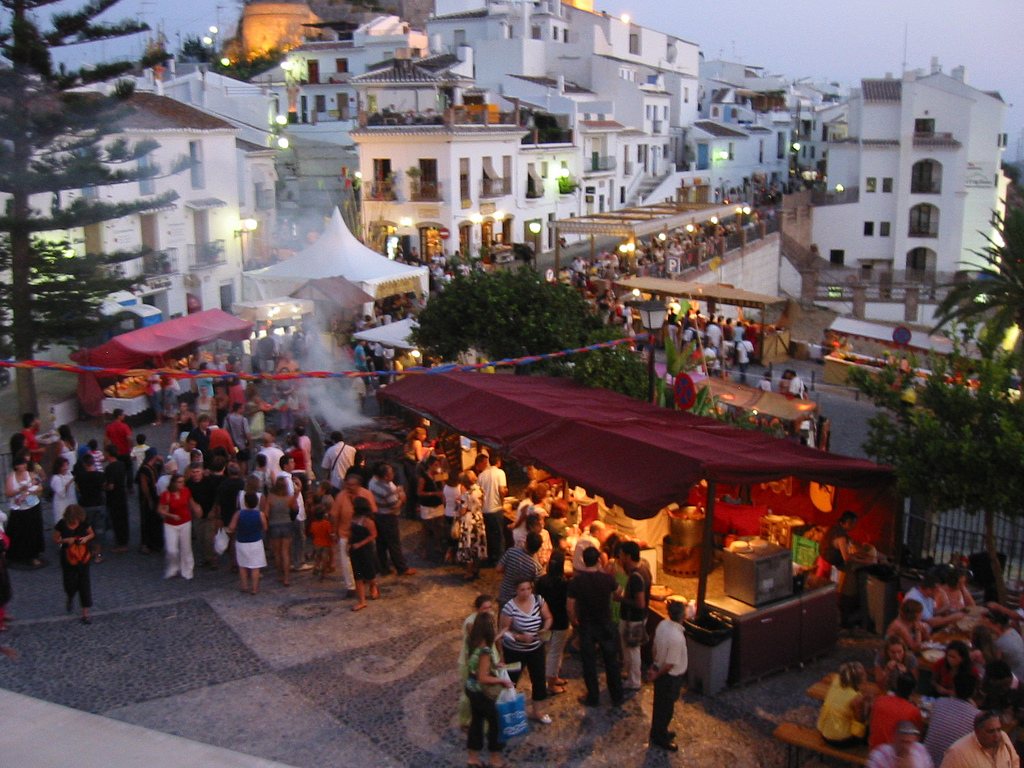
Discover more local festivities along the coast on our festivals page.
Suggested day trip
| Time | Facility |
|---|---|
| 9:30 | Depart from Playa Tropical along the N-340, stopping at Cerro Gordo and the aqueduct |
| 10:30 | Park beneath Plaza de las Tres Culturas. Visit the tourist office and the museum in Casa del Apero |
| 11:00 | Stroll through the Barribarto and locate the ceramic plaques. Enjoy the views at Callejón del Peñón, visit the church and the Fuente Vieja |
| 13:30 | Lunch in the old town – savour choto or aubergines with sugar cane molasses |
| 15:30 | Pick up some local miel de caña and drive to Torrox and the coastal lighthouse |
| 17:00 | Head back via the A-7 (approx. 35 mins from Torrox Costa) |
Maps and routes
Red star = Playa Tropical. Click on a point for the name and distance. Map data © OpenStreetMap.
Open the route in Google Maps
- Drive from Playa Tropical to FrigilianaApprox. 29 km, 35 mins via the A-7 towards Málaga, exit at Nerja and follow signs to Frigiliana. Parking in the underground car park beneath Plaza de las Tres Culturas.
- Along the coastal road with stopsCerro Gordo, the aqueduct at Maro, and Balcón de Europa in Nerja – following the scenic N-340 before heading up to Frigiliana.
- Round trip: Frigiliana, Torrox, and homeFrigiliana in the morning, followed by the historic town of Torrox and the lighthouse with Roman excavations, returning via the A-7.
- Walking tour of FrigilianaFrom the car park past El Ingenio, up the steps by Calle Hernando el Darra to the church and Fuente Vieja – under 1 km, but plenty of steps.
The routes start at Playa Tropical. On mobile devices, they open directly in the Google Maps app, ready for navigation.
Good advice
- Arrive early or late. In the middle of the day, tour coaches arrive, and during summer the stepped alleys can get very warm.
- Wear sturdy footwear. The streets are steep and the cobblestones can be slippery, especially after rain.
- Check your vehicle's height. The underground car park has a maximum clearance of 2.20 m.
- Use the toilets at Plaza del Ingenio before heading up into the Barribarto.
- Pick up the plaque guide. The tourist office in Casa del Apero provides a leaflet in English and Spanish with a map showing all twelve ceramic plaques.
- Take some sugar cane molasses home. Available in shops throughout the village, it is delicious drizzled over pancakes, cheese, and fried aubergines.
- Arrive early for the festival. At the end of August, the village is bustling, and the underground car park fills up quickly.
Sources
- Turismo Frigiliana: Casco histórico and Las calles
- Turismo Frigiliana: Monumentos (El Ingenio, Fuente Vieja, the church, El Torreón, Castillo de Lízar, Casa del Apero)
- Turismo Frigiliana: The Battle of Peñón de Frigiliana and The 12 ceramic panels
- Turismo Frigiliana: Historia and Información general
- Turismo Frigiliana: Fiestas y tradiciones (San Sebastián, Carnival, Semana Santa, Día de la Cruz, Feria, Día de la Miel, Festival 3 Culturas)
- Turismo Frigiliana: Gastronomía
- Turismo Frigiliana: Situación – cómo llegar and tourist office opening hours
- Museo Arqueológico de Frigiliana: opening hours and prices
- Ayuntamiento de Frigiliana: Nerja–Frigiliana bus timetable (updated 09-09-2026)
- Ayuntamiento de Frigiliana: Festival 3 Culturas 27–30 August 2026
- Ayuntamiento de Frigiliana: Ingenio Nuestra Señora del Carmen
- Ayuntamiento de Frigiliana: Free parking on Paseo de las 3 Culturas
- Clubö: Frigiliana underground car park (tariffs, height clearance, toilets – updated 29-10-2026)
- Euro Weekly News 23-08-2026: The 2026 festival and the cancelled fireworks
- Rural Sierra Sol: Frigiliana, el único productor de miel de caña en Europa
- Wikipedia (es): Frigiliana
- Wikipedia (es): Torrox, Faro de Torrox and Caviclum
- Driving distances: OSRM/OpenStreetMap
- Coordinates: OpenStreetMap contributors (ODbL)
Krone amounts are converted at 1 € ≈ 7.46 kr. and rounded.