Just half an hour's drive west of Playa Tropical, by the village of Maro, lies one of Spain's most visited caves: Cueva de Nerja. Five young boys stumbled across it in January 1959 whilst chasing bats. Here is your guide to the cave – tickets, steps, and timings – as well as the town of Nerja with its Balcón de Europa, Burriana beach, and the aqueduct in Maro, with rewarding stops along the way.
The cave discovered by five boys
On 12 January 1959, five local boys from Maro and Nerja squeezed through a narrow opening in the rock face where bats were flying in and out. Their names were José Luis Barbero, brothers Manuel and Miguel Muñoz, Francisco Navas, and José Torres. Penetrating the darkness, they first entered the vast cavern known today as the Cascada chamber, and then ventured into the Sala de los Fantasmas, the "Ghost Chamber". Here, two skeletons lay on the floor.
The boys alerted their schoolteachers, who accompanied them back inside. In April of that year, José Padial photographed the cave, and the pictures were published in the Málaga newspaper Sur. By September 1959, work was already underway to make the cave accessible to the public. The entrance you use today is not the boys' crawl hole: it was excavated further down the slope. On 12 June 1960, the cave was officially inaugurated with a ballet performance inside the Cascada chamber. The plaza by the entrance is today named Plaza de los Descubridores – "Discoverers' Square".
Only a portion of the cave system is open to visitors. That same autumn, on 17 November 1959, Francisco Navas found the Upper Galleries, and ten years later the New Galleries were revealed. These areas remain closed to the public. The cave was declared a protected monument in 1961 and is now protected as an archaeological site (Bien de Interés Cultural, 2006).

The discoveries: seals on the walls and human presence 40,000 years ago
The cave is not merely spectacular; it is one of the most vital archaeological sites in Andalusia. According to the cave foundation, humans have used this space for more than 41,000 years. Researchers have recorded over 50 figures painted onto the walls: deer, horses, goats, fish, and seals. The oldest paintings are believed to date back around 35,000 years, with the majority created inside a sanctuary roughly 20,000 years ago.
The red seals in the "Fish Chamber" are the most famous. The cave administration notes that they have not yet been definitively dated and might rank among the earliest works of art in Europe. In 2012, researchers estimated an age of about 42,000 years – suggesting Neanderthal origin – but a 2017 study revised this down to 18,000–20,000 years (early modern humans). The debate is still open.
Burials have also been unearthed within the cave, notably the remains of a woman known as Pepita, alongside Neolithic pottery and a lead amulet from the Moorish era. The paintings cannot be seen along the standard tour, as they require strict conservation. Instead, you can admire them in the cave's virtual reality experience, which is included with your ticket.

Guide: planning your visit
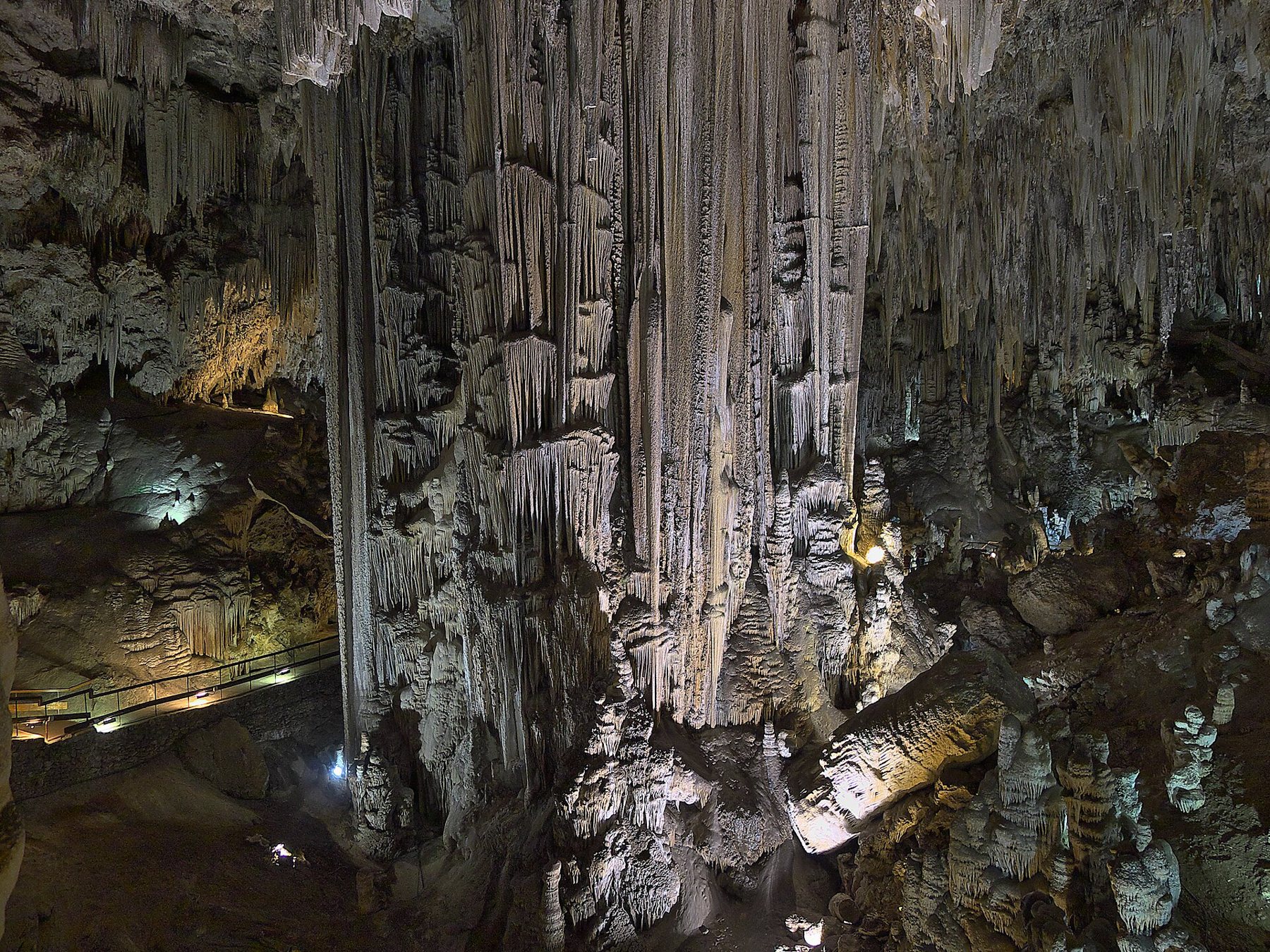
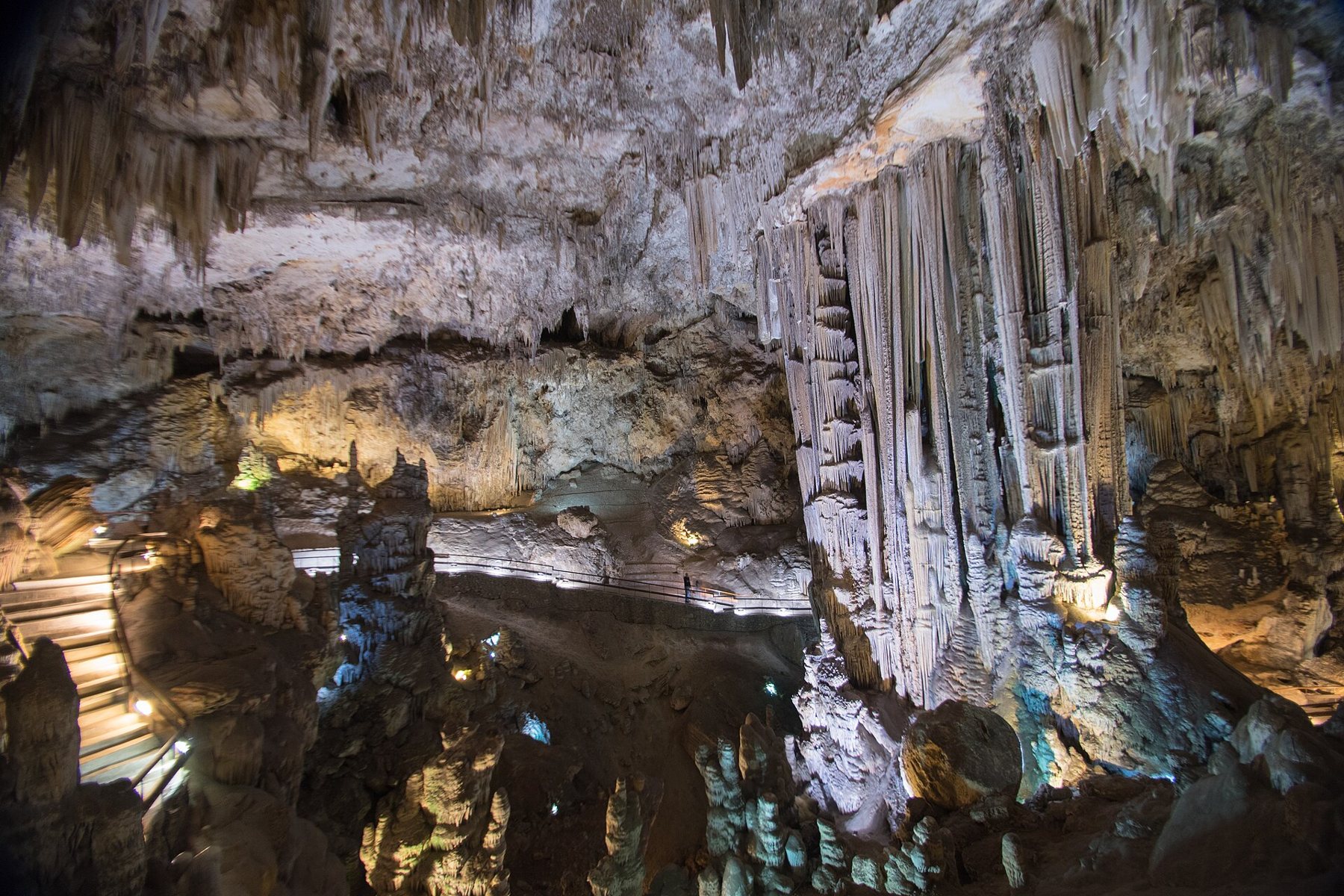
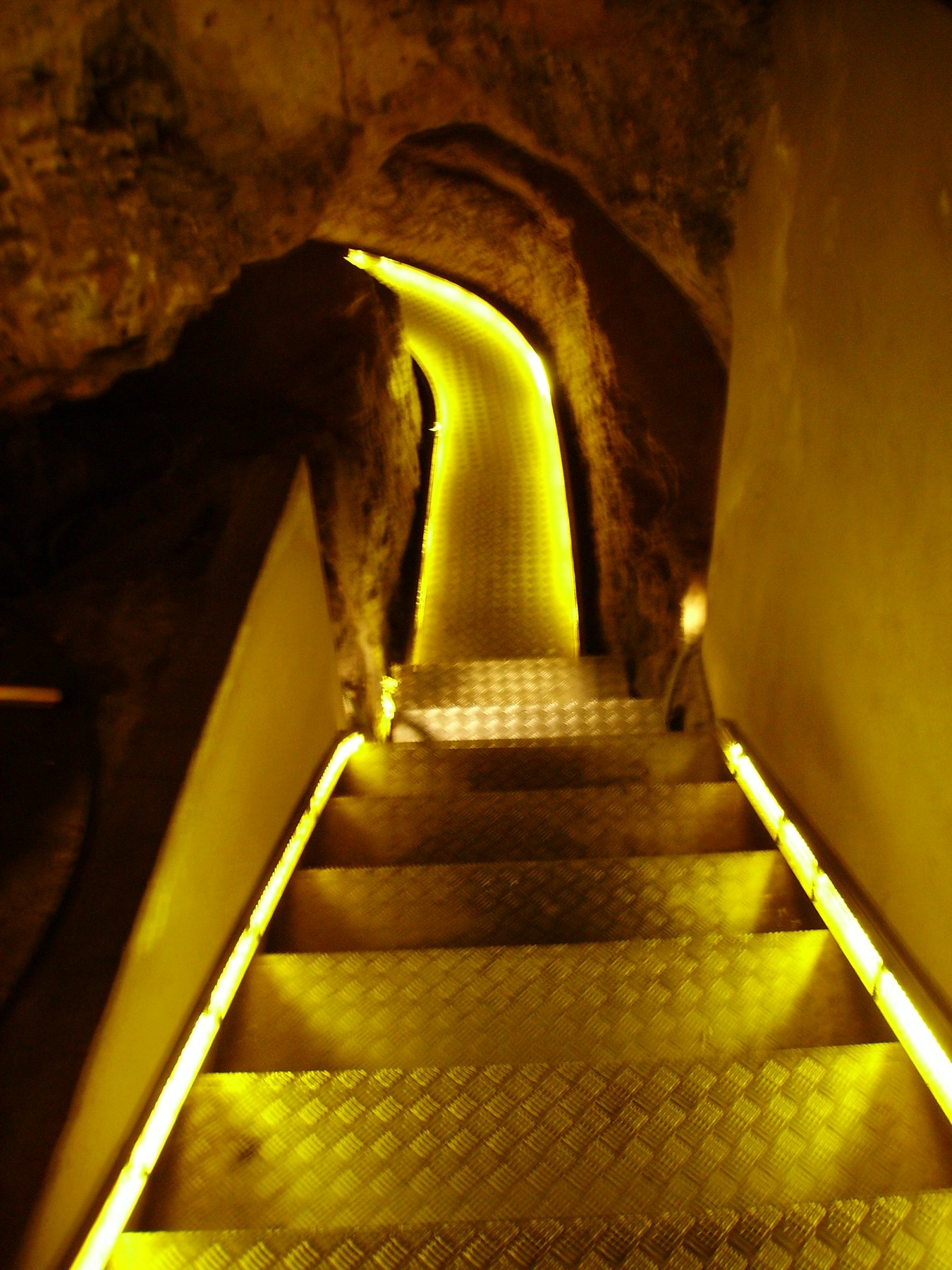
You purchase a ticket for a specific time slot, ensuring you bypass any queues. From the ticket office, you walk through the grounds down to the entrance and descend a flight of stairs into the mountain. You then follow a marked path through the cavernous chambers of the open section – including the Ghost Chamber, Bethlehem Chamber, Cascada Chamber, and the Cataclismo Chamber, where colossal pillars and fallen boulders fill the space. You explore at your own pace, with visits typically taking 45 minutes to an hour.
- Stairs: The cave states there are 458 steps in total (other sections of their site mention "just over 400"). There are handrails throughout, but it is up and down the whole way. Prams, pushchairs, and wheelchairs cannot be taken down.
- Temperature: Around 19°C. You will not need heavy layers, but it can feel quite humid.
- Footwear: Enclosed shoes with non-slip soles – no flip-flops. Lighting is atmospheric and low.
- Photography: Permitted only in designated areas and without flash. Eating and drinking inside the cave is prohibited.
- Audio guide: Free app available to download onto your phone in advance (available in 15 languages, including a children's tour in Spanish and English). Handheld audio devices can be hired on site for €2 (≈ 14.92 kr.).
- Bonus: Your ticket also includes admission to the Museo de Nerja on Plaza de España in the town centre.
Ticket prices 2026
Prices are taken from the cave's official website, January 2026. "Summer etc." covers June–September, Christmas, Easter (from the Friday before Palm Sunday to Easter Sunday), and bank holiday weekends. Online booking discounts apply only to adult tickets.
| Ticket | Online | Online, summer etc. | Ticket desk | Ticket desk, summer etc. |
|---|---|---|---|---|
| Adult (from 14 years) | 16 € (≈ 119 kr.) | 18 € (≈ 134 kr.) | 18 € (≈ 134 kr.) | 20 € (≈ 149 kr.) |
| 65+ (with ID) | 14 € (≈ 104 kr.) | 15 € (≈ 112 kr.) | 14 € (≈ 104 kr.) | 15 € (≈ 112 kr.) |
| Junior (12–13 years) | 13 € (≈ 96.98 kr.) | 14 € (≈ 104 kr.) | 13 € (≈ 96.98 kr.) | 14 € (≈ 104 kr.) |
| Child (6–11 years) | 12 € (≈ 89,52 kr.) | 13 € (≈ 96.98 kr.) | 12 € (≈ 89,52 kr.) | 13 € (≈ 96.98 kr.) |
| Mini (3–5 years) | 5 € (≈ 37.30 kr.) | 6 € (≈ 44.76 kr.) | 5 € (≈ 37.30 kr.) | 6 € (≈ 44.76 kr.) |
| Baby (0–2 years) | free | free | free | free |
Discounts are also available (same price as 65+) with a disability card and Carné Joven Europeo. Tickets are non-exchangeable and non-refundable. Purchase them on the cave's ticket website.
At the entrance: toilets, café, and garden
At the cave, there are toilets (including accessible toilets) and a nursing room, a restaurant-cafeteria overlooking the sea, a picnic area, playground, souvenir shop, and luggage lockers (1 € (≈ 7.46 kr.), which is refundable). Surrounding the entrance is the botanical garden Jardín Botánico Detunda. If you cannot manage the stairs, you can experience the cave in the virtual reality room.
Festival de la Cueva de Nerja – the concerts
The ballet performance at the inauguration in 1960 marked the start of a music festival held almost every year since. In the Cascada chamber, luminaries such as Yehudi Menuhin, Mstislav Rostropovich, Maya Plisetskaya, Montserrat Caballé, José Carreras, and Joan Manuel Serrat have performed. By 1984, the cave chamber had already become too small, leading to a competition for a permanent open-air stage outside the cave.
There are no longer concerts inside the cave. The last one took place in July 2019, and that same year the cave foundation decided to halt performances inside to protect it. Since then, the festival has been held at the open-air venue Auditorio Manuel del Campo near the cave, seating around 2,000 spectators.
The festival was cancelled in 2026. The foundation announced on 10-07-2026 that an appeal regarding the tender process for 2026–2030 had put the contract on hold. According to several sources, 2025 was also cancelled. Whether there will be concerts in the summer of 2027 is not yet known – see the cave's festival page.
The town of Nerja
Nerja has around 22,000 residents and perches on cliffs above a series of small beaches. The town is wonderful to wander around: white houses, narrow streets, and plenty of cafés and restaurants surrounding Balcón de Europa. Many Spaniards know it from the TV series Verano Azul ("Blue Summer"), which was filmed in Nerja and Maro in 1979–80. On Calahonda beach stands a bronze statue of the show's fisherman Chanquete, and in the Verano Azul park sits a replica of his boat.
Balcón de Europa
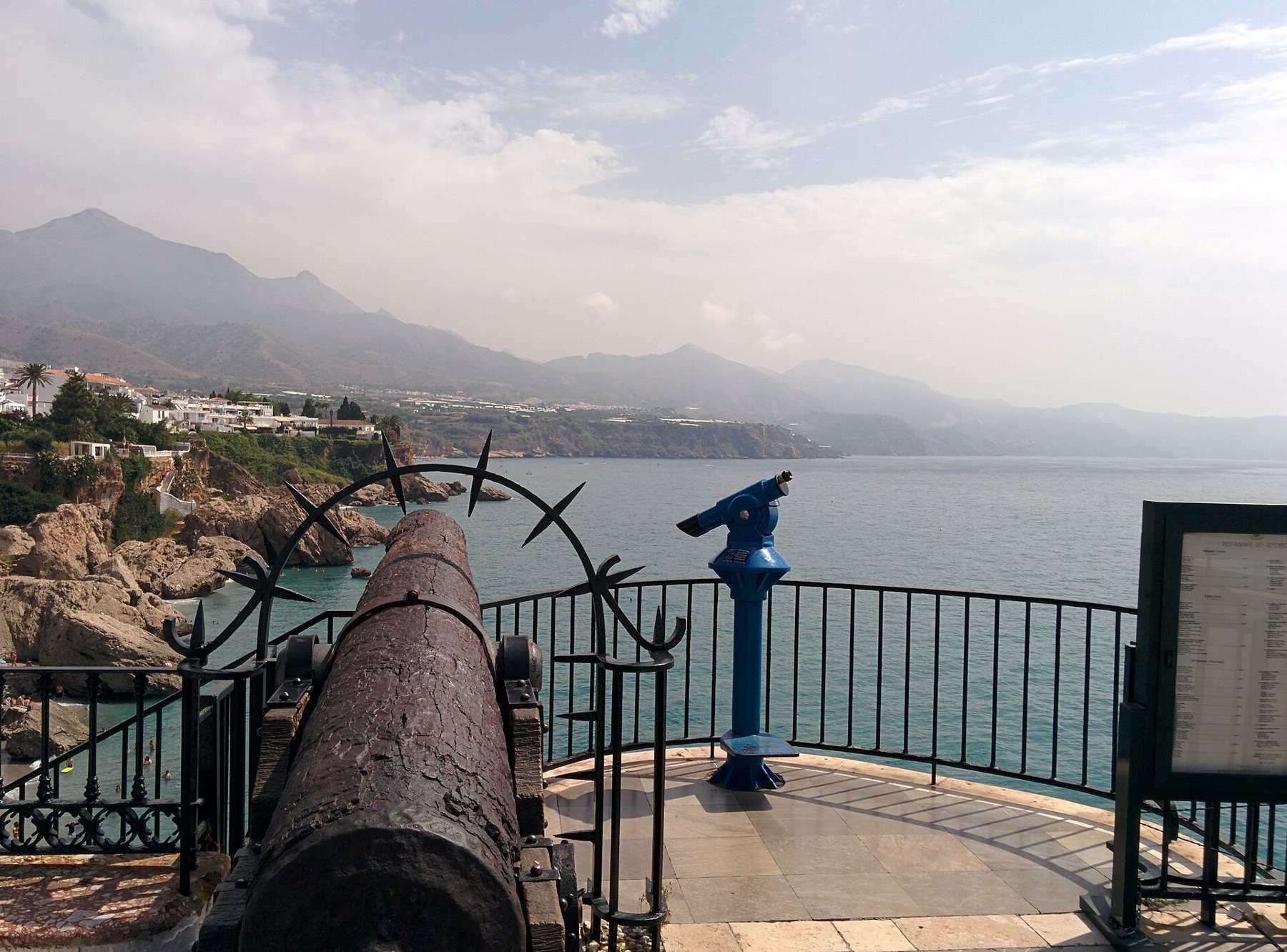
The town's landmark is a wide palm promenade ending on a cliff high above the sea. A fortress tower with cannons once stood here: Torre de los Guardas or La Batería. The tower was destroyed in 1812 when British warships shelled the coast during the Peninsular War against Napoleon. Two rusty cannons still stand at the far end of the square.
In January 1885, King Alfonso XII visited the region following the major earthquake at Christmas 1884. Legend has it that he stood here and named the spot the "Balcony of Europe". However, historical records suggest the name is older. A life-size bronze statue of the king stands on the square.

El Salvador Church
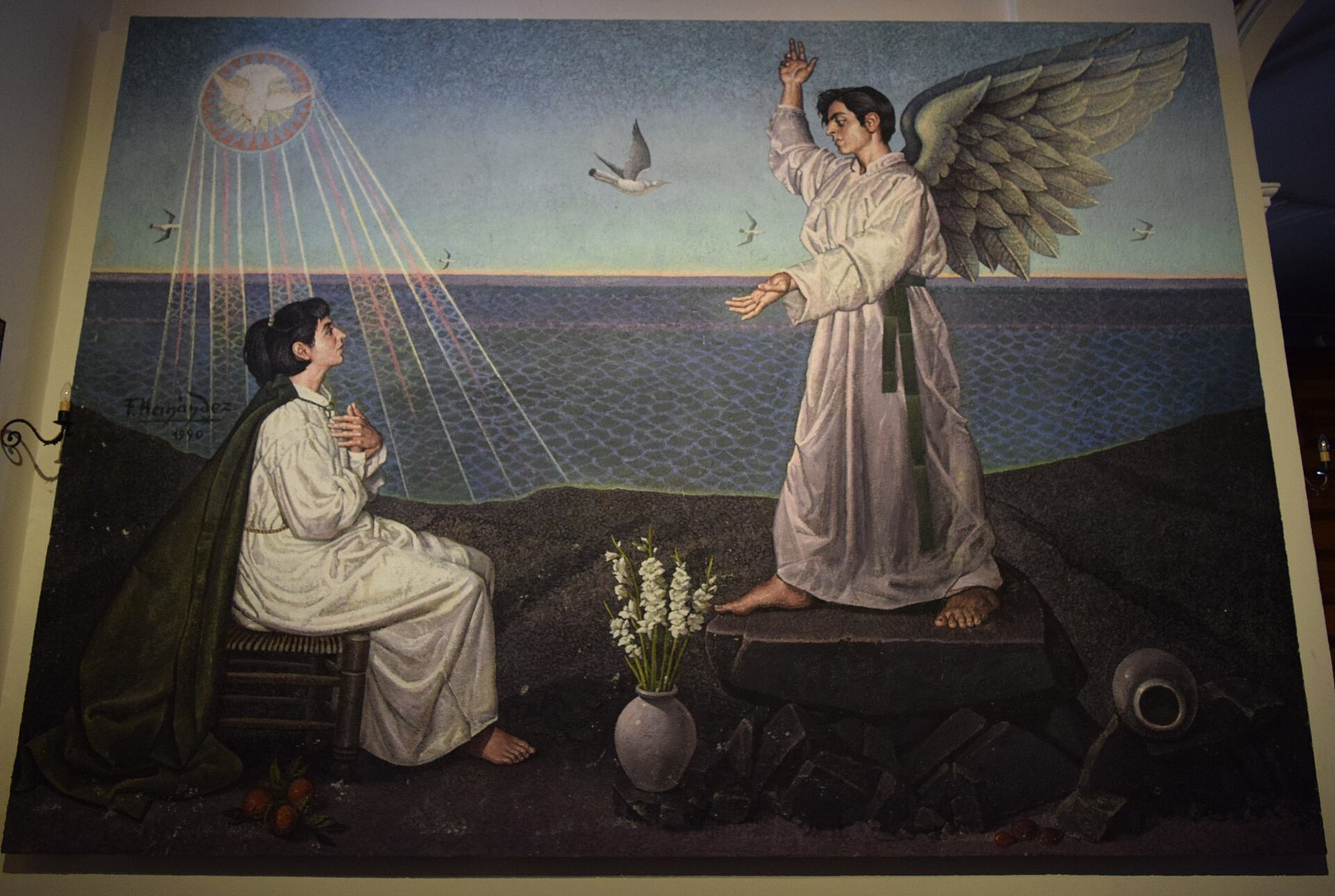
Just next to Balcón de Europa stands the whitewashed church Iglesia de El Salvador. The first section was completed in 1697, and the church was expanded during the 18th century. Inside hangs a large, modern mural depicting the Annunciation by painter Francisco Hernández, where the angel visits Mary by the sea. Along the walls are Stations of the Cross painted on 18th-century ceramic tiles.

Playa de Burriana
East of the town centre lies Nerja's largest beach, Burriana, roughly 800 metres long and 40 metres wide. It features a promenade lined with shops, bars, and restaurants, alongside showers, accessible toilets, sunbeds and parasols for hire, kayaking and paddleboarding, and lifeguards during high season. The beach has been awarded the Blue Flag multiple times. From Balcón de Europa, it is just over a kilometre's walk, with steps leading down to the shore.

Acueducto del Águila in Maro
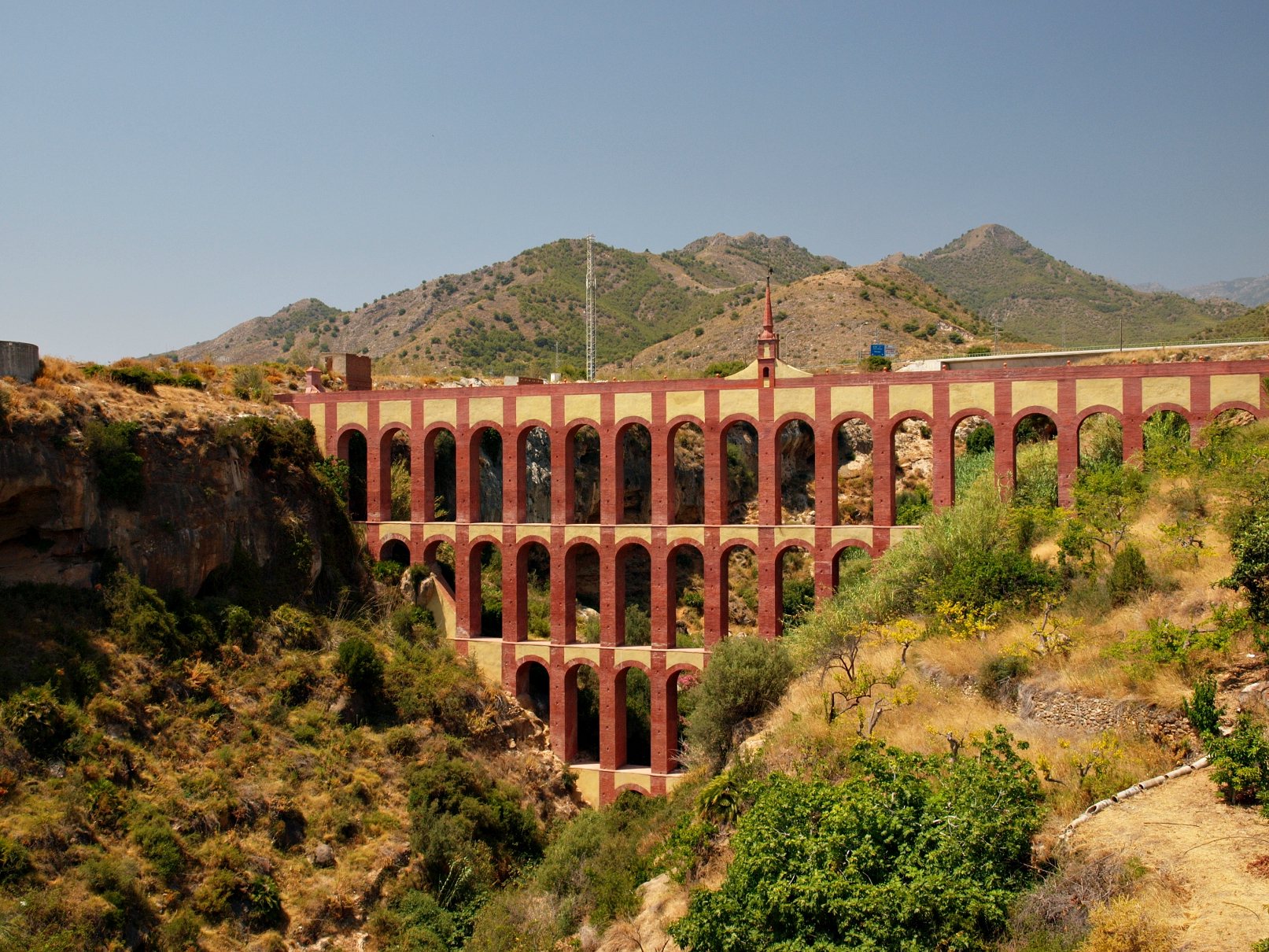
Just west of Maro, the Eagle Aqueduct spans the Barranco de la Coladilla ravine: four tiers of red brick arches rising around 40 metres high, crowned by a weather vane shaped like a double-headed eagle. It was built in the 19th century by Francisco Cantarero Martín to channel water to the San Joaquín sugar factory in Maro. The Larios sugar company took it over in 1930, the local council acquired it in 2005, and it was restored in 2010–12. You get the best view of it from the vantage point along the old N-340 between Nerja and Maro.
How to get there
By car
Join the A-7 heading towards Málaga. After roughly 24 km, take the exit for Nerja/Maro and follow the signs for "Cueva de Nerja". It takes 25–30 minutes. The A-7 is toll-free here. The cave's car park has 300 spaces, with payment on exit: 0.030 € per minute for the first 90 minutes (1 hour = 1.80 € (≈ 13.43 kr.)) and 0.021 € per minute thereafter – two hours thus costs roughly 3.30 € (≈ 24.62 kr.).
To reach Nerja town, drive another 5 km. The easiest option is the underground Parking Balcón de Europa under Plaza de España, a couple of minutes' walk from Balcón de Europa. The price is about 2 € (≈ 14.92 kr.) per hour according to various guides (we have not been able to verify the official tariff). There is also an open-air car park near Carabeo. See also parking and speed cameras.
The buttons below the map at the bottom open the route from Playa Tropical directly in Google Maps – both the quick route via the A-7 and the scenic coastal road with stops.
By bus
ALSA's coastal service Motril–Málaga runs from the bus station in Almuñécar via La Herradura and Maro (Empalme) to Nerja. The journey to Nerja takes 20–30 minutes according to booking platforms. From the Maro crossroads, there is a bit of an uphill walk to the cave, and from the bus station in Nerja (Avenida de Pescia), a local bus runs to the "Cuevas" stop. Timetables change with the season, so check ALSA before you head out. See also buses.
Sights along the way
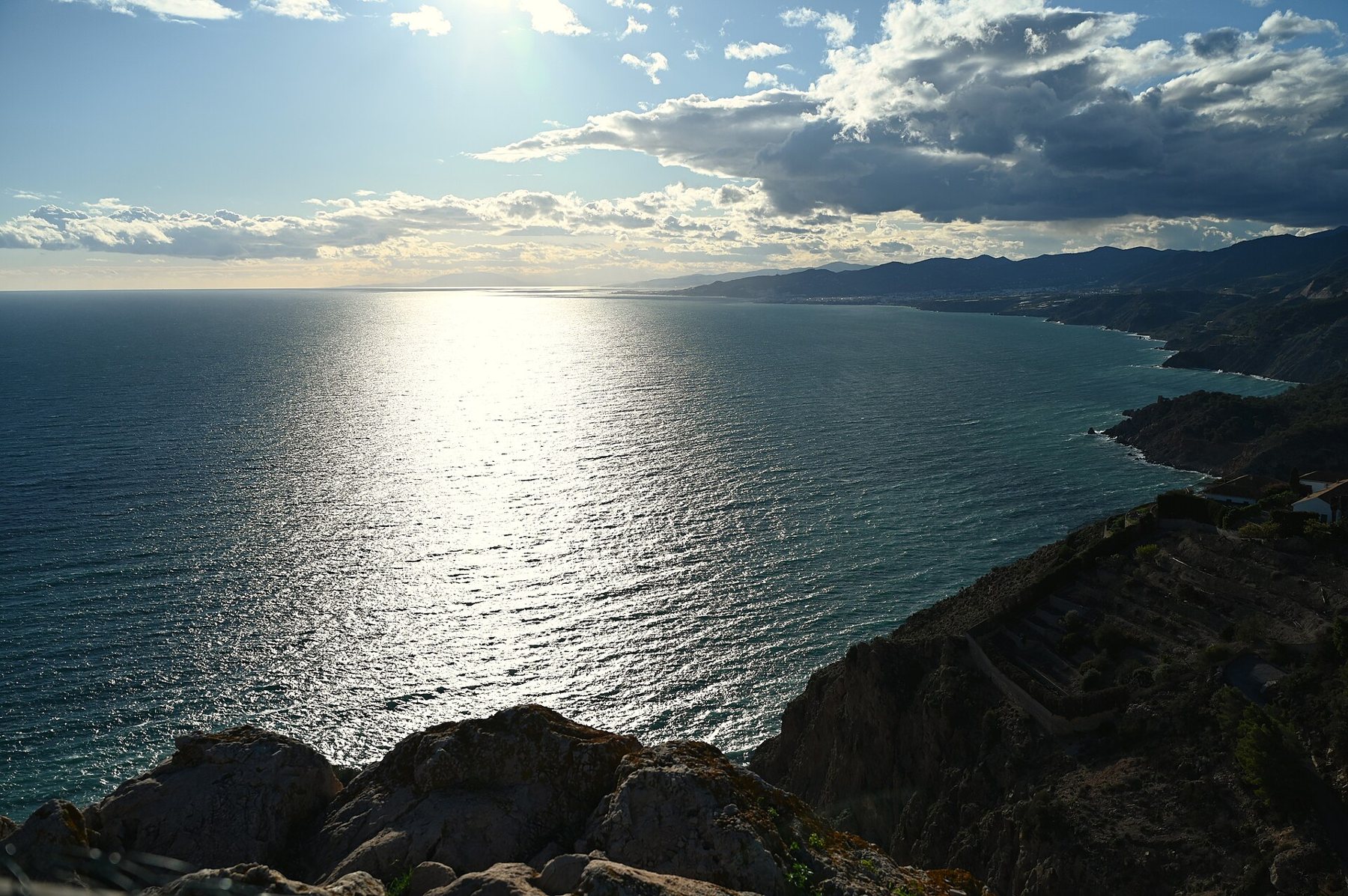
If you have the time, take the old coastal road N-340 instead of the motorway. It winds along the cliffs, offering some of the finest vistas along the entire coast.
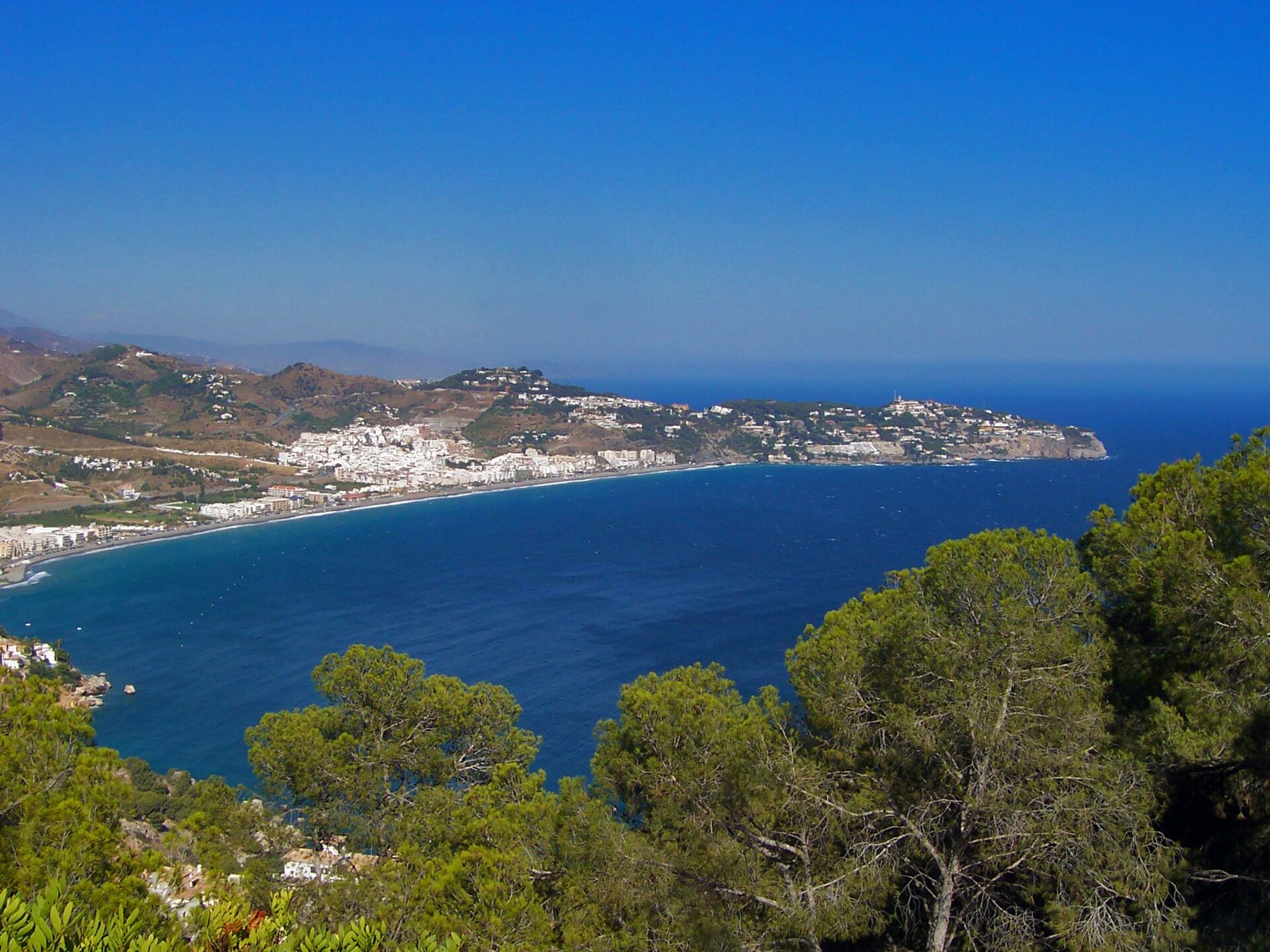
- La Herradura (9 km): the horseshoe-shaped bay where 25 Spanish galleys were shipwrecked in 1562. A lovely place for a coffee by the beach – as well as diving and kayaking, see The sea at La Herradura.
- Mirador de Cerro Gordo (13 km): viewpoint and roadside restaurant, with free parking. Behind the restaurant, a steep path leads up to a 16th-century watchtower built to scan for pirates. From here, you have sweeping views of both La Herradura bay and the cliffs toward Maro.
- Playa Cantarriján: a secluded beach down in the nature reserve Acantilados de Maro-Cerro Gordo, which received protected status in 1989 and stretches roughly 12 km along the coast. The beach is a well-known naturist spot. In summer, driving all the way down is prohibited: in 2026, the Junta de Andalucía shuttle bus ran from the top car parks every 10–15 minutes between 9:00 and 21:00, with return tickets costing 3 € (≈ 22.38 kr.).
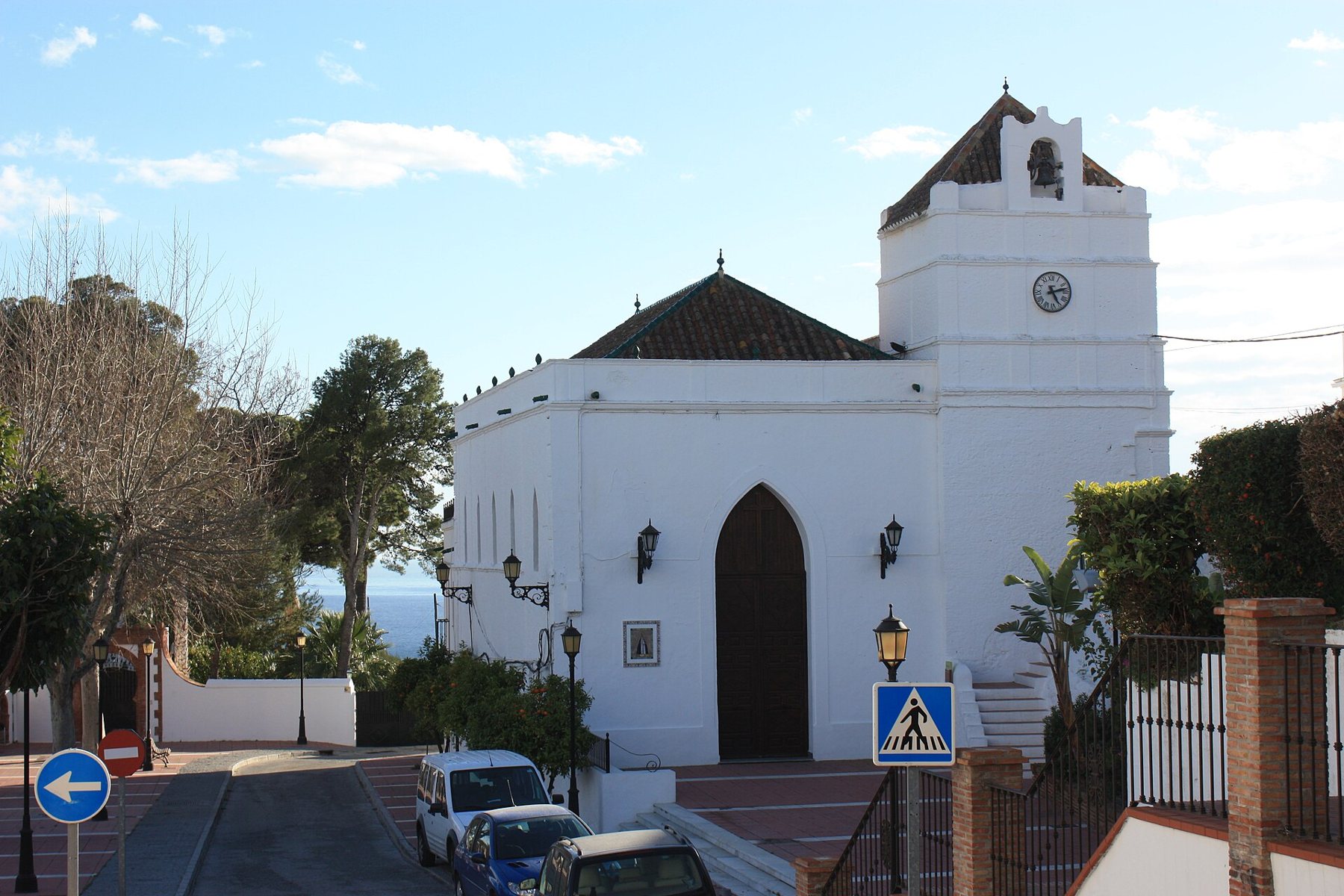
- Maro (by the cave): a small, charming white village with roughly 760 inhabitants and the church Nuestra Señora de las Maravillas on the square. From Maro, it is around 3 km to Nerja.
- Acueducto del Águila: the aqueduct along the old N-340, just before Nerja (see above).

Food
Nerja belongs to the province of Málaga and the Axarquía region, and its cuisine celebrates the sea: fresh fish and seafood, boquerones (anchovies, either fried or marinated in vinegar), and sardines on skewers, espetos, grilled over open flames on the beach. In summer, you can enjoy ajoblanco, a chilled soup made from almonds, garlic, bread, and olive oil, served garnished with grapes. For dessert or tapas, you might come across miel de caña, sugarcane honey from the neighbouring village of Frigiliana.
- At the cave: the cave's own restaurant-cafeteria serves breakfast, lunch, and snacks overlooking the sea. There is also a picnic area if you have packed your own food.
- In Nerja town: the streets surrounding Balcón de Europa and Plaza de España are packed with tapas bars and restaurants. If you wander a couple of streets into the old quarter, things quieten down considerably.
- Paella at Burriana: Chiringuito de Ayo was founded in 1969 by Francisco Ortega Olalla, "Ayo", and is legendary for its paella, cooked in huge pans over wood fires. According to El Español, the venue featured in Verano Azul, and Ayo himself appeared in the series. We have not been able to verify current prices.

Discover more local dishes: food traditions and 3×10 things to taste, eat, and visit.
Toilets
- The Nerja Caves: toilets at the entrance, including accessible facilities and a baby care room. Be sure to use the facilities before heading down – the tour takes up to an hour.
- Playa de Burriana: showers and accessible toilets on the beach according to Wikipedia, alongside numerous bars and restaurants.
- Balcón de Europa: we have not been able to confirm public toilets on the square itself. Drop into one of the many cafés nearby – buy a coffee and you're good to go.
- Mirador de Cerro Gordo: the restaurant at the viewpoint (for patrons).
Festivals and traditions
- San Isidro, 15 May: following Mass in El Salvador, the town joins a romería (a lively pilgrimage and outdoor fiesta) up to the San Isidro chapel right by the cave. As a result, the cave is closed on 15 May.
- Virgen del Carmen, 15–17 July: patron saint of fishermen. On the 16th, her statue is carried in procession and taken out onto the water, culminating at Calahonda beach right below Balcón de Europa.
- Feria de Nerja, October: the town fair takes place in the second week of October (typically around the 8th–12th) in honour of the Virgen de las Angustias and San Miguel, with colourful processions through the old quarter.
- Maro, September: the village celebrates its patron saint, the Virgen de las Maravillas.
- The five discoverers: the square outside the cave entrance is named Plaza de los Descubridores, "The Discoverers' Square", after the local boys who found it in 1959.
Discover more local festivities along the coast on our festivals page.
Suggested day trip
| Time | Facility |
|---|---|
| 09:00 | Drive from Playa Tropical along the N-340 stopping at Cerro Gordo (or take the A-7 if going direct) |
| 10:00 | Ticket to the cave (purchased online). Roughly 1 hour in the cave, followed by coffee at the entrance |
| 11:30 | Explore Maro and the aqueduct on your way into Nerja |
| 12:00 | Park underneath Plaza de España. Visit Balcón de Europa, El Salvador, and Museo de Nerja (free with cave ticket) |
| 14:00 | Lunch in town or paella on Burriana |
| Afternoon | Swimming at Burriana – and back via the A-7 (approx. 30 mins) |
Maps and routes
Red star = Playa Tropical. Click on a point for the name and distance. Map data © OpenStreetMap.
Open the route in Google Maps
- Drive from Playa Tropical to the Nerja CavesApprox. 24 km, 25–30 min via the A-7 towards Málaga, exit at Nerja/Maro. Parking at the cave.
- Along the old coastal road with stopsLa Herradura, Mirador de Cerro Gordo, Maro, and the aqueduct – via the coastal N-340, ending at the cave.
- Day tour: the cave, Nerja town, and returnThe cave in the morning, then the underground car park at Balcón de Europa, and return via the A-7.
- Walking tour in Nerja: Balcón de Europa – BurrianaFrom the underground car park past the church and Balcón de Europa down to Burriana Beach, approx. 1.5 km.
The routes start at Playa Tropical. On mobile devices, they open directly in the Google Maps app, ready for navigation.
Good advice
- Buy your ticket online. You get a set entry time, avoid the queues, and save 2 € (≈ 14.92 kr.) per adult.
- Arrive early. The cave opens at 9:15, and the last admission is already at 15:30 (16:30 in summer).
- Consider the stairs. Over 400 steps up and down in dim lighting. If you have bad knees or heart trouble, enjoy the virtual reality room instead.
- Wear sturdy, closed shoes. Flip-flops are not recommended, and paths can be damp.
- Download the audio guide beforehand. It is available free in the app (15 languages). We could not confirm whether Danish is included.
- Avoid 15 May and major public holidays. The cave is closed then.
- Make use of the museum ticket. Your cave ticket includes free entry to Museo de Nerja on Plaza de España.
The cave is not suitable for wheelchairs, rollators, or prams. Children under 6 remain the responsibility of parents at all times, and the cave management notes that people prone to claustrophobia may find it challenging.
Sources
- Cueva de Nerja: Prices 2026 (periods, opening hours, closing days)
- Cueva de Nerja: The Cave (parking, temperature, rules) and Services (toilets, restaurant)
- Cueva de Nerja: Frequently Asked Questions (458 steps, approx. 50 min, audio guide)
- Cueva de Nerja: The Discovery
- Cueva de Nerja: Archaeology and The Cave Paintings
- Cueva de Nerja: History of the Festival
- Fundación Cueva de Nerja on the cancellation of the 2026 festival and Andalucía Información 10-07-2026
- Wikipedia (es): Cueva de Nerja (protected status, dating of seal depictions 2012/2017)
- Wikipedia (es): Nerja and Wikipedia (en): Nerja (Balcón de Europa, El Salvador, festivals, Verano Azul)
- Wikipedia (es): Acueducto del Águila
- Wikipedia (es): Playa de Burriana and Maro
- El Español 08-06-2026: Nerja and Chiringuito de Ayo
- El Faro de Motril 16-06-2026: The shuttle bus to Cantarriján
- Wikipedia (es): Acantilados de Maro-Cerro Gordo
- ALSA: Nerja–Maro
- Driving distances: OSRM/OpenStreetMap
- Coordinates: OpenStreetMap contributors (ODbL)
Krone amounts are converted at 1 € ≈ 7.46 kr. and rounded.