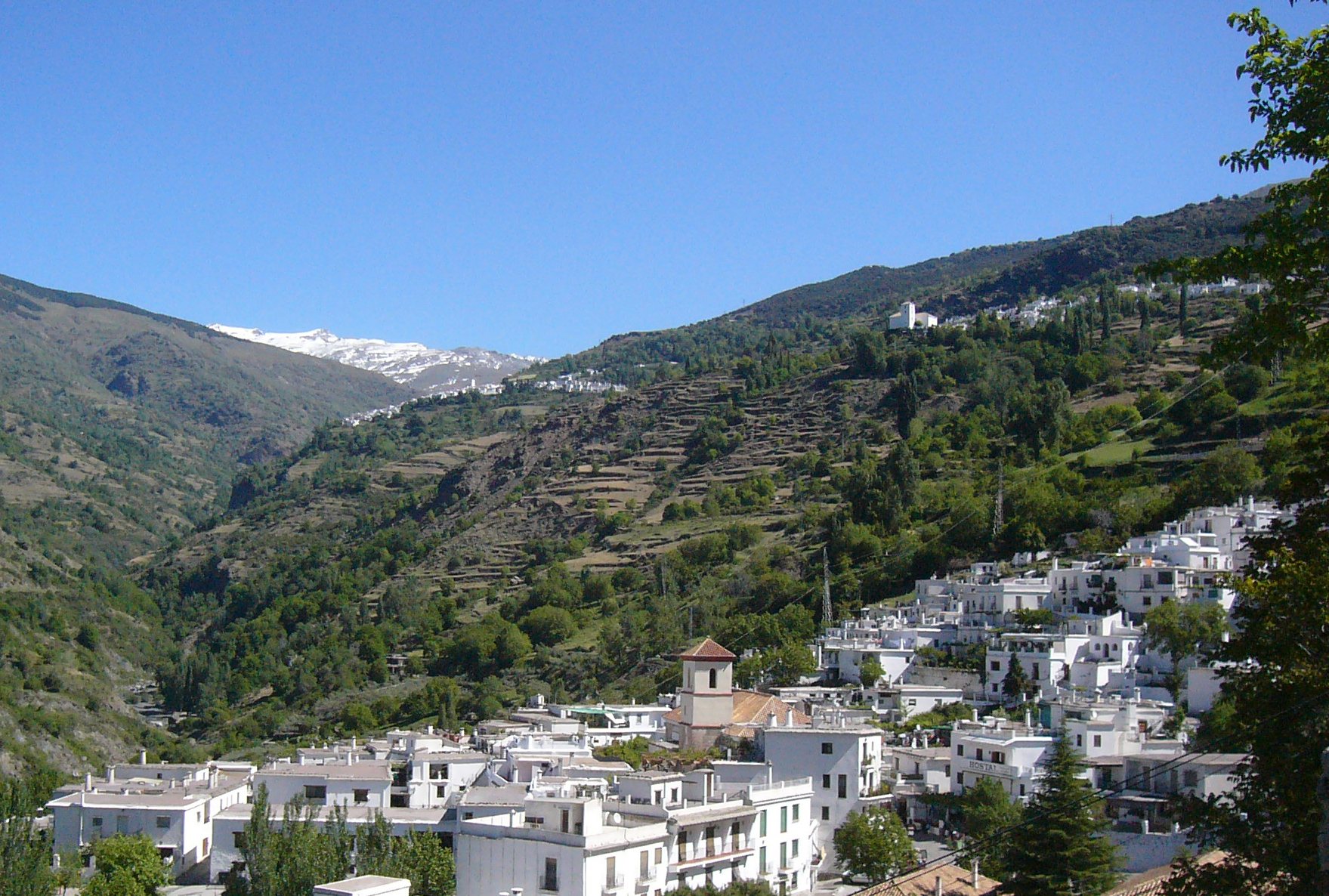
The Alhambra is one of Spain's most visited monuments, and it lies just over an hour's drive from Playa Tropical. Here is the complete guide to a day in Granada: tickets and reserved entry slots for the Nasrid Palaces, the Generalife, Alcazaba, and Palacio de Carlos V – followed by the Albaicín, Mirador de San Nicolás, the Cathedral, and free tapas served with every drink.
The Alhambra – 'the Red Castle'
The name derives from the Arabic al-Hamra, meaning 'the red one'. In 1238, Muhammad ibn Nasr – known as al-Ahmar ('the red') after his reddish beard – seized power in Granada and established the Nasrid dynasty. He constructed the earliest part of the fortress on the hill overlooking the city, and his successors expanded it over the course of 250 years. Its most renowned highlights, the Court of the Myrtles and the Court of the Lions, date from the reigns of Yusuf I and Muhammad V in the 14th century.
On 2 January 1492, the last sultan, Boabdil, surrendered Granada to the Catholic Monarchs, Isabella and Ferdinand. This brought an end to nearly 800 years of Muslim rule in Spain. In 1984, the Alhambra and Generalife became Spain's first UNESCO World Heritage site, with the Albaicín added in 1994.
Tickets: book well in advance
The Alhambra has a strict daily quota of tickets, and access to the Nasrid Palaces sells out particularly fast. The Patronato strongly advises purchasing tickets in advance. Only buy through the official ticketing website: tickets.alhambra-patronato.es. Numerous unauthorised sites sell tickets at inflated prices.
| Ticket | Price (as of October 2026) | What's included |
|---|---|---|
| Alhambra General (daytime) | 22,27 € (≈ 166 kr.) | Full access: Nasrid Palaces, Alcazaba, Partal, and Generalife |
| Gardens and Generalife (daytime) | 12,73 € (≈ 94.97 kr.) | Generalife, Alcazaba, and gardens – does not include the Nasrid Palaces |
| Nasrid Palaces at night | 12,73 € (≈ 94.97 kr.) | Palaces only, with designated time slot |
| Generalife at night | 8,48 € (≈ 63.26 kr.) | Gardens only (spring and autumn) |
- Online up to the day before: Individuals can book online until 23:59 the day before visiting. Maximum 10 tickets per person, payment card, and month.
- Discounts: EU citizens over 65, Carné Joven holders, and individuals with a registered disability of at least 33% qualify for a discount. According to several guides, an over-65 ticket costs €14.85 (≈ 111 kr.) – though we were unable to confirm this directly on the Patronato's own site. You must present valid documentation (such as a passport) both at purchase and at entry, otherwise you will be charged the full price.
- Children under 12: free admission, but a ticket must still be booked alongside adult tickets.
- Bring your passport: If you collect your ticket from a machine or counter, you must show valid photo ID and the payment card used for the booking.
- Free access: The Palacio de Carlos V, Alhambra Museum, and Baño de la Mezquita can be visited without a ticket.
The Nasrid Palaces can only be entered at the exact time slot printed on your ticket. If you miss your slot, entry will be refused. The rest of the complex can be explored at your leisure during opening hours – and you may leave and re-enter the grounds, although each designated area (Alcazaba, Nasrid Palaces, Partal, Generalife) can only be entered once.
Guide: planning your visit
The Patronato recommends budgeting roughly three hours for the entire complex. Plan your route around your designated entry time for the Nasrid Palaces. The ticket office is situated near the parking area at the eastern end, whereas the Nasrid Palaces lie at the western end – it is a fair walk between them, so allow plenty of time before your time slot.
- Generalife – close to the main entrance, ideal to visit first if your palace slot is scheduled later.
- Alcazaba – the military fortress perched at the tip of the hill.
- Palacio de Carlos V and the museum – free admission, located by Puerta del Vino.
- Nasrid Palaces – at your booked entry time.
- Partal – the tranquil gardens and reflection pool directly after the palaces.
The Nasrid Palaces
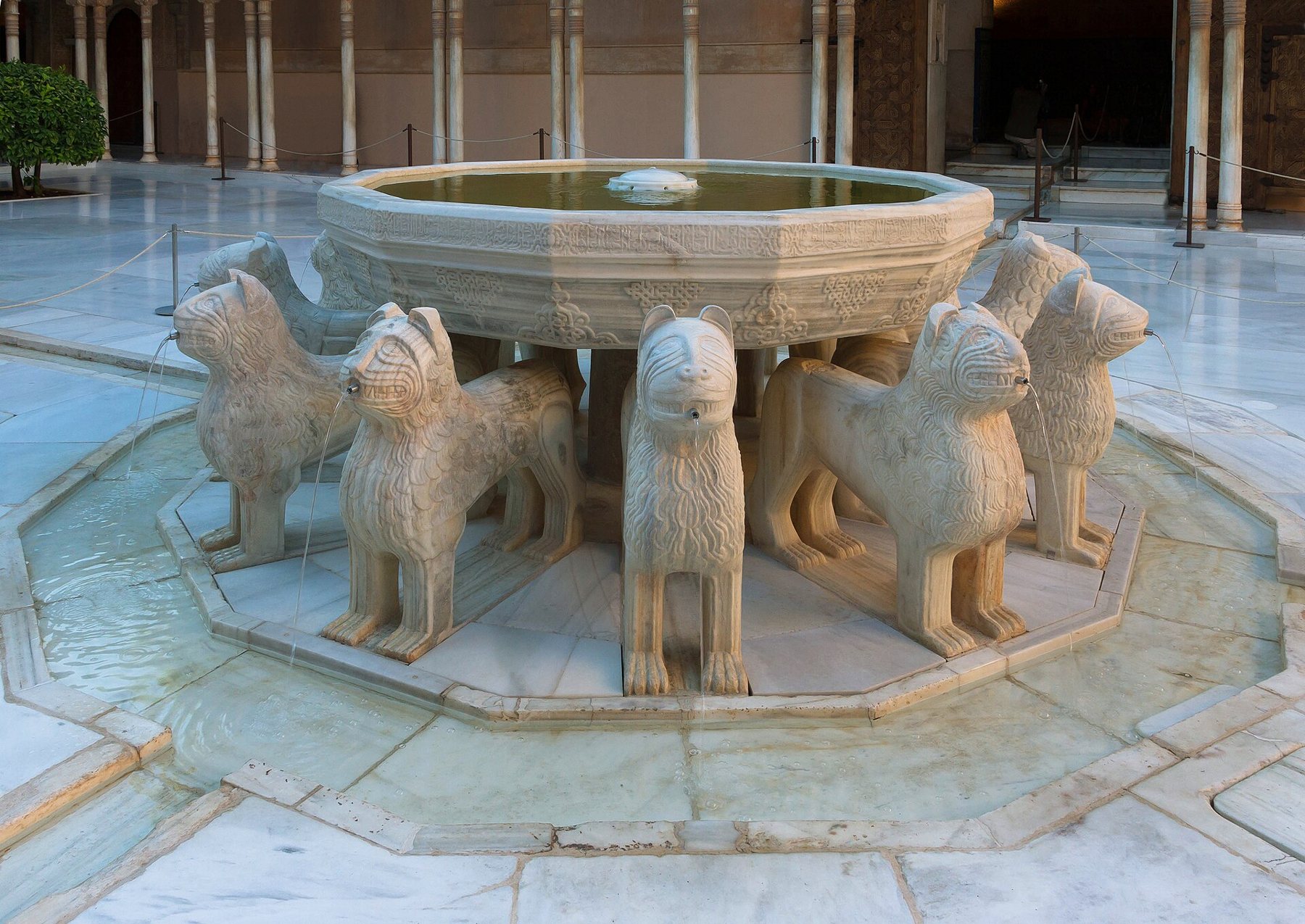
This is the Alhambra's crowning glory: intricate halls and courtyards where every wall is adorned with carved stucco, glazed zellij tiles, and calligraphic Arabic inscriptions. The tour leads through three palaces: the Mexuar, where the sultan conducted state council; the Comares Palace, with its serene Court of the Myrtles (Patio de los Arrayanes) and the long reflection pool in front of the Comares Tower; and the Palace of the Lions, featuring the iconic Court of the Lions (Patio de los Leones), where twelve marble lions support the central fountain. Surrounding the courtyard are opulent halls crowned with honeycomb muqarnas domes.

The Generalife
The Generalife served as the sultans' summer residence and retreat, complete with lush gardens, orchards, and soothing watercourses, set slightly higher up the hill from the palaces. Its oldest section was likely constructed under Muhammad II in the late 13th century. Its most celebrated spot is the Patio de la Acequia, an elongated courtyard framed by a water channel and criss-crossing water jets on either side.

Alcazaba
The Alcazaba is the oldest and most military part: a fortress with walls and towers on the western tip of the hill. If you walk up into the Torre de la Vela (the watchtower), you will get one of the best views of Granada, Albaicín and – on clear days – the Sierra Nevada. There are many steps and uneven stones, so good footwear is an advantage.

Palacio de Carlos V
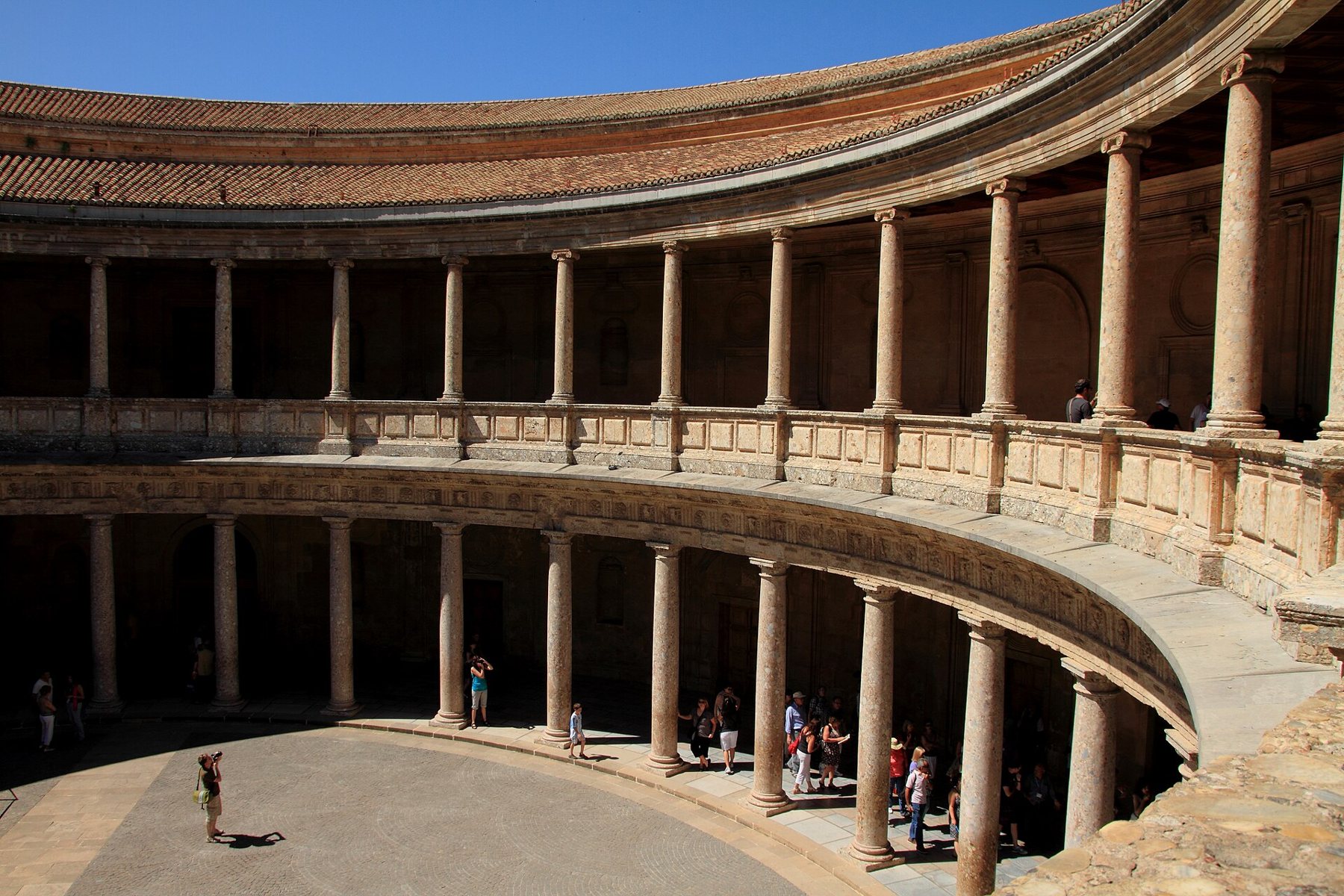
In the middle of the Moorish complex stands a square Renaissance palace with a circular courtyard. Emperor Charles V had it built after staying in the Alhambra with his bride, Isabella of Portugal, following their wedding in 1526. It was never really used by the emperor. Today, it houses the Alhambra Museum and Granada's Museum of Fine Arts. The courtyard and museum are free – even without a ticket to the rest.
Practical information inside the Alhambra
- Bags: maximum 40 × 40 cm. Small rucksacks must be worn on the front of your body. There are free lockers at the entrance pavilion and at the Puerta del Vino (with the day's ticket, subject to availability).
- Prams are not allowed inside the buildings. At the Puerta del Vino, you can leave your pram and borrow a baby carrier for free (for children up to 12 kg).
- Wheelchairs: There is a specially accessible route, and wheelchairs can be borrowed at the entrance (subject to availability).
- Food and drink are not allowed inside the monuments. There are vending machines at the entrance, at the Puerta del Vino and at the car park, and eating is permitted in areas such as the Plaza de los Aljibes.
- Photography: permitted, but without flash and tripods. Smoking is prohibited everywhere, including outdoors.
- Audio guides can be rented. The Patronato does not provide guides itself, but recommends an authorised guide.
Granada city
From the Puerta del Vino, you can walk down Cuesta Gomérez to Plaza Nueva in the city centre – under a kilometre, downhill. Or take the minibus: line C30 runs from the Alhambra to the centre (Plaza Isabel la Católica), and C32 runs from the Alhambra to the Albaicín. You can leave your car in the Alhambra car park – private cars are not allowed to drive into the old town centre.
Albaicín and Mirador de San Nicolás
Opposite the Alhambra, on the other side of the River Darro, lies the old Moorish quarter of Albaicín: narrow, steep cobbled streets, white houses and gardens behind high walls (cármenes). The neighbourhood sits 700–800 metres above sea level, so there are hills. The most scenic route up starts at Plaza Nueva and runs alongside the river along Carrera del Darro with its small bridges.
At the top is the square Mirador de San Nicolás in front of the Church of San Nicolás. From here, you can see the entire Alhambra with the Sierra Nevada behind it – this is the view from the postcards. The square is free and always open, and at sunset it is filled with people and street musicians. The church tower can be climbed for 3 € (≈ 22.38 kr.) (via the archbishopric's ticket website).


The Cathedral and Capilla Real
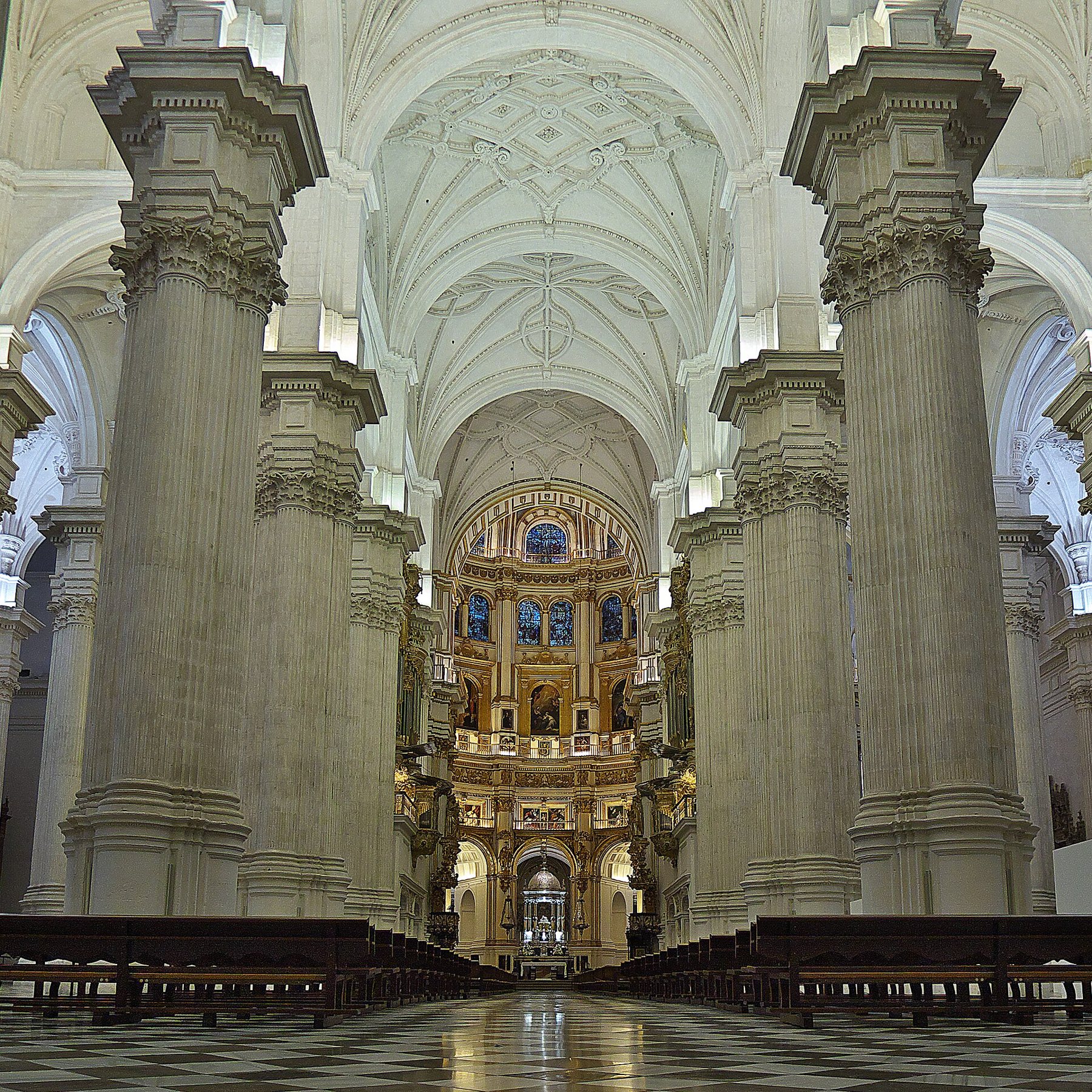
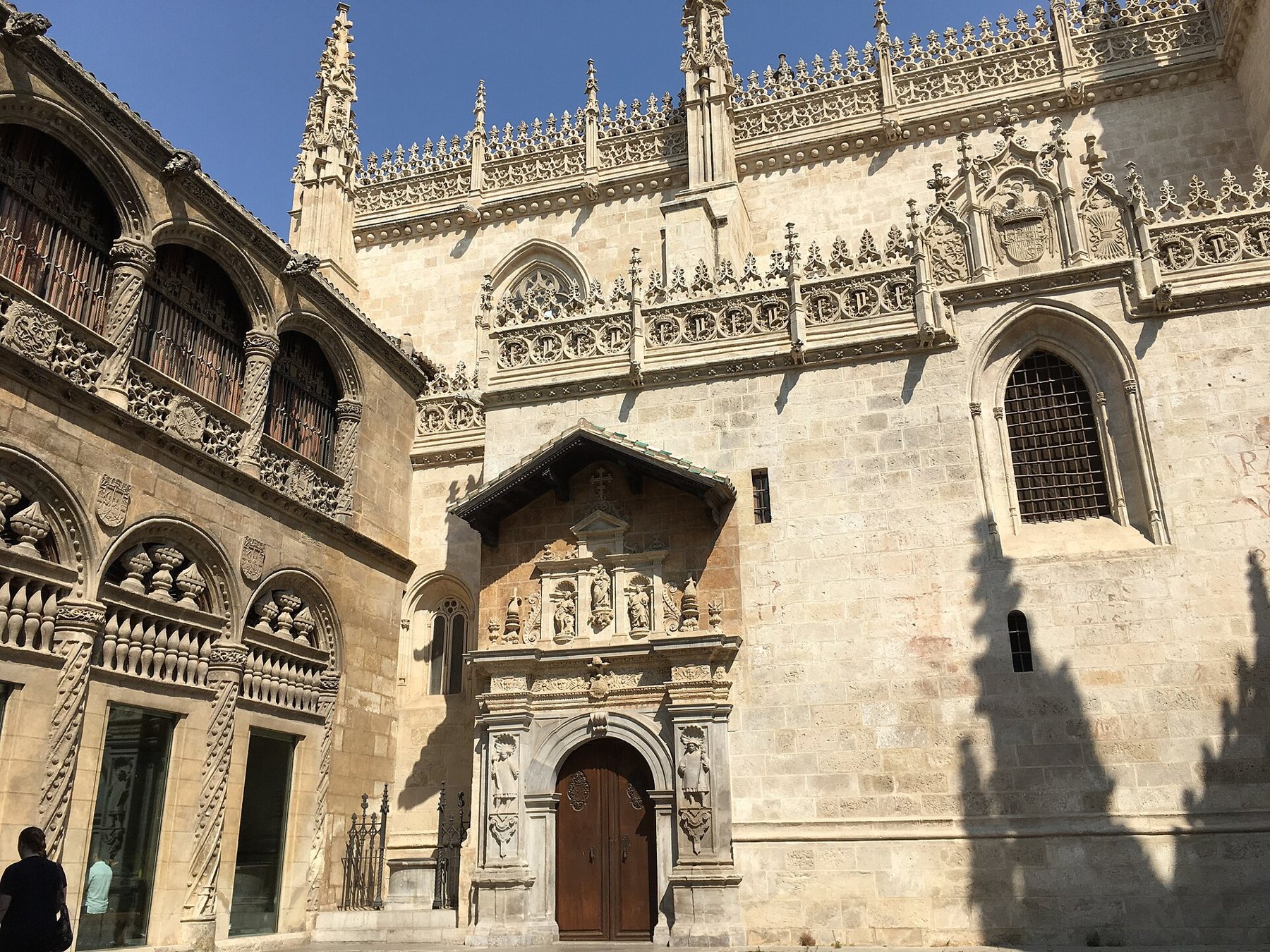
In the heart of the city stands the Cathedral, built after the conquest in 1492 in the Renaissance style, featuring enormous white columns. Right next to it is the Capilla Real, the Royal Chapel in late Gothic style, built 1505–1517. Here lie Isabella and Ferdinand buried, alongside their daughter Joanna and her husband Philip the Handsome. The two buildings have separate entrances and tickets.
| Open | Price (as of October 2026) | |
|---|---|---|
| The Cathedral | Mon–Sat 10–18.15, Sun 15–18.15 (doors close at 18.45) | 10 € (≈ 74.60 kr.) during the KERYGMA exhibition (until 28 November 2026), 8 € (≈ 59.68 kr.) discounted. Children under 12 free. Audio guide app free |
| Capilla Real | Mon–Sat 10–18.30, Sun 11.30–18.30 (doors close at 19) | 7 € (≈ 52.22 kr.), students aged 13–25 5 € (≈ 37.30 kr.). Audio guide app free |
The cathedral is always closed on 25 December, 1 January and Good Friday. The Capilla Real is closed on 25 December and 1 January and has modified opening hours on certain public holidays. Large rucksacks and suitcases are not allowed inside. Tickets: the cathedral and the Capilla Real.
Alcaicería – the old silk bazaar
Just south of the cathedral lies the Alcaicería, a network of narrow alleys lined with small shops. In Moorish times, this was the city's grand bazaar where silk was manufactured and sold. On 20 July 1843, the bazaar burned down completely, and what you see today has been rebuilt. Today, the shops sell handicrafts: blue-and-white Fajalauza pottery, inlaid wood (taracea), stained glass lamps – and plenty of souvenirs. From here, it is only a few steps to the square Plaza Bib-Rambla with its fountain and cafés.

Food: free tapas with every drink
Granada is one of the few cities in Spain where you still get a free tapa when you order a drink – beer, wine or soft drink. In many bars, the tapa gets larger with each round, and the kitchen often decides what you get. Not all bars do this, but the vast majority do. A drink with a tapa typically costs 2–3.50 € (≈ 26.11 kr.) according to local guides. Three or four rounds can easily turn into lunch.
- Calle Navas (by the town hall, Plaza del Carmen): a pedestrian street with many tapas bars close together. Touristy, but popular.
- Campo del Príncipe in the Realejo neighbourhood: a little more local, beneath the Alhambra hill.
Taste the local dishes: habas con jamón (broad beans with ham, ideally using jamón from Trevélez), tortilla del Sacromonte (omelette from the Sacromonte cave district) and piononos – small syrup-soaked pastries from the neighbouring town of Santa Fe, which are also considered typical of Granada. The pomegranate – in Spanish granada – is the city's symbol.

More about local food: food traditions and 3×10 things to taste, eat and visit.
Toilets
- Alhambra: toilets outside the monument itself by the ticket office (entrance pavilion) and inside the grounds at the Generalife and the Nasrid Palaces, according to the Patronato. There are also baby-changing facilities at the Puerta del Vino building and in the Generalife (Paseo de los Nogales). Use the toilet before joining the queue for the palaces.
- Granada city: we have been unable to confirm public toilets in the city centre. Use a bar or café – thanks to the tapas culture, you'll be buying a drink anyway.
- Along the way: petrol stations along the A-44, e.g. the BP station at Suspiro del Moro, and the cafés in Salobreña and Vélez de Benaudalla.
How to get there
By car
Drive east along the A-7 towards Motril, and at Salobreña/Motril take the A-44 motorway north towards Granada. It climbs up through the Guadalfeo Valley past Vélez de Benaudalla, across Suspiro del Moro and past Padul. At Granada, do not drive towards the centre: follow the southern ring road (Ronda Sur) towards the Sierra Nevada and the "Alhambra" signs. The Patronato describes the route: through the Serrallo tunnel, turn left at the roundabout and up Avenida de Santa María de la Alhambra. It is about 78 km from Playa Tropical, and takes 1 hour to 1 hour 15 minutes. The motorways are free.
The Alhambra car park has 360 spaces according to the Patronato, is open 24 hours a day and is monitored. There are disabled parking spaces and an area for buses and motorhomes. We haven't found the official rate; 2026 guides mention approx. 3.20–3.30 € (≈ 24.62 kr.) per hour and 21.70–22.90 € (≈ 171 kr.) for a full day. For an Alhambra trip lasting 4–5 hours, you should expect around 13–17 € (≈ 127 kr.). See also parking and speed cameras.
The buttons beneath the map at the bottom open the route from Playa Tropical directly in Google Maps – both the direct route to the Alhambra car park and the route with stops along the way.
By bus
ALSA runs between the Almuñécar bus station (Avenida Juan Carlos I, at the entrance to the town) and Granada's bus station, about 9 times a day with departures between approx. 7 am and 8 pm according to Love Granada. The fastest bus takes about 1 hour and 15 minutes and stops in Salobreña. Other departures take the mountain road over Jete, Otívar and Lentegí, taking up to 2 hours. The ticket costs 7–8 € (≈ 59.68 kr.) according to the same source. From Granada's bus station (north of the centre), you take a city bus to the centre. Check the timetable on alsa.es before you set off – and see buses.
By bus, you should expect a long day: catch an early bus so you have plenty of time for your slot at the Nasrid Palaces, and check the last bus home.
Sights along the way
- Salobreña (13 km): the white town on the cliff by the sea, with the castle at the top. The castle was a Nasrid pleasure palace and prison for deposed sultans – Yusuf III, among others, was imprisoned here for 15 years. Feel free to combine it with a coffee in the old town.
- Vélez de Benaudalla (27 km): a village by the River Guadalfeo with a castle at the top and the Jardín Nazarí, a small Moorish-style garden known as "the little Generalife". We have not been able to confirm opening hours – call the local council if you want to go inside.
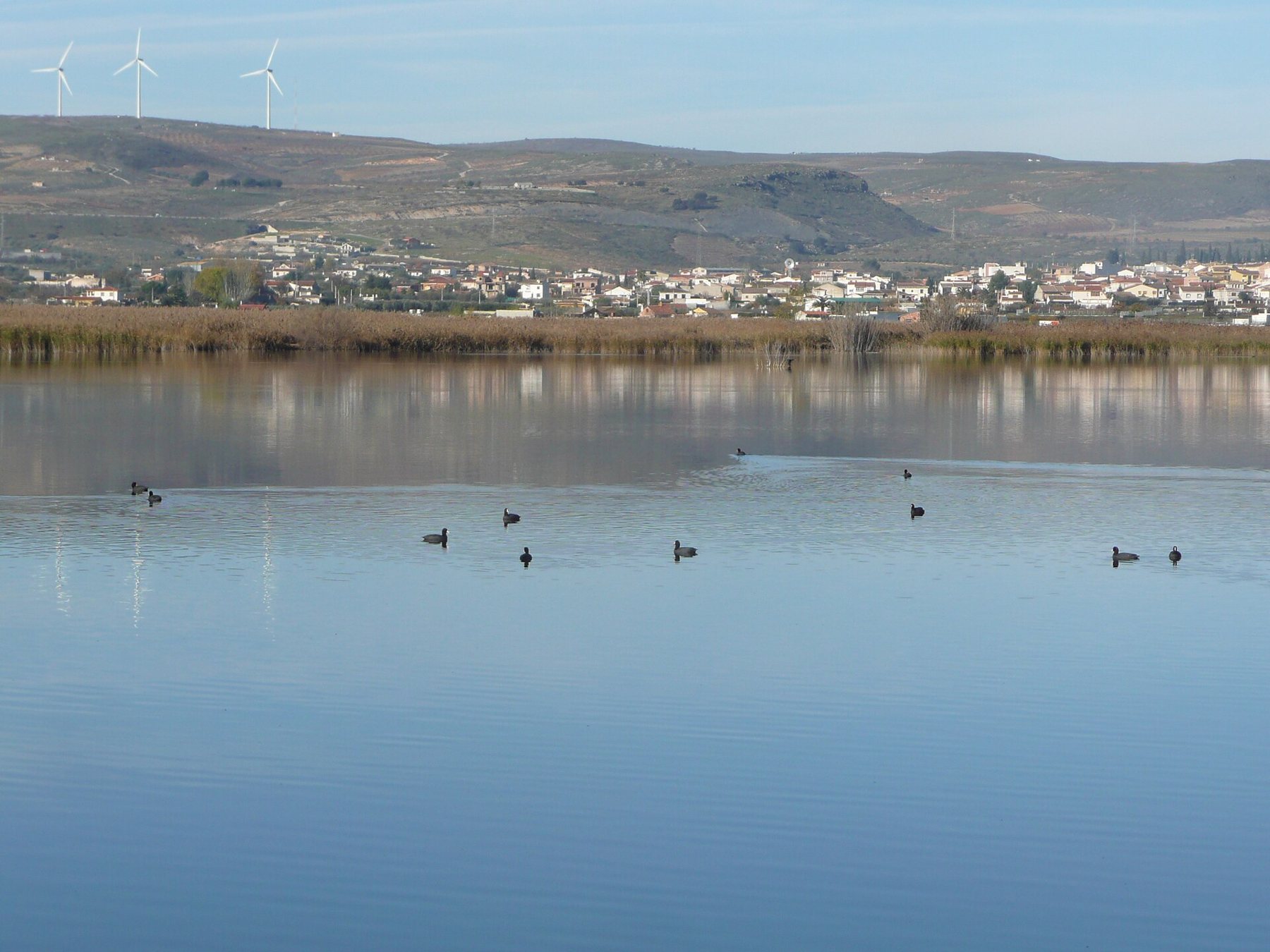
- Padul (55 km): the town by the Laguna del Padul, one of Spain's most important wetlands (a Ramsar site) with birds and boardwalks. In 1982, mammoth remains were found in the peat – one of the tusks is exhibited in the Parque de las Ciencias in Granada.
- Puerto del Suspiro del Moro (63 km): the mountain pass at 860–865 metres where the A-44 crosses over to the Granada plain. Here you see Granada for the first time (see legend below).



The legend of Boabdil's sigh
Following the surrender in January 1492, Boabdil was granted a small lordship in the Alpujarras. Heading south into exile, he dared not look back. Only when he reached the final hill where Granada can first be seen from this road, about 12 km south of the city, did he stop, take one last look at his palace, sigh and burst into tears. His mother, the Sultana Aixa, reportedly said to him: "Weep like a woman for what you could not defend as a man." Ever since, the pass has been called El Suspiro del Moro – "The Moor's Sigh".
Whether it truly happened, nobody knows. The writer Leonardo Villena suggests the story was invented by Bishop Antonio de Guevara to gain the favour of Emperor Charles V. But the name has stuck for over 500 years – and you will drive right past it.
Festivals and traditions
- Día de la Toma, 2 January: Granada commemorates the surrender of 1492 with the Pendón Real banner being waved from the town hall balcony and a wreath-laying ceremony at the Capilla Real. According to folklore, unmarried girls who ring the bell in the Torre de la Vela on that day will get married before the end of the year.
- Cruces de Mayo, 3 May: the city's squares and courtyards are decorated with crosses made of flowers, and locals eat saladilla con habas (broad beans and bread).
- Corpus Christi and the city fair, May/June: Granada's major festival featuring a procession, fairground and marquees. In 2026, the fair took place from 30 May to 6 June. In 2027, Corpus Christi falls on Thursday 27 May; the fair dates have not yet been announced.
- Semana Santa: Holy Week processions through the city centre.
- Padul: livestock market and town festival in late September.
Discover more local festivities along the coast on our festivals page.
Suggested day trip
| Time | Facility |
|---|---|
| 8.00 am | Drive from Playa Tropical via the A-7 and A-44 (stop at Suspiro del Moro if desired) |
| 9.15 am | Park at the Alhambra. Generalife and Alcazaba |
| 11:00 | The Nasrid Palaces (book a suitable time slot), then El Partal and the Palacio de Carlos V |
| 13:30 | Walk down Cuesta Gomérez to Plaza Nueva. Tapas lunch |
| 15:30 | Capilla Real, Cathedral and Alcaicería |
| 5.30 pm | Carrera del Darro up to the Mirador de San Nicolás (or bus C32) – the Alhambra in the afternoon light |
| Evening | Bus C32 or C30 back to the car park, and home (approx. 1 hour 15 minutes) |
Maps and routes
Red star = Playa Tropical. Click on a point for the name and distance. Map data © OpenStreetMap.
Open the route in Google Maps
- Drive from Playa Tropical to the AlhambraApprox. 78 km, 1 hour to 1 hr 15 min via the A-7 and A-44, then Ronda Sur towards the Sierra Nevada and the Alhambra signs. Park in the Alhambra car park.
- With stops along the waySalobreña, the Jardín Nazarí in Vélez de Benaudalla, Laguna del Padul and Suspiro del Moro – finishing at the Alhambra car park.
- Walk through the Alhambra and down into the cityFrom the ticket office through the grounds to the Puerta del Vino and down Cuesta Gomérez to Plaza Nueva.
- City walk: chapel, bazaar, cathedral and tapasFrom Plaza Nueva to the Capilla Real, Alcaicería and cathedral – and on to the tapas bars in Calle Navas.
- Up to the Mirador de San NicolásFrom Plaza Nueva along Carrera del Darro and up through the Albaicín for views of the Alhambra.
- Round trip: Alhambra, Salobreña and homeThe Alhambra in the morning, home via the A-44 with an evening stroll in Salobreña.
The routes start at Playa Tropical. On mobile devices, they open directly in the Google Maps app, ready for navigation.
Good advice
- Book the Alhambra well in advance – only through the official website. In high season, the Nasrid Palaces can sell out weeks ahead.
- Choose your palace time slot carefully. You will not be admitted if you are late. There is quite a walk from the entrance.
- Bring your passport – for the ticket machine and for discounted tickets.
- Good shoes and water. There are many kilometres, stairs and uneven stones. In summer it gets hot – bring a sun hat.
- Leave the car. Use the Alhambra car park all day and take minibus C30/C32 or walk down into the city.
- Avoid large bags. Maximum 40 × 40 cm, and rucksacks must be worn on the front.
- Try the tapas culture. Order a drink and wait for the tapa – don't order food right away.
The Alhambra is closed on 25 December and 1 January. The cathedral is also closed on Good Friday.
Sources
- Patronato de la Alhambra: Opening hours and prices (opening hours, prices, purchasing rules, discounts)
- Patronato: Alhambra General day visit
- Patronato: F.A.Q. (approx. 3 hours, toilets, admission, parking, buses)
- Patronato: Time of the visit (Nasrid time slot, free areas, rules)
- Patronato: Services (360-space car park, lockers, baby-changing facilities, vending machines)
- Official Alhambra ticketing website
- Archbishopric: Granada Cathedral and Capilla Real
- Wikipedia (es): Alhambra, Generalife and Palacio de Carlos V
- Wikipedia (es): Toma de Granada and Capilla Real de Granada
- Wikipedia (es): Albaicín and Alcaicería de Granada
- Wikipedia (es): Gastronomía de la provincia de Granada
- Wikipedia (es): Puerto del Suspiro del Moro
- Wikipedia (es): Salobreña, Vélez de Benaudalla and Padul
- Andalucía.org: Jardín Nazarí
- Love Granada: Almuñécar–Granada buses and Alhambra parking (unofficial)
- Granada Direct: Tapas bars in Granada (unofficial)
- Idealista 27-05-2026: Corpus Christi in Granada 2026
- Driving distances: OSRM/OpenStreetMap
- Coordinates: OpenStreetMap contributors (ODbL)
Krone amounts are converted at 1 € ≈ 7.46 kr. and rounded.