← All articles about motorhomes
Free motorways: the A-7 and A-44
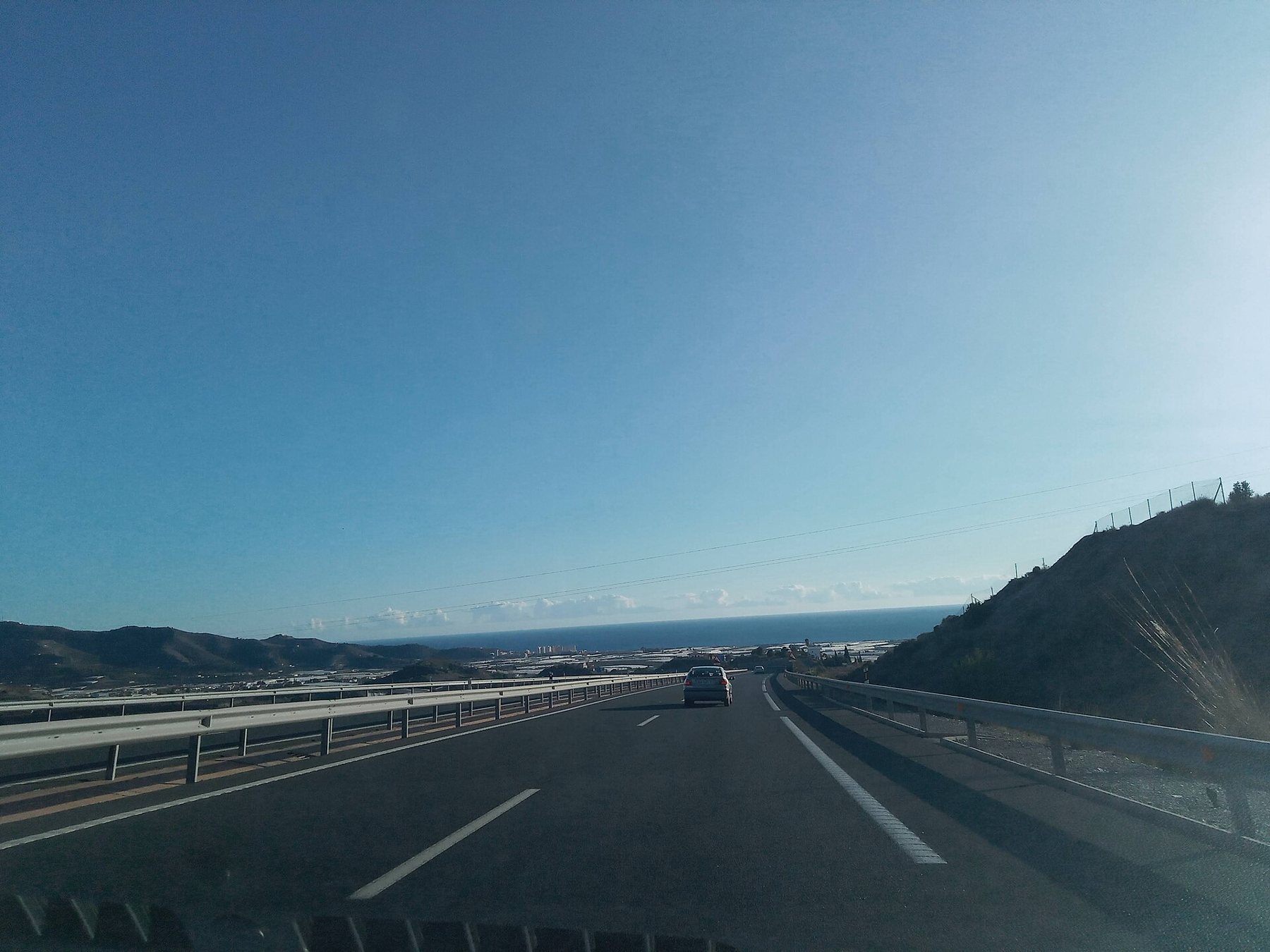
The main road along the coast is the A-7 (Autovía del Mediterráneo). It is an autovía and costs nothing. To the north, the A-44 runs from Motril up to Granada, also free. From Málaga towards Antequera and Córdoba you can drive for free on the A-45, which runs parallel to the AP-46 toll road.
The A-7 between Nerja and Motril has many bridges and tunnels. In windy weather, ease off on the high viaducts – a tall motorhome catches a lot of wind. The old coast road, the N-340 (Carretera del Mediterráneo), still runs through the towns and is more beautiful, but narrower and with sharp bends, e.g. at the Cerro Gordo viewpoint between La Herradura and Maro.
Toll roads: the AP-7 and AP-46
Within 250 km of Almuñécar there are two toll roads you are likely to come across:
| Road | Route | 2026 toll (confirmed) | Free alternative |
|---|---|---|---|
| AP-7 (Autopista del Sol) | Málaga–Estepona–Guadiaro. Toll plazas at Calahonda, San Pedro de Alcántara and Manilva | Málaga–Calahonda: 3,55 € (≈ 26,48 kr.) for ligeros at the standard rate (5,75 € (≈ 42,90 kr.) in the summer season). Tolls rose by 3,64 % on 01-01-2026 | The A-7 through the towns (slower) |
| AP-46 | Málaga–Alto de las Pedrizas (towards Antequera). Toll plaza at Casabermeja | Low season: ligeros 4,35 € (≈ 32,45 kr.), pesados 1 6,00 € (≈ 44,76 kr.), pesados 2 8,70 € (≈ 64,90 kr.). High season: 6,60 € (≈ 49,24 kr.) / 7,60 € (≈ 56,70 kr.) / 11,35 € (≈ 84,67 kr.) | A-45 (free) |
The AP-46 tolls are taken from the Ministry of Transport's toll schedule, valid from 01-01-2026. The Málaga–Calahonda toll is in the ministry's toll schedule for the AP-7 Málaga–Estepona and is confirmed by La Noción (06-10-2026), which writes that since 1 October you pay 3,55 € (≈ 26,48 kr.) per passage at Calahonda, compared with 5,75 € (≈ 42,90 kr.) in summer. We have not been able to read the pesados 1 tolls on the AP-7 unambiguously, so we do not give them.
Is a motorhome a "ligero" or a "pesado 1"?
We have not been able to get this confirmed. Motorhomes are not listed as a separate group in the ministry's toll sheets. The toll sheets for other Spanish toll roads (AP-36 and AP-66, 2025) say:
- Ligeros: cars, vans and minibuses without a trailer – or with a trailer without twin wheels.
- Pesados 1: among others, lorries with two or three axles, buses with two axles, and cars/vans with a single-axle trailer with twin wheels.
- Pesados 2: among others, cars/vans with a trailer with two or more axles, at least one of which has twin wheels.
The deciding factor seems to be the number of axles and twin wheels (rueda gemela). An ordinary motorhome on a van chassis with single rear wheels is, by the wording, a two-axle van. A large motorhome with twin wheels or three axles may be charged as a pesado. Ask the motorway company (Ausol for the AP-7) before your trip, and keep the receipt.
Driving licence, weight and speed
- A category B licence covers vehicles with a maximum authorised mass of no more than 3.500 kg. If the motorhome is heavier, you need C1 (up to 7.500 kg). Check the registration certificate for the vehicle's maximum authorised mass – not what it weighs empty.
- Overloading: A motorhome loaded with water, gas, bikes and the winter's supplies easily ends up over its maximum authorised mass. Use a public weighbridge or a recycling centre with a weighbridge if you are in doubt.
- Speed: In Spain different limits apply to motorhomes over 3.500 kg than to lighter ones. We have not been able to read the current figures on the DGT website from our working environment, so we do not give them. See the DGT website and our page on speed checks.
- Bike rack and the V-20 sign: Spanish rules require a red-and-white striped sign (panel V-20) on the back when a load sticks out behind the vehicle. Many motorhome owners put it on a loaded bike rack. We have not been able to read the wording of the rule in the Reglamento General de Circulación, so check with the DGT whether and when your bike rack requires the sign.
The DGT's instruction for motorhomes was updated as PROT 2026/04 (in force 11-03-2026). According to the DGT's press release of 16-03-2026, motorhomes may stop and park on the same terms as other vehicles, but they must respect the councils' signs and rules in towns. What counts as camping is explained in our article on rules, fines and do's & don'ts.
Low barriers, car parks and narrow roads
Almost all multi-storey and underground car parks on the coast are too low for a motorhome. OpenStreetMap (read 02-11-2026) shows, among others, these height limits:
| Location | Height | From Almuñécar (as the crow flies) |
|---|---|---|
| Almuñécar: entrance to Lidl, Calle Larache | 2,3 m | 0,4 km |
| Almuñécar: car park by Avenida Mar de Plata | 2,2 m | 0,6 km |
| Almuñécar: several entrances to underground car parks by Paseo de Velilla | 2,1 m | approx. 1,7 km |
| Almuñécar: N-340 (Carretera del Mediterráneo) west of the centre | 5,0 m | 0,9 km |
| Nerja: Parking Balcón de Europa | 2,0 m | 16,6 km |
| Nerja: car park in the Castillo Alto industrial estate (marked "no motorhomes") | 2,2 m at the entrances | 17,4 km |
| Salobreña: Calle Estación (pedestrian-style street) | 2,9 m | 9,1 km |
| Salobreña: Avenida Federico García Lorca | 4,5 m | 9,7 km |
OpenStreetMap is made by volunteers and is not complete. If a height is missing from the table, it does not mean there is room. Always look out for the round sign showing the height (gálibo) and the yellow or red height barrier at the entrance.
The mountain roads
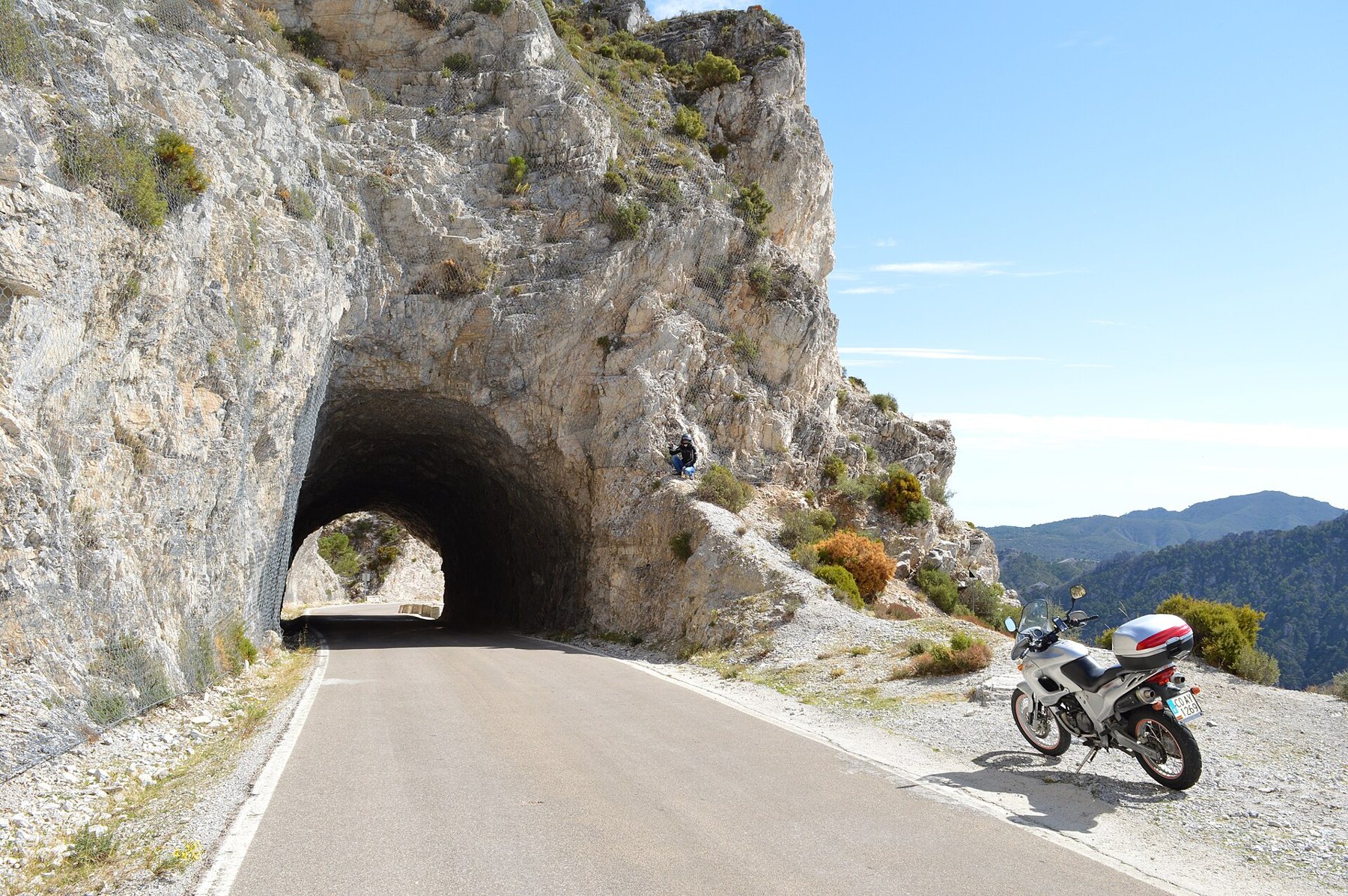
- A-4050 (Carretera de la Cabra) from Almuñécar over the mountains towards Granada is narrow, steep and full of hairpin bends. We have not found an official ban on motorhomes, but the road is best suited to small motorhomes and vans. Use the A-7/A-44 if your vehicle is long. See spots and trips.
- Frigiliana (19 km as the crow flies): The village lies on a hillside with narrow, steep streets. We have not been able to confirm a car park intended for motorhomes. Park outside the village and walk up.
- Alpujarra (Lanjarón, Órgiva, Pampaneira): Narrow, winding roads through the villages. See Alpujarras.
- Sierra Nevada: The road up past the El Dornajo visitor centre (50 km as the crow flies) climbs quickly. In winter, chains or winter tyres may be required. See Sierra Nevada.
Do not drive into the old towns
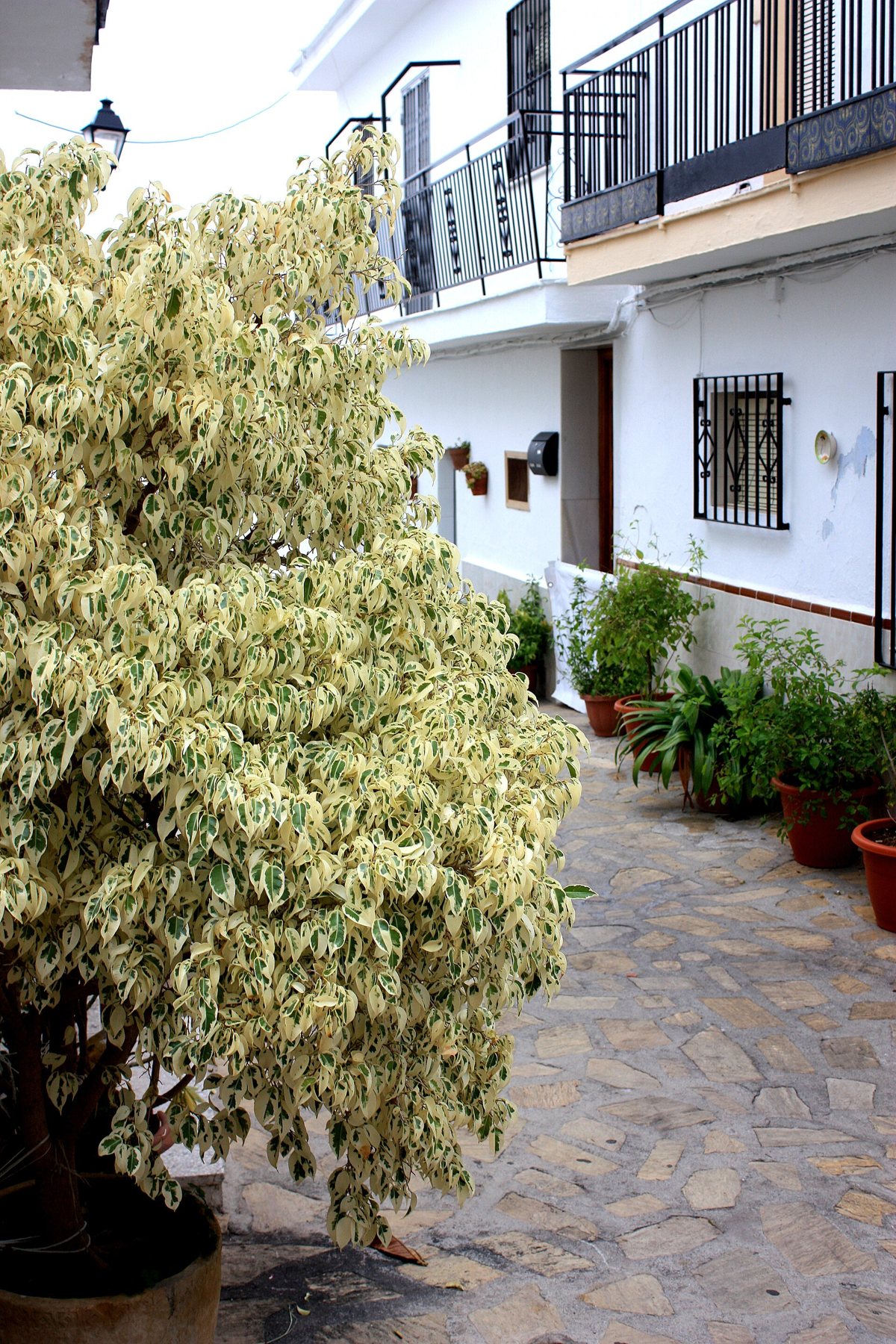
The old town centres were built for donkeys, not motorhomes. The streets are narrow, steep and often one-way, and many are dead ends. Do not drive into:
- Almuñécar: the old town around Castillo de San Miguel and Barrio de San Miguel. See motorhomes in Almuñécar and the town.
- Salobreña: the old town up towards the castle. See Salobreña.
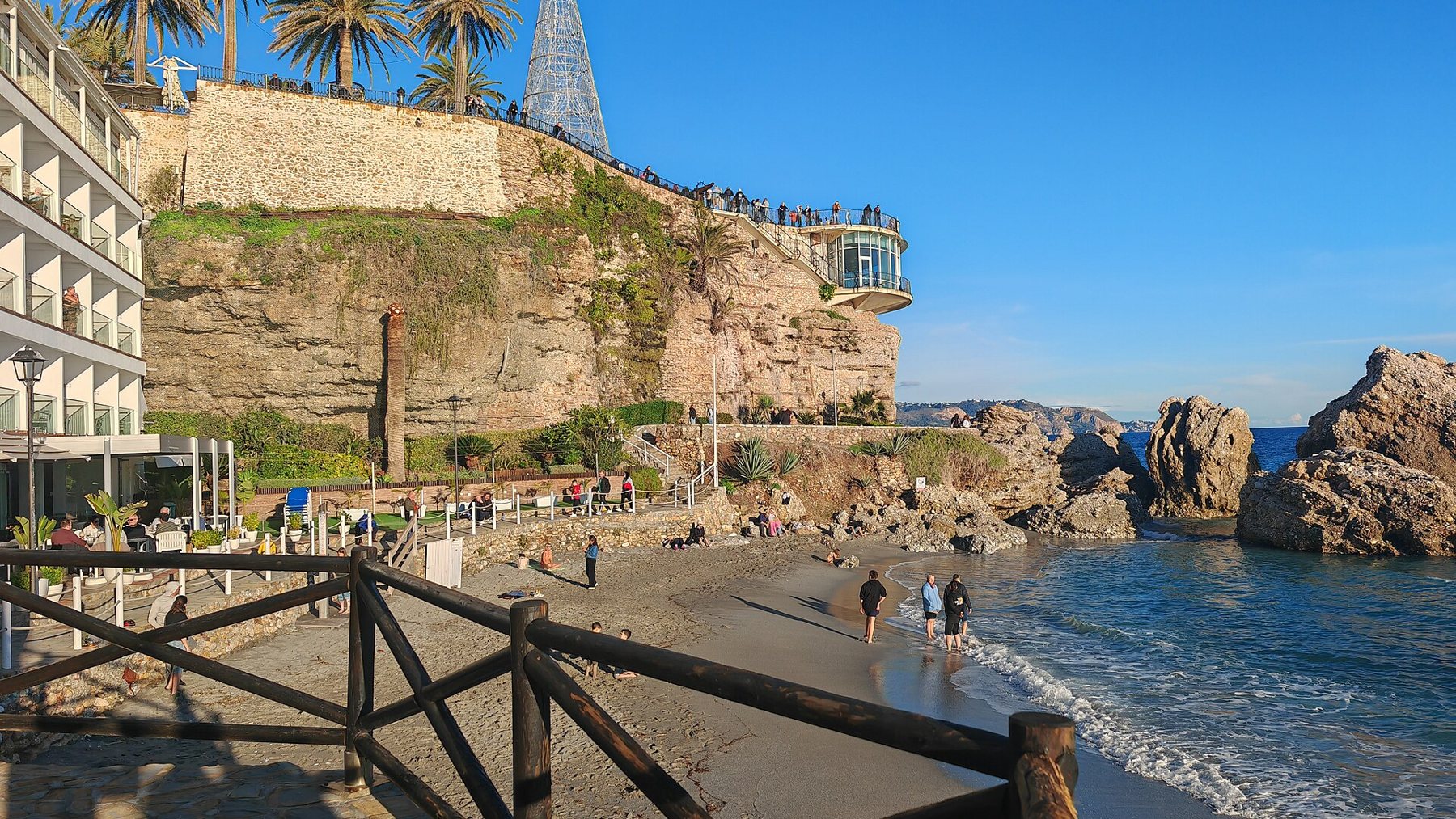
- Nerja: the centre around Balcón de Europa. The council has previously put up height barriers against motorhomes and issued many fines (see the rules).
- Frigiliana: the whole old village. See Frigiliana.


Parking in the towns
We have not been able to confirm municipal car parks intended for motorhomes or coaches in Nerja, Frigiliana, Salobreña, Motril, Granada or Málaga. The councils' own websites could not be opened from our working environment. The safest option is to spend the night at an área or campsite and take the bus into town:
- Places in and around Almuñécar: motorhomes in Almuñécar.
- Places along the coast from Málaga to Roquetas: áreas and campsites on the coast.
- Buses: buses on the Costa Tropical. Salobreña has a bus station (Alsa) in the lower part of town (OpenStreetMap).
- Ordinary parking: parking in Almuñécar.
Spanish councils may not ban parking simply because a vehicle is a motorhome, but they may limit parking time and put up signs. Always respect the local signs – read more under rules and fines.
Low-emission zones (ZBE)
Málaga and Granada have low-emission zones (zonas de bajas emisiones, ZBE). We have not been able to confirm the current rules for foreign-registered motorhomes – e.g. whether you have to register the vehicle in advance. Check the council's website before driving into the centre, and preferably park outside the city and take the bus or train in.
Videos
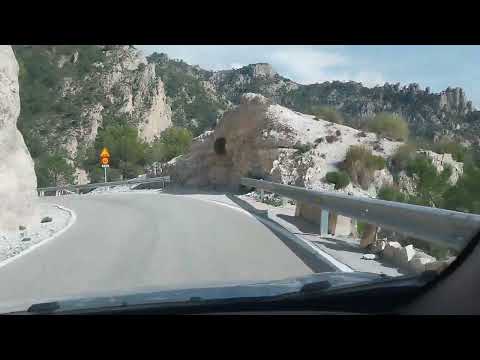 Carretera de la Cabra (A-4050) between Granada and AlmuñécarCortijo de la Plata
 Driving on the AP-7 toll road from Fuengirola to MarbellaPlatino Photo Agency
Maps and routes
The map shows the toll plaza on the AP-7, height restrictions from OpenStreetMap and places where you need to take care. The buttons below the map open the route in Google Maps. Google Maps' car navigation does not show height, weight and width restrictions, so it may send you into streets a motorhome cannot get through. Use a sat nav for motorhomes or lorries if you have one.
Red star = Playa Tropical. Click on a point for the name and distance. Map data © OpenStreetMap.
Open the route in Google Maps
- From Almuñécar to the AP-7 toll road at CalahondaVia the free A-7 past Málaga to Ausol's toll plaza at Calahonda. Málaga–Calahonda costs 3,55 € for ligeros at the normal 2026 rate. Check your toll class.
- The old coast road to the west: Cerro Gordo and MaroThe N-340 is more scenic than the A-7, but narrow and winding. Do not continue into Nerja's centre – the car park at Balcón de Europa is only 2,0 m.
- From Almuñécar to Salobreña – avoiding the old townSalobreña's lower streets have height limits (2,9 m in Calle Estación). Park down below and walk up to the castle.
- Up towards the Sierra NevadaVia the A-7, A-44 and Granada's ring road up past El Dornajo. Steep road – in winter, chains or winter tyres may be required.
- Walk in Almuñécar: from the área to the town hallLeave the motorhome at the área by Velilla and walk along the promenade into the centre.
The routes start at Playa Tropical. On mobile devices, they open directly in the Google Maps app, ready for navigation.
Good advice
- Know your height, width, length and weight. Write the measurements on a note by the steering wheel – including bikes and roof box.
- Check your driving licence. A category B licence only covers up to 3.500 kg maximum authorised mass.
- Use the free roads. The A-7, A-44 and A-45 are free. The toll roads only save time west of Málaga.
- Ask about the toll class. If your vehicle has twin wheels or three axles, ask Ausol (AP-7) before your trip.
- Never drive into a car park without looking at the sign. Almost all are 2,0–2,3 m.
- Stay out of the old towns. Park outside and walk or take the bus.
- Do not trust Google Maps blindly. It does not know your vehicle's height.
- Wind on the viaducts. Slow down on the A-7's high bridges when it is windy.
- Breakdown: A motorhome over 3,5 t needs a tow truck for heavy vehicles. See breakdown and gear and workshops.
The tolls here are those we were able to confirm on 02-11-2026. The toll roads have high-season and low-season rates, and the tolls change every year on 1 January. Check the motorway company's website before your trip.
Sources
- Ministry of Transport: Tolls AP-46 Alto de las Pedrizas–Málaga 2026 (valid from 01-01-2026; read via search result 02-11-2026)
- Ministry of Transport: Tolls AP-7 Málaga–Estepona 2026 and AP-7 Estepona–Guadiaro 2026 (read via search result 02-11-2026)
- Ministry of Transport/SEITT: Tolls AP-36 2025 and AP-66 2025 (definition of ligeros, pesados 1 and 2)
- La Noción: The toll on the AP-7 at Calahonda drops to 3,55 euros from October (06-10-2026)
- Andalucía Información: AP-7 Málaga–Guadiaro rises 3,64 % from 1 January (30-12-2025)
- Autopista del Sol (Ausol): Tolls
- DGT: Tráfico actualiza la Instrucción de autocaravanas (16-03-2026) and DGT: Instrucciones (PROT 2026/04)
- Wikipedia: Autovía A-45
- Euro Weekly News: Local uproar: residents complain about number of motorhomes (16-02-2019, height barriers in Nerja)
- Height restrictions: OpenStreetMap, read 02-11-2026
- Coordinates: OpenStreetMap contributors (ODbL)
Krone amounts are converted at 1 € ≈ 7.46 kr. and rounded.