

← All stories about pirates and smugglers
A cave made by the sea
Most caves in Spain were made by rainwater slowly dissolving the limestone and forming stalactites. The Cueva del Tesoro is different. It was shaped by the sea, when the rock lay under water. That is why the walls are rounded and full of holes like a sponge, and there are almost no stalactites. The municipality calls it one of only three known caves of marine origin in the world, and according to Wikipedia it is the only one in Europe. According to several sources the limestone dates from the Jurassic period.
The cave was originally three caves: El Higuerón, El Suizo and La Victoria. Later Higuerón and Suizo were joined in what is now called the Sala de la Virgen. Inside the rock there are about 500 metres of passages. The tour goes through chambers with names such as the Sala del Volcán (the volcano's chamber), the Sala de los Lagos (the chamber of the lakes) with its clear green water, the Sala de Marco Craso and the Sala de Noctiluca.

The legend of the five kings' treasure
According to legend a huge treasure lies here. It is said to have belonged to the five kings of the Almoravid dynasty, Berbers from North Africa who ruled Morocco and Muslim Spain in the 11th and 12th centuries. The last of them, Tashfin ibn Ali, fought against the new rulers, the Almohads. According to legend he sent the royal treasure across the sea to al-Andalus, where trusted men and slaves hid it in the cave. Afterwards the slaves were killed so that no one could reveal the spot. The last part comes from English Wikipedia – it is legend, not history.
What we know for certain is this: Tashfin ibn Ali was the last great ruler of the Almoravids, and he died in 1145 near Oran in present-day Algeria during the war against the Almohads. There is no evidence that he ever sent a treasure to the Málaga coast.
The legend is old. According to Spanish Wikipedia, the monk Fray Agustín de Milla y Suazo wrote it down in the 17th century in a manuscript on the history of Málaga, in which he mentions the Cueva del Higuerón. It was printed in 1789 in the book Conversaciones Malagueñas, which the Málaga historian Cristóbal Medina Conde published under a pseudonym.

The Roman who hid – and the moon goddess
Two other stories also belong to the cave. One is about the Roman politician Marcus Licinius Crassus. The Greek writer Plutarch tells how Crassus as a young man fled to Spain and hid for eight months in a cave by the sea while his enemies Marius and Cinna held power in Rome (c. 86 BC). That it was this very cave is a local tradition – hence the Sala de Marco Craso.
The other story is about Noctiluca, a goddess of the moon, fertility, life and death. Some writers believe the Phoenicians had a shrine to her in the cave. It is a theory, not something archaeologists have proved.
Pirates and "Tagore"?
You sometimes read that the treasure belonged to a pirate, and online the name "Tagore" pops up as a pirate or king who is supposed to have hidden it. We have not been able to find this in any official source or in Wikipedia. The municipality and all the old sources speak of the Almoravid kings. But the pirates were real enough on this coast – see further down about the watchtower and the coastal fort, and read Pirates and watchtowers.
The treasure hunters
The legend has lured many. The best known is Antonio de la Nari, a man from Switzerland. According to Spanish and English Wikipedia he spent almost 30 years searching for "the treasure of the five kings". He blasted new passages and holes in the rock and died in 1847 in one of his own explosions. He never found the treasure. The part of the cave where he worked is still called the Cueva del Suizo – "the Swiss man's cave" – and is now the Sala del Lago. (Wikipedia says he used dynamite, but dynamite was not invented until 1867, 20 years after his death. It was probably gunpowder.)
In the 20th century the Laza family owned the land above the cave. The researcher Manuel Laza Palacio explored it for decades and wrote the book La Cueva del Tesoro (1962). It was he who made it a tourist attraction in the 1970s. And then the incredible happened: during his excavations he found a small clay oil lamp containing six Almoravid gold coins from the time of Ali ibn Yusuf (who reigned 1106–1143). We have not been able to find out when the discovery was made.
Was it the five kings' treasure? No. Six coins are not a royal treasure. But it shows that someone from the Almoravid period really did hide gold in the cave. According to Spanish Wikipedia, some researchers believe the coins were placed there deliberately as a ritual, because the number six had a magical meaning for some Saharan tribes. So perhaps the legend has a grain of truth in it.
The real treasures: the Stone Age
The greatest treasure in the cave is not gold. People have used the caves here for tens of thousands of years. Archaeologists have found traces from the Palaeolithic (Old Stone Age) and the Bronze Age, and a number of cave paintings. The French priest and scholar Henri Breuil, one of the great experts on cave art of his day, visited the Cueva del Suizo in 1918 and described red signs painted on the rock. Excavations uncovered pottery from the Neolithic (New Stone Age), an arrowhead, skulls and bones from a bison. The paintings are in a part of the cave that was closed to tourists at the end of the 1970s to protect them.
Many of the finds are now in the Museo Arqueológico Nacional in Madrid, and some are on loan to the Museo de Málaga.


Timeline
| When | What happened |
|---|---|
| Palaeolithic | People use the caves. Traces from the Palaeolithic and later the Bronze Age |
| About 7,500–5,500 years ago | Neolithic: pottery, bracelets and tools are left in the cave |
| c. 86 BC | Crassus hides for eight months in a cave in Spain (Plutarch). Tradition: it was this one |
| 1106–1143 | Ali ibn Yusuf rules the Almoravids. The gold coins in the cave are from his time |
| 1145 | Tashfin ibn Ali dies near Oran. Legend: his treasure is hidden in the cave |
| 16th century | The Torre del Cantal watchtower is built on the cliff by the cave – against pirates |
| 17th century | Fray Agustín de Milla y Suazo writes down the legend |
| 1766 | The coastal fort Casa Fuerte de Bezmiliana is built under Charles III |
| 1789 | The legend is printed in Conversaciones Malagueñas |
| Until 1847 | The Swiss Antonio de la Nari digs and blasts for almost 30 years – and dies in an explosion |
| 1908 | The Málaga–Vélez-Málaga railway is tunnelled through the cliffs at El Cantal |
| 1918 | Henri Breuil describes the cave paintings |
| 1962 | Manuel Laza Palacio publishes the book La Cueva del Tesoro |
| 1970s | The cave opens to tourists. The 50th anniversary was celebrated in 2024 |
| 1985 | The cave is declared a heritage site (BIC). One municipal source mentions 2002 |
| 2023 | Over 75,000 visitors in a single year |
Visiting today
From the ticket office you go down into the cave and follow the paths, steps and walkways around. The visit is self-guided with a free audio guide that you download to your own phone – bring headphones. There are also guided tours in the morning at 12 and in the afternoon. The municipality does not say how long the visit takes. The cave is about 500 metres long inside, so allow a good hour including the park outside.
Free entry: On weekdays entry is free during the first hour (10 in winter, 10.30 in summer) for a maximum of 25 people, but only if you book in advance on tel. 952 406 162. It is also free on 6 June (International Day of Caves) and 27 September (World Tourism Day). On the last Sunday of the month there are theatre performances in the cave at 11 and 12.30.
Accessibility: The cave is not fully accessible. There is a lift down to the first chamber, so wheelchair users and people with walking difficulties can get that far. The rest of the tour has several flights of steps. The municipality calls it "a pleasant walk", and most of it is easy. The floor can be damp, so wear shoes with a good grip.
Right next to the cave is the Parque Arqueológico del Mediterráneo, a free park open until 18 in winter and 20 in summer. The Cueva de la Victoria, the third of the old caves, can be visited separately – ask at the ticket office.
The tourist office's English page still gives the old prices (4.65 € (≈ 34.69 kr.) for adults). The Spanish page says 6 € (≈ 44.76 kr.). It is worth checking turismoenrincon.es or phoning before you drive.
Also worth seeing: the watchtower and the tunnels
Walk 10 minutes down towards the sea and you are at the Torre del Cantal, a round watchtower from the 16th century. It stands on the cliffs about 30 metres above the sea between La Cala del Moral and Rincón. From here the guards kept a lookout for pirate ships and sent smoke signals by day and fire signals by night to the next tower. The tower has been restored, but we have not been able to confirm whether you can go inside. Read more about the towers along the coast in Pirates and watchtowers.


Below the tower runs one of the finest promenades on the coast. You can walk along the cliffs at El Cantal on paths by the sea or through the old railway tunnels. They were built in 1908 for the suburban line between Málaga and Vélez-Málaga, which people called La Cochinita or El Matagallinas. Today they are a footpath and cycle path with no steps. The path is part of the Senda Litoral, the path along the whole coast of Málaga province.


The coastal fort against the pirates
In Rincón de la Victoria, about 2 km east of the cave, stands the Casa Fuerte de Bezmiliana. King Charles III had it built in 1766 – according to the municipality to protect the coast against British and Dutch pirates. The king's coat of arms is above the gate. Later the fort was a Guardia Civil barracks, and since 1992 it has been an exhibition and concert venue. Entry is free. Winter: Tuesday–Saturday 10.30–13.30 and 17–20, Sunday 10.30–13.30, closed Monday. Summer (15/6–15/9): every day 10.30–20.

The Roman villa
A little further east lies the Villa Romana de Antíopa, a Roman villa from the 3rd century AD. According to the municipality it is one of the best preserved in Andalusia. It is known for the mosaic of the satyr and the princess Antiope. Price 6 € (≈ 44.76 kr.) for adults, 4 € (≈ 29.84 kr.) for pensioners (as of October 2026). Winter 10–14 and 15–18, summer 10.30–14 and 16.30–20. For group visits you can buy a combined ticket for the cave and the villa.

How to get there from Playa Tropical
Car: Take the A-7 towards Málaga past Nerja and Torre del Mar. It is about 70 km and takes about an hour. Take the exit for Rincón de la Victoria / La Cala del Moral and follow the signs to "Cueva del Tesoro". The cave lies up in the residential area above the beach. The buttons below the map open the route from Playa Tropical directly in Google Maps.
Parking: The municipality says there is parking at the cave. On OpenStreetMap the car park right by the entrance is marked as free.
Bus: From Málaga, buses run by the Málaga area transport company (including line M-160) go to the "Cueva del Tesoro" (El Cantal) stop – check the timetable before you set off. From Almuñécar you have to take the bus to Málaga and change – it makes for a long day. See Buses.
Combine it with Málaga: The cave is about 10 km from the centre of Málaga, so it fits in nicely on the way home from a day trip to Málaga. It can also be combined with the Nerja caves – then you get two completely different caves in one day.
Toilets and food
There are toilets at the cave (the municipality mentions "aseos" in the reception area). Spain's official tourism website also says there are toilets and showers by the beach in La Cala del Moral.
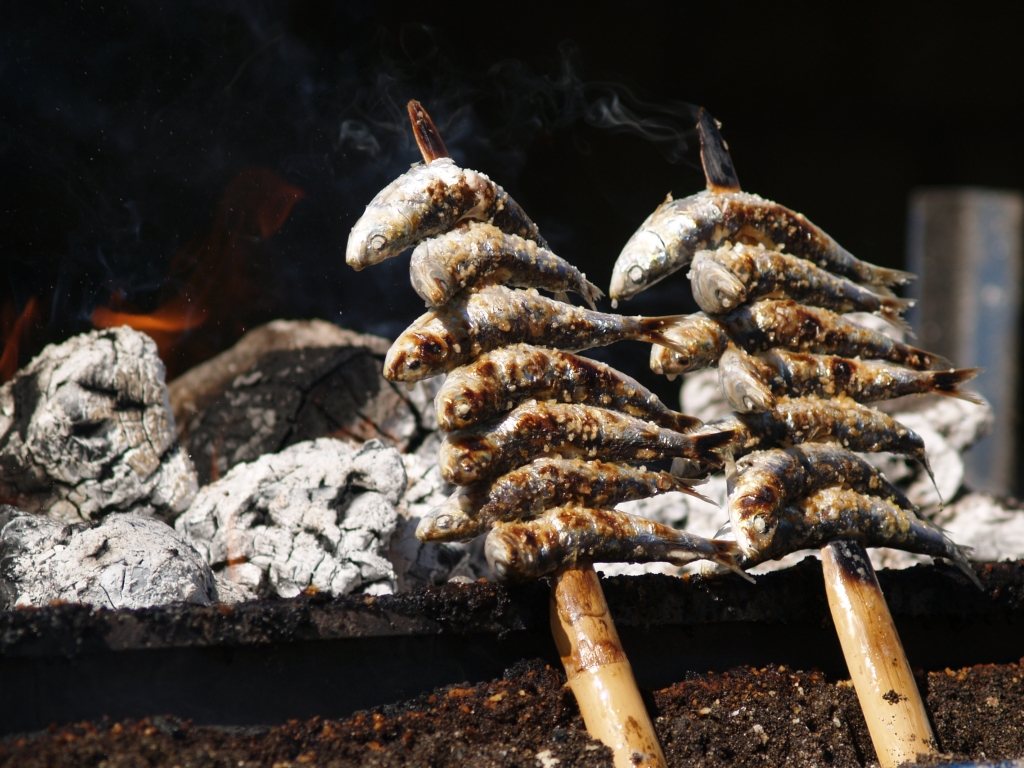
Rincón de la Victoria is a fishermen's town. The municipality calls the boquerón victoriano – small anchovies which, according to the municipality, are named after the fishing season around the festival of the Virgen de la Victoria – the "jewel in the crown" of the local cuisine. Order them deep-fried (boquerones fritos) or as pescaíto frito. And then there are espetos: sardines on skewers, grilled over a fire in an old boat filled with sand on the beach. Every year the town holds the Fiesta del Boquerón.
Along the beach promenade in La Cala del Moral (Paseo Blas Infante) there is a row of chiringuitos and restaurants, a 10–15-minute walk from the cave. One of them, Avante Claro (Paseo Blas Infante, Parcela 5), has been awarded a "Solete" in the Guía Repsol for its seafront terrace and its fish and seafood. Read more about the food culture in Food traditions.

Maps and routes
Red star = Playa Tropical. Click on a point for the name and distance. Map data © OpenStreetMap.
Open the route in Google Maps
- Drive from Playa Tropical to the Cueva del TesoroAbout 70 km, about 1 hour along the A-7 towards Málaga. Free parking at the cave.
- The Roman villa and the coastal fort on the wayVilla Romana de Antíopa and Casa Fuerte de Bezmiliana in Rincón de la Victoria – and then on to the cave.
- The cave, lunch in La Cala del Moral and homeFrom the cave down to the beach promenade and espetos – and back to Playa Tropical. About 145 km in total.
- Walk from the cave to the watchtower and the tunnelsAbout 2 km, about 30 min. Down residential streets to the tower, through the tunnel and along the beach. It is downhill – the way back is uphill.
The routes start at Playa Tropical – walks on site and trips on the other side of the Strait start at the route's first point. On your mobile they open directly in the Google Maps app, ready for navigation.
Good advice
- Come in the morning. The cave closes for lunch 14–15 in winter and 14–16.30 in summer. Last entry is one hour before closing time.
- Headphones and a charged phone. The audio guide is free, but you have to download it to your own phone.
- Good shoes. There are steps, and the floor can be damp and slippery.
- Walking difficulties? The lift only goes to the first chamber. The rest involves steps.
- First hour free. On weekdays the first hour is free if you book in advance (tel. 952 406 162, max. 25 people).
- Walk down to the sea afterwards. The watchtower, the tunnels and the espetos in La Cala del Moral are 10–15 minutes from the cave. Remember it is uphill back to the car.
- Combine the trip. The Casa Fuerte de Bezmiliana is free and on the way. Málaga is 10 km further west.
- Read more about the pirates and the watchtowers and the smugglers on the coast.
Sources
- Turismo Rincón de la Victoria: Cueva del Tesoro (opening times, prices, accessibility, the three caves)
- Turismo Rincón de la Victoria: Treasure Cave (English page, older prices)
- Wikipedia (es): Cueva del Tesoro (the legend, Milla y Suazo, 1789, Antonio de la Nari, Laza Palacio, the coins, Breuil, BIC)
- Wikipedia (en): Treasure Cave, Spain
- Turismo Rincón de la Victoria: Torres almenaras (Torre del Cantal)
- Turismo Rincón de la Victoria: Acantilados de El Cantal (the tunnels from 1908)
- Turismo Rincón de la Victoria: Casa Fuerte de Bezmiliana
- Turismo Rincón de la Victoria: Villa Romana de Antíopa
- Turismo Rincón de la Victoria: Gastronomía (boquerón victoriano, espetos)
- Guía Repsol: Avante Claro, La Cala del Moral
- Euro Weekly News 2024: La Cueva del Tesoro celebrates 50 years (Laza Palacio, the 1970s, visitor numbers 2023)
- andalucia.com: Cueva del Tesoro
- Wikipedia (en): Tashfin ibn Ali and Marcus Licinius Crassus
- The finds: the Museo Arqueológico Nacional's descriptions on Wikimedia Commons (inv. no. 1973/58/HIG)
- Coordinates: OpenStreetMap contributors (ODbL)
Krone amounts are converted at 1 € ≈ 7.46 kr. and rounded.


