

500 years of "moros en la costa"
Drive along the old N-340 coast road and you will see round stone towers on the headlands – from the Balcón de Europa in Nerja you can see Torre Caleta above the cove at Cantarriján. They are the clearest trace of a long history. In the 16th and 17th centuries the corsairs came from Algiers at night and carried off fishermen, farmers and children as slaves. The Spanish still say "no hay moros en la costa" – "there are no Moors on the coast" – when they mean the coast is clear.
When the pirates disappeared around 1830, the smugglers came. Tobacco from Gibraltar was unloaded in the little coves below the cliffs and carried over the mountains on mules, and the customs guards, the Carabineros, moved into the old watchtowers. Up in the mountains, bandoleros held up the stagecoaches until the Guardia Civil was founded in 1844. After the Civil War, guerrilla fighters took to the mountains above Frigiliana, and today the Guardia Civil hunts fast rubber boats carrying hashish with radar and helicopters.
The landscape is the same all the way: Africa is only about 200 km away, the coast has many small coves that cannot be seen from land, and the mountains rise right behind the beach. That has made the Costa Tropical a coast where someone has always been keeping watch.


The map above shows that the coast was well known in North Africa and Istanbul. In his youth Piri Reis sailed with his uncle, the corsair Kemal Reis, on raids along the coasts of Spain and Italy. Later he gathered his knowledge of the Mediterranean coasts in the sea atlas Kitab-ı Bahriye, which he presented to Sultan Süleyman in 1521 and in an expanded edition in 1526.
Timeline: from corsairs to narcolanchas
| Year | What happened | Read more |
|---|---|---|
| 1489–1492 | Almuñécar and Salobreña surrender to the Catholic Monarchs. Granada falls in 1492, and many Muslims flee to North Africa | Pirates |
| 1507 | Moorish monfíes, who were based in the mountains, attack the town council in Motril | Bandits |
| 1516 | The Barbarossa brothers seize power in Algiers, which becomes the corsairs' capital | Pirates |
| 6 October 1526 | Almuñécar is granted its coat of arms – according to tradition as thanks for repelling a pirate attack | Pirates |
| 19 October 1562 | 25 Spanish galleys are wrecked in the storm at La Herradura. Around 5,000 people drown | Pirates |
| 1575–1580 | Miguel de Cervantes is a captive in Algiers and is ransomed | Pirates |
| 16th and 17th centuries | The chain of round watchtowers is built along the coast. Tobacco becomes the most important smuggled goods | Pirates |
| 1704 / 1713 | Gibraltar becomes British – the free port becomes the smugglers' warehouse | Smugglers |
| 1764–1771 | Charles III's plan for coastal defence. The cannon fort Castillo de La Herradura is completed in 1771 | Pirates |
| 1789 | The legend of the Almoravid kings' treasure in the Cueva del Tesoro is printed for the first time | The treasure cave |
| 9 March 1829 | The Carabineros customs guards are founded and move into the old watchtowers | Smugglers |
| 1830 | France conquers Algiers. The age of the pirates is over | Pirates |
| 28 March 1844 | The Guardia Civil is founded to make the roads safe | Bandits |
| 1847 | The treasure hunter Antonio de la Nari dies in one of his own blasts in the Cueva del Tesoro | The treasure cave |
| 21 April 1850 | A gang of 12 men robs the mail coach from Málaga at Venta de Alfarnate | Bandits |
| 1877–1889 | El Bizco de El Borge's gang kidnaps and sends threatening letters in the Axarquía. The Guardia Civil hunts it until El Bizco dies in 1889 | Bandits |
| 15 March 1940 | The Carabineros are disbanded. The Guardia Civil takes over the coast | Smugglers |
| 1946–1952 | The Agrupación Guerrillera de Granada under "Roberto" in the mountains above Frigiliana. El Acebuchal is emptied in 1948 | The guerrillas |
| 1980s | Hashish from Morocco in fast boats. The Almería coast becomes one of the smugglers' favourite landing places | Recent times |
| 1998 | Descendants of those driven out begin to rebuild El Acebuchal | The guerrillas |
| 2002 | The first SIVE radar system goes into service near Algeciras. The Guardia Civil leaves Castillo de La Herradura | Recent times |
| 2018 | Narcolanchas – the smugglers' fast rubber boats – become prohibited goods in Spain | Recent times |
| 2021 | Museo 1562 opens in Castillo de La Herradura | Pirates |
| 2023 | The Galería del Bandolero opens in El Borge with the collection from the closed museum in Ronda | Bandits |
| February 2026 | Narcolanchas shelter from a storm at La Herradura, and one is refuelled in Marina del Este | Recent times |
The six stories
1. The Barbary pirates and the watchtowers (approx. 1500–1800)
The corsairs from Algiers, Tunis and Tripoli were after people, not gold. The captives were sold at the slave market in Algiers, and only those whose families could pay were ransomed – like Cervantes in 1580. That is why the old towns sit up on the cliffs behind walls, and why there is a watchtower on almost every headland. The watchmen sent smoke signals by day and fire signals by night from tower to tower. The nearest tower, Torre de Velilla, stands only about 600 metres from Playa Tropical.

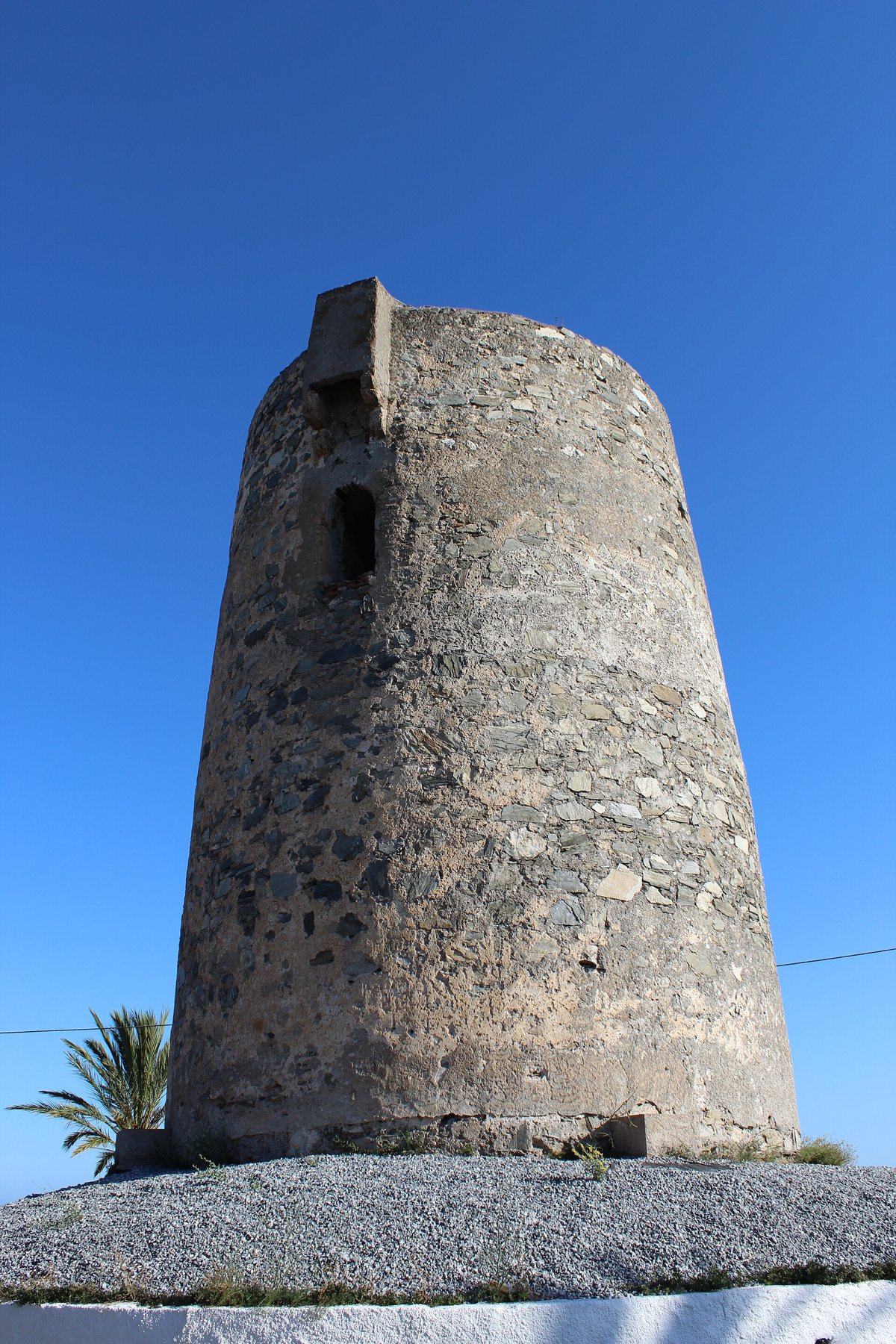
What you can see: the towers along the N-340 from Maro to Castell de Ferro, the walk to Torre de Cerro Gordo (2 km round trip) and Museo 1562 in La Herradura. Read Pirates and watchtowers
2. Cueva del Tesoro – the treasure cave (legend and finds)
In Rincón de la Victoria, east of Málaga, there is a cave shaped by the sea. According to legend it hides the treasure of five Almoravid kings from the 12th century. The Swiss Antonio de la Nari blasted his way through the rock for almost 30 years and died in one of his own blasts in 1847. Later the researcher Manuel Laza Palacio actually found six Almoravid gold coins in an oil lamp – but no royal treasure. The real treasure is the traces from the Stone Age.

What you can see: the cave with an audio guide (approx. 70 km, approx. 1 hour), the Torre del Cantal watchtower and the old railway tunnels by the sea. Read Cueva del Tesoro
3. The smugglers on the coast (approx. 1700–1950)
Tobacco was a state monopoly in Spain and expensive. In the free port of Gibraltar it was cheap. The goods were shipped east and unloaded at night in small coves such as Cantarriján and near Maro, and muleteers carried them over the Sierra de Almijara and Sierra Tejeda. In 1871 it was said in the British House of Commons that around 1,500 tonnes of tobacco had gone from Gibraltar on into Spain in three years. Facing the smugglers from 1829 were the Carabineros – in the old watchtowers and in the cannon fort in La Herradura.


What you can see: Castillo de La Herradura, the Carabineros' lookout post on Cerro Gordo, the cove at Cantarriján and the Paseo de los Carabineros in Nerja. Read The smugglers on the coast
4. The bandits in the mountains (18th and 19th centuries)
19th-century travellers loved the Andalusian bandoleros in fine costume with a rifle. The reality was kidnappings, threatening letters and hold-ups of the stagecoaches. In the Axarquía people remember Luis Muñoz García, El Bizco de El Borge (1837–1889), who was sentenced to death without being caught and was hunted by the Guardia Civil for years. In his home town of El Borge he was remembered as a generous bandit – the Guardia Civil called him ruthless. According to legend he shot the holes in the church weathervane.


What you can see: the Galería del Bandolero in El Borge (approx. 66 km, approx. 1 hr 10 min), El Bizco's birthplace and the old inn Venta de Alfarnate on the royal road between Málaga and Granada. Read The bandits in the mountains
5. The guerrillas in the Sierra de Almijara (approx. 1945–1952)
After the Civil War, Republicans went up into the mountains above Nerja, Frigiliana and Cómpeta to keep fighting Franco – 21 of them from Frigiliana. The Agrupación Guerrillera de Granada under "Roberto" also kidnapped and killed, and the Guardia Civil responded with interrogation, prison and shootings "while trying to escape". The farmers were caught between two evils. The village of El Acebuchal was emptied of its roughly 200 inhabitants in 1948 and lay in ruins for 50 years. The article tells the story from both sides.


What you can see: El Acebuchal with its chapel, information board and bar-restaurant (approx. 39 km, just over 1 hour via Frigiliana), Frigiliana and the view of Cerro Lucero. Read The guerrillas in the Almijara
6. Smuggling in recent times (approx. 1980–2026)
Today it is hashish from Morocco's Rif Mountains that is shipped across the Alboran Sea in fast rubber boats, narcolanchas. The Guardia Civil tracks them with the SIVE radar system, helicopters and patrol boats, and the customs service has boats in Motril. The same sea is crossed by people in small boats, who are rescued and brought into the port of Motril. It almost always happens at night and far out at sea – for tourists it means very little. If you see something suspicious, keep your distance and call 112.

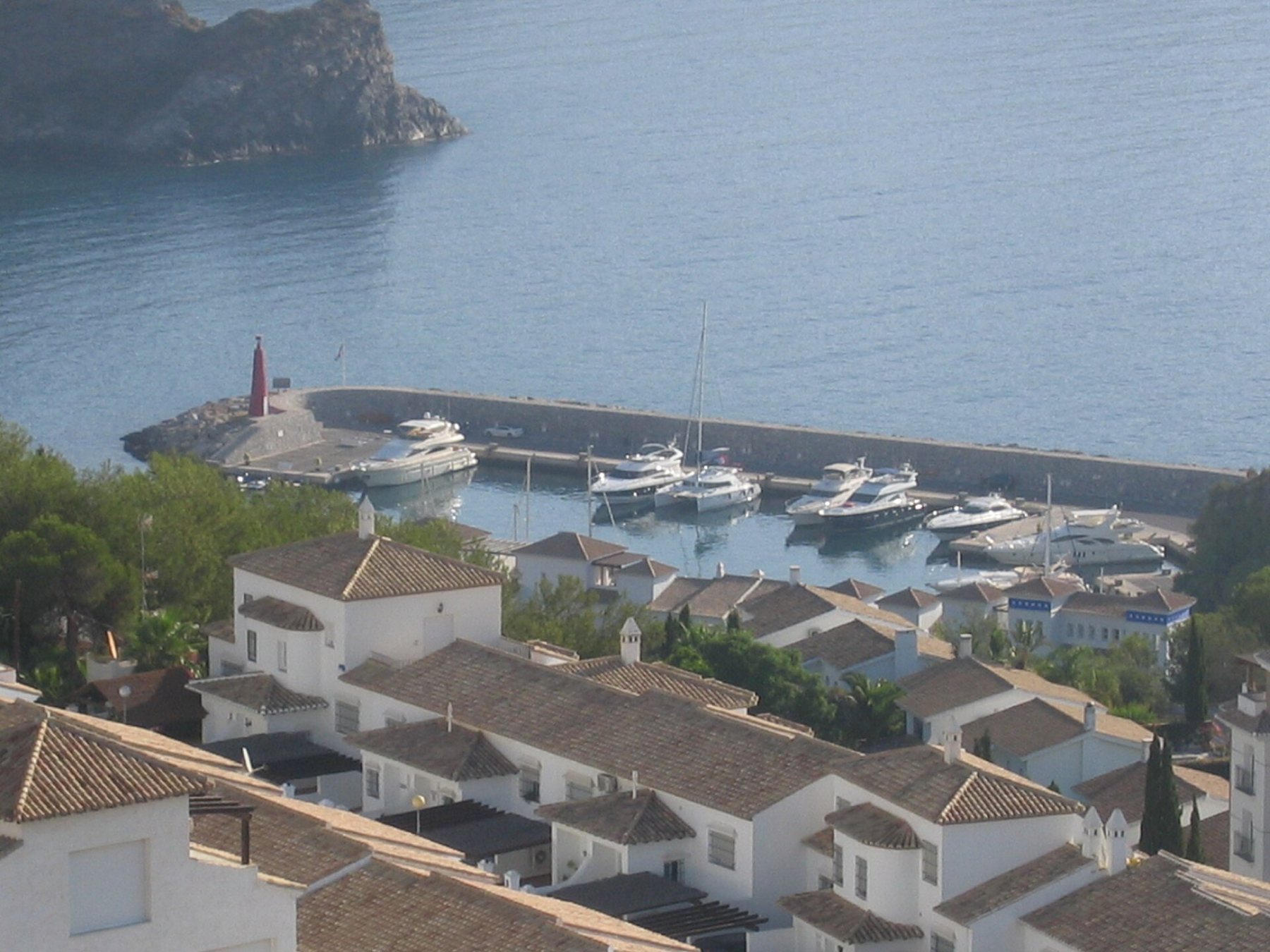
What you can see: the port of Motril from Playa de Poniente, the natural harbour in Calahonda and the watchtowers at La Rijana and Castell de Ferro. Read Smuggling in recent times
Legend or fact?
Crime stories grow every time they are told. In the series we have separated what is documented from what is only legend:
| Story | What we know |
|---|---|
| The treasure of the five kings in the Cueva del Tesoro | Legend. But six genuine Almoravid gold coins have been found in the cave |
| The pirate "Tagore" and the treasure | Not found in any official source or in Wikipedia |
| El Bizco shot the holes in the church weathervane in El Borge | Legend. That he lived and was hunted by the Guardia Civil is documented |
| Almuñécar's coat of arms from 1526 was thanks for a battle against pirates | Tradition. The date is certain; we have not found the battle itself described |
| The princesses Harra and Hanna gave Torre de la Rijana its name | Local legend without evidence |
| The smugglers used Cantarriján and Maro in particular | Likely given the landscape and sources on Maro-Cerro Gordo, but no named landings have been found |
The crime-themed drive from Playa Tropical
If you want to see most of it in one day, drive west. The route follows the story from the pirates' towers via the smugglers' coves to the guerrillas' mountains. Pure driving time is just over 2½ hours for about 88 km – with stops, walks and lunch it makes a whole day.
| Stop | What you see | Distance |
|---|---|---|
| Start: Playa Tropical | If you like, first walk up to Torre de Velilla (15 min.) | – |
| 1. Castillo de La Herradura | The cannon fort from 1771, later a barracks for the Carabineros and Guardia Civil. Museo 1562 about the shipwreck in 1562 (Wed–Sun 10–14 and 16–19 according to the tourist office, November 2025). Toilet on the promenade | 9.5 km, 15 min |
| 2. Mirador de Cerro Gordo | The view and the path down to Torre de Cerro Gordo, the Carabineros' lookout post: 2 km round trip, approx. 40 min, moderate. No public toilet | 4.5 km, 9 min |
| 3. Nerja | Park in the underground car park below Plaza de España. Balcón de Europa, Calahonda beach and the Paseo de los Carabineros. Toilets by the beach. Lunch | 21 km, 21 min |
| 4. Frigiliana | The village where 21 men took to the mountains, and where the Guardia Civil had its base. Toilet at Plaza del Ingenio – the last before the mountains | 7 km, 12 min |
| 5. El Acebuchal | The village that was emptied in 1948. Narrow mountain road for the last stretch. Bar-restaurant (check opening hours) | 7.5 km, approx. 35 min |
| Home | Back via Frigiliana and the A-7 | 38.5 km, approx. 1 hour |
Short of time? Then just do the first two stops and drive home again – that makes a good half-day.
Two other trips
- Heading east (half-day): The port of Motril from Playa de Poniente and the natural harbour in Calahonda with Torre del Zambullón – and home. About 65 km and just over 1 hour's driving. See Smuggling in recent times and the towers in Pirates and watchtowers.
- The bandits and the treasure cave (full day): The Galería del Bandolero in El Borge in the morning (Wed–Sun 10–14), on down to the Cueva del Tesoro in the afternoon and home along the A-7. About 157 km and just over 2½ hours' driving. The cave closes for lunch, so check the times in the article about the cave.
How to get there
All the places are within about 70 km of Playa Tropical. A car is easiest – many of the places have no bus. Take the A-7 motorway to get there quickly, and the old N-340 coast road if you want to see the towers and coves. The N-340 is narrow and winding at Cerro Gordo and between Calahonda and Castell de Ferro, and the road up to El Acebuchal is a narrow mountain road. See speed checks, parking and car hire. ALSA's coastal buses run to La Herradura, Nerja and Motril – see buses.
The buttons below the map open the routes from Playa Tropical directly in Google Maps: the direct drive to Castillo de La Herradura, the crime-themed drive west, the trip east, the full-day trip to El Borge and the cave, and the walk to Torre de Velilla.

Practical info
- Toilets: Use the towns. There are public toilets on the promenade in La Herradura, by Calahonda beach in Nerja, at Plaza del Ingenio in Frigiliana and by the beach in Calahonda (Motril). The cave has toilets. We have found none by the towers out on the headlands or in El Acebuchal – use a restaurant as a customer.
- Food: Fish restaurants and beach bars on the promenade in La Herradura, tapas bars around the Balcón de Europa in Nerja, the bar-restaurant in El Acebuchal, the Posada del Bandolero in El Bizco's birthplace in El Borge, and espetos in La Cala del Moral by the cave. Details are in the articles – opening hours change with the season.
- On foot and accessibility: Castillo de La Herradura, the port of Motril and the promenades are flat. The paths to the towers are stone and gravel with no shade, El Borge and El Acebuchal have steep streets, and the cave has steps (lift to the first floor only).
- Sun and water: Bring good shoes, a hat and water. In summer the midday heat is fierce on the cliffs and in the mountains.
Maps and routes
Red star = Playa Tropical. Click on a point for the name and distance. Map data © OpenStreetMap.
Open the route in Google Maps
- Drive from Playa Tropical to Castillo de La Herradura9.5 km, approx. 15 min along the N-340. The cannon fort with Museo 1562 on the seafront promenade.
- The crime-themed drive westLa Herradura, Cerro Gordo, Nerja, Frigiliana and El Acebuchal – and home. Approx. 88 km, just over 2½ hours' driving. A whole day with stops.
- Pirates and smugglers on the way to NerjaShort version: the fort in La Herradura and Cerro Gordo on the way to Nerja. Approx. 35 km.
- Heading east: the port of Motril and CalahondaThe port and the natural harbour – and home. Approx. 65 km, just over 1 hour's driving.
- Full-day trip: the bandits and the treasure caveThe Galería del Bandolero in El Borge, the Cueva del Tesoro and home along the A-7. Approx. 157 km, just over 2½ hours' driving.
- Walk from Playa Tropical to Torre de VelillaUnder 1 km, approx. 15 min. The last stretch is up steep residential roads.
The routes start at Playa Tropical. On mobile devices, they open directly in the Google Maps app, ready for navigation.
Good advice
- Start at the door. Torre de Velilla is a 15-minute walk from Playa Tropical – so you will have seen a real watchtower before you even get in the car.
- Read before you drive. The stories bring the places to life. Take one article at a time, and have it with you on your phone.
- Check opening hours. Museo 1562, the Galería del Bandolero, the cave and the restaurant in El Acebuchal have changing hours and closing days.
- Keep away from the edge. The cliffs by the towers are steep, and the ruins are fragile. Never climb the towers.
- Be sensitive about the Civil War. Many families lost someone – on both sides. Feel free to ask, but listen more than you talk.
- Call 112. If you see a boat unloading at night or people in distress at sea, move away and call 112 (or the Guardia Civil on 062).
- More history: Almuñécar's history, Castillo de San Miguel, Salobreña, Maro-Cerro Gordo and Frigiliana.
The towers are listed monuments, and the nature parks have a high fire risk in summer. Take nothing away, never light a fire, and stay on the paths. In an emergency: call 112.
Sources
- The six articles in the series with their source lists: Pirates and watchtowers, Cueva del Tesoro, The smugglers on the coast, The bandits in the mountains, The guerrillas in the Almijara and Smuggling in recent times
- Wikipedia (en): Piri Reis (Kemal Reis, Kitab-ı Bahriye 1521 and 1526)
- Wikimedia Commons: Granada in the Kitab-ı Bahriye
- Junta de Andalucía: Sendero Torre de Cerro Gordo
- Turismo Rincón de la Victoria: Cueva del Tesoro
- Galería del Bandolero, El Borge
- Guardia Civil 2025: SIVE
- Driving distances: OSRM route calculation on OpenStreetMap data
- Coordinates: OpenStreetMap contributors (ODbL)
